

What Is The Export Price Of Cored Wire From China?Applications Of Cored Wire In Steel Welding
Leave a message
What is the export price of cored wire from China?
| Export price of cored wire from China as of April 10, 2026 | |||||
| product | index | price | rise and fall | port | Remark |
| Calcium silicate cored wire | ca30si60∮13mm | 1300-1330 | -- | Tianjin Port | FOB, USD/ton |
| Calcium silicate cored wire | ca28si55∮13mm | 1160-1180 | -- | Tianjin Port | FOB, USD/ton |
| Pure calcium cored wire | ca98%min∮9mm (Ca58-68g) | 1450-1540 | -- | Tianjin Port | FOB, USD/ton |
Applications of Cored Wire in Steel Welding
Cored wire in steel welding is primarily used to improve welding efficiency, stabilize arc performance, and enhance weld metal quality. By filling alloy powders or flux inside a steel sheath, cored wire enables precise control of chemical composition during welding, making it widely used in submerged arc welding (SAW), gas-shielded welding (FCAW), and high-strength steel fabrication. It significantly improves deposition rate, reduces welding defects, and ensures consistent mechanical properties in weld joints.
Cored Wire Specifications (Welding Grade)
| Type | Core Material | Sheath Material | Diameter (mm) | Alloy Content | Welding Method | Application |
|---|---|---|---|---|---|---|
| Flux-Cored Wire | Flux + alloy powder | Low carbon steel | 0.8–2.4 | Mn, Si, Ti, etc. | FCAW | Structural welding |
| Metal-Cored Wire | Metal powder alloy | Low carbon steel | 1.2–1.6 | Fe, Mn, Ni, Cr | MIG/MAG | High-speed welding |
| Alloy Cored Wire | FeSi, FeMn, FeCr | Steel strip | 9–13 (for injection) | Customized | Ladle treatment | Steel refining |
| Stainless Cored Wire | Cr, Ni alloy powder | Stainless steel | 0.8–1.6 | Cr 18–25%, Ni 8–12% | TIG/MIG | Stainless steel welding |
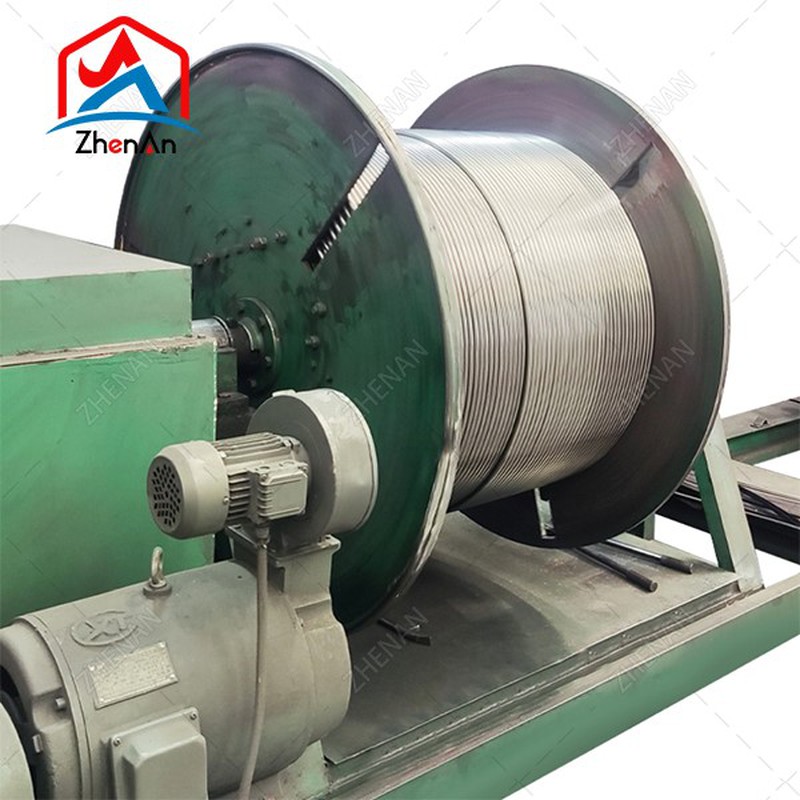
Packaging: spool / drum / coil
Weight: 15–500 kg per spool or customized bulk packaging
What are the applications of cored wire in steel welding?
Cored wire is widely used in modern steel welding because it provides higher deposition efficiency and better weld consistency compared to solid wire. In industrial applications, it plays a critical role in structural steel fabrication, shipbuilding, pipeline welding, and heavy machinery production.
In structural steel welding, flux-cored wire is commonly used due to its high arc stability and deep penetration ability. It produces strong weld seams with reduced porosity, making it suitable for bridges, buildings, and steel frameworks.
In pipeline welding, metal-cored wire and alloy cored wire ensure high toughness and crack resistance. The controlled alloy composition improves resistance to low-temperature brittleness, which is essential for oil and gas pipelines.
In shipbuilding and heavy engineering, cored wire helps achieve high-speed welding while maintaining weld strength and fatigue resistance. Its high deposition rate significantly reduces production time.
Additionally, stainless steel cored wire is used in corrosive environments, such as chemical plants, food processing equipment, and marine structures, where corrosion resistance is critical.
Why is cored wire important in modern welding technology?
Cored wire improves welding quality by enabling precise alloy control inside the weld pool. Unlike solid welding wire, cored wire contains alloying elements or flux materials that react during welding to optimize metallurgical properties.
It enhances:
Arc stability and weld consistency
Alloy composition control in weld metal
Slag formation and protection (flux-cored type)
Welding speed and deposition efficiency
Because of these advantages, cored wire has replaced many traditional welding consumables in high-end industrial welding systems.
Application of cored wire in high-strength steel welding
High-strength steel requires welds with excellent toughness and low defect rates. Cored wire allows engineers to adjust alloy composition (Mn, Ni, Mo, Cr) precisely during welding.
This ensures:
Reduced cracking risk in heat-affected zones
Improved impact toughness at low temperatures
Stable mechanical properties across weld joints
For this reason, cored wire is widely used in pressure vessels, offshore platforms, and heavy load-bearing structures.
Grade Comparison: Flux-Cored Wire vs Metal-Cored Wire vs Alloy Cored Wire
Flux-Cored Wire vs Metal-Cored Wire
Flux-cored wire contains flux inside the core and is mainly used for structural welding with slag protection, while metal-cored wire contains mainly metal powder and provides higher deposition efficiency and cleaner weld seams. Flux-cored is better for outdoor and heavy-duty welding, while metal-cored is preferred for high-speed automated welding.
Metal-Cored Wire vs Alloy Cored Wire (Injection Type)
Metal-cored wire is used in welding processes like MIG/MAG, focusing on weld deposition quality. Alloy cored wire (ladle injection type) is used in steel refining rather than welding, mainly for adding alloys into molten steel. One is for welding joints, the other is for metallurgical treatment of steel composition.
Summary
Cored wire is a critical consumable in modern steel welding processes. It improves welding speed, stabilizes arc performance, and enhances mechanical properties of welds. Different types-flux-cored, metal-cored, and stainless cored wire-are used across structural steel, pipelines, shipbuilding, and corrosion-resistant applications. Its ability to control alloy composition makes it essential for high-performance welding in industrial manufacturing.
FAQ – Cored Wire in Steel Welding
1. What is cored wire used for in welding?
Cored wire is used to improve welding efficiency, increase deposition rate, and enhance weld quality by controlling alloy composition during welding.
2. What is the difference between cored wire and solid wire?
Cored wire contains flux or metal powders inside, while solid wire is a single metal rod. Cored wire offers better arc stability and higher productivity.
3. Which welding methods use cored wire?
It is widely used in FCAW (Flux-Cored Arc Welding), MIG/MAG welding, and submerged arc welding (SAW).
4. Why is flux-cored wire preferred in construction?
Because it provides strong penetration, slag protection, and good performance in outdoor or windy environments.
5. Can cored wire improve weld strength?
Yes. It allows precise alloy control, which improves toughness, crack resistance, and overall weld strength.
6. Where is stainless steel cored wire used?
It is used in chemical plants, marine structures, and food processing equipment where corrosion resistance is required.
Looking for High-Quality Welding Cored Wire Supply?
We supply flux-cored wire, metal-cored wire, and alloy cored wire with stable quality and competitive factory pricing for global steel fabrication and welding industries.
Contact us for quotation and technical support:
Email: info@zaferroalloy.com
WhatsApp: +86 15518824805
Fast response within 24 hours
Stable welding performance & low spatter
Bulk supply for industrial welding projects
Reliable Cored Wire Supplier – Precision · Stability · Metallurgical Performance
All cored wire products are manufactured under ISO9001-certified systems with strict control over wire filling, sheath quality, and core material composition. COA, SDS, and REACH documentation are available for international steel industry supply.
01
30+ Years of Metallurgical Expertise
With decades of ferroalloy and steelmaking material experience, ZhenAn understands how cored wire performs in deep ladle treatment, helping customers improve alloy utilization and steel quality.
02
Precise Filling & Stable Feeding Performance
Advanced production equipment ensures uniform powder filling, stable wire diameter, and smooth feeding during injection, reducing breakage and improving treatment efficiency.
3
Wide Range & Custom Solutions
We supply multiple types of cored wire such as CaSi wire, CaFe wire, FeTi wire, and FeB wire, with customizable alloy ratios and wire specifications for different steel grades.
04
Fast Response & Technical Support
24-hour quotation service with professional technical guidance to support alloy selection, injection parameters, and steelmaking optimization.


