

What Is The Current Price Of Calcium Silicon Per Ton?How Are Silicon And Calcium Used in Steelmaking And Casting?
Leave a message
What is the current price of Calcium silicon per ton?
| Summary of China's silicon-calcium, silicon-barium, and metallic calcium market prices as of April 10, 2026 | ||||
| (1) National standard silicon calcium (RMB/ton, including tax) | ||||
| Brand | area | April 10th transaction price | April 9th transaction price | rise and fall |
| National Standard Ca1 | Shaanxi | 9200-9400 | 9200-9400 | flat |
| Ningxia | 9200-9400 | 9200-9400 | flat | |
| Inner Mongolia | 9000-9200 | 9000-9200 | flat | |
| National Standard Ca2 | Shaanxi | 9100-9300 | 9100-9300 | flat |
| Ningxia | 9100-9300 | 9100-9300 | flat | |
| Inner Mongolia | 8900-9100 | 8900-9100 | flat | |
| ca28si55 | Henan | 8200-8300 | 8200-8300 | flat |
| ca28si50 | Henan | 7200-7400 | 7200-7400 | flat |
| (2) Barium silicon (RMB/ton, ex-factory price including tax) | ||||
| Brand (Natural Block) | area | April 10th transaction price | April 9th transaction price | rise and fall |
| Si50-55Ba30 | Inner Mongolia | 6800-7100 | 6800-7100 | flat |
| Gansu | 6900-7000 | -- | -- | |
| Qinghai | -- | -- | -- | |
| Si65-75Ba4-6 | Qinghai | 6100-6150 | 6150-6200 | ↓50 |
| Ningxia | 6300-6350 | 6300-6350 | flat | |
| Si65-75Ba2-3 | Ningxia | 6300-6350 | 6300-6350 | flat |
| Smelting inoculant Si≥68Ba4-6 (1-3/3-8mm) | Inner Mongolia and Ningxia | 6700-6900 | 6700-6900 | flat |
| Jiangsu and Shaanxi | 7000-7100 | 7000-7100 | flat | |
| (3) Calcium metal series (RMB/ton, cash price including tax) | ||||
| product | area | April 10th transaction price | April 9th transaction price | rise and fall |
| Crude Calcium Metal | Shanxi | 16800-17000 | 16800-17000 | flat |
| Metallic calcium wire | Henan | 20000-20200 | 20000-20200 | flat |
| Metallic calcium particles | Henan | 19500-19700 | 19500-19700 | flat |
How are silicon and calcium used in steelmaking and casting?
Silicon (Si) and calcium (Ca) are widely used in steelmaking and casting as key deoxidizing, desulfurizing, and inclusion-modifying elements. Silicon primarily improves deoxidation efficiency and steel strength, while calcium is mainly used to modify non-metallic inclusions (Al₂O₃, sulfides) and improve steel cleanliness and machinability. In combination (such as in CaSi alloy), they are essential for producing high-quality, clean steel and stable casting performance.
Silicon & Calcium Alloy Specifications (Typical Industrial Grades)
| Product | Si (%) | Ca (%) | Al (%) | Fe (%) | C (%) | S (%) | P (%) | Form |
|---|---|---|---|---|---|---|---|---|
| FeSi (75%) | ≥72–75 | - | ≤2.0 | Balance | ≤0.2 | ≤0.02 | ≤0.04 | Lump |
| CaSi Alloy | 55–65 | 28–35 | ≤1.5 | Balance | ≤1.0 | ≤0.02 | ≤0.05 | Lump |
| Si-Ca Cored Wire | 30–60 | 20–35 | ≤1.5 | - | - | ≤0.02 | ≤0.04 | Wire |
| High CaSi | 60–70 | 30–35 | ≤1.0 | Balance | ≤0.8 | ≤0.02 | ≤0.04 | Lump |
Particle size: 10–50 mm / 3–10 mm / cored wire
Packaging: 1 MT jumbo bag or steel drum
What is the role of silicon in steelmaking and casting?
Silicon is one of the most important deoxidizing and strengthening elements in steel production. During steelmaking, silicon reacts with oxygen in molten steel to form SiO₂, effectively removing oxygen and improving steel purity.
In steelmaking, silicon improves:
Deoxidation efficiency
Steel strength and hardness
Heat resistance
Elastic limit
In casting, silicon plays an even more critical role in controlling graphite formation in cast iron, improving:
Fluidity of molten iron
Casting structure stability
Crack resistance
Silicon is commonly introduced through ferrosilicon (FeSi 75%), which is the most widely used silicon carrier in industrial metallurgy.
What is the role of calcium in steelmaking and casting?
Calcium is mainly used as a steel cleanliness control element, rather than a strengthening alloy.
In steelmaking, calcium is used to:
Modify solid alumina (Al₂O₃) inclusions into liquid calcium aluminates
Reduce nozzle clogging in continuous casting
Improve steel flowability
In casting, calcium improves:
Sulfide shape control
Machinability of steel
Inclusion morphology (soft, spherical inclusions instead of hard angular particles)
Calcium is highly reactive, so it is usually added in the form of:
Calcium silicon (CaSi) alloy
Cored wire injection systems
This ensures stable absorption and controlled reaction in molten steel.
How do silicon and calcium work together in steel refining?
When used together (especially as CaSi alloy), silicon and calcium create a synergistic refining effect.
Silicon first performs strong deoxidation, reducing oxygen levels in molten steel. Then calcium reacts with remaining oxides and sulfides, transforming them into low-melting, spherical inclusions.
This combined effect results in:
Cleaner steel with fewer inclusions
Improved machinability
Reduced casting defects
Better continuous casting stability
This is especially important in high-grade steel production, such as automotive steel, bearing steel, and pipeline steel.
Grade Comparison: CaSi Alloy vs FeSi, CaSi vs Cored Wire
CaSi Alloy vs FeSi (Ferrosilicon)
FeSi is mainly used for deoxidation and silicon alloying, while CaSi provides both deoxidation and inclusion modification. CaSi is more advanced in refining performance, especially in clean steel production, whereas FeSi is more cost-effective and widely used in bulk steelmaking.
CaSi Alloy vs CaSi Cored Wire
CaSi lump is added directly into molten steel, offering simpler operation but slightly lower efficiency. CaSi cored wire provides:
Higher calcium recovery rate
More precise control
Reduced oxidation loss
Cored wire is preferred in high-end continuous casting systems, while lump CaSi is widely used in general steel plants due to lower cost.
Summary
Silicon and calcium are essential functional elements in steelmaking and casting. Silicon provides deoxidation and strength improvement, while calcium focuses on inclusion modification and steel cleanliness control. When combined as CaSi alloy or cored wire, they significantly improve steel quality, casting stability, and production efficiency, especially in high-grade steel manufacturing.
FAQ – Common Procurement Questions About Silicon & Calcium in Steelmaking
1. Why is silicon used in steelmaking?
Silicon is used mainly as a deoxidizer and strength enhancer, improving steel hardness and reducing oxygen content in molten steel.
2. What is the main function of calcium in steel?
Calcium modifies non-metallic inclusions, making them spherical and less harmful, improving steel cleanliness and machinability.
3. What is CaSi alloy used for?
CaSi alloy is used for deoxidation, desulfurization, and inclusion modification, especially in high-quality steel and continuous casting.
4. What is the difference between CaSi lump and cored wire?
Lump is cheaper and simpler to use, while cored wire offers higher efficiency and better calcium recovery.
5. Can silicon replace calcium in steelmaking?
No. Silicon and calcium have different functions. Silicon deoxidizes, while calcium modifies inclusions. They are complementary, not interchangeable.
6. What steel grades use CaSi alloy?
It is widely used in bearing steel, automotive steel, pipeline steel, and high-strength structural steel.
Ready to Source High-Quality Silicon & Calcium Alloys?
If you are looking for stable CaSi alloy, ferrosilicon, or cored wire products with consistent quality and competitive pricing, we provide factory-direct supply for global steelmakers and foundries.
Contact us now for quotation and samples:
📧 Email: info@zaferroalloy.com
📱 WhatsApp: +86 15518824805
👉 Fast response within 24 hours
👉 Stable chemical composition & low impurities
👉 Bulk supply for steel mills and casting plants
Trusted Calcium Silicon Supplier – Quality · Stability · Service
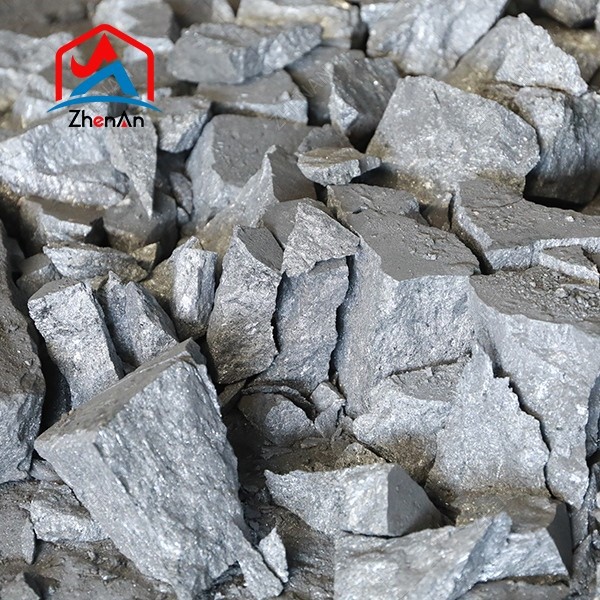
All calcium silicon (CaSi) products are manufactured under ISO9001-certified systems and strictly controlled from smelting to crushing and packaging. COA, SDS, and REACH documentation are available to support global procurement needs.
01
Rich Ferroalloy Experience
With over 30 years in ferroalloy production, ZhenAn understands the role of calcium silicon in steel deoxidation, desulfurization, and inclusion modification, ensuring better steel cleanliness and performance.
02
Stable Chemistry & Low Impurities
Strict control of Ca, Si content and impurities such as Al, C, and S ensures consistent reaction efficiency in steelmaking and stable metallurgical results for end users.
03
Flexible Supply & Customization
Multiple grades and particle sizes are available, including lump and granular forms. Packaging and specifications can be customized to meet different steel plant requirements.
04
Fast Response & Export Support
Quick quotation within 24 hours with professional documentation and logistics support, ensuring smooth delivery to global customers.


