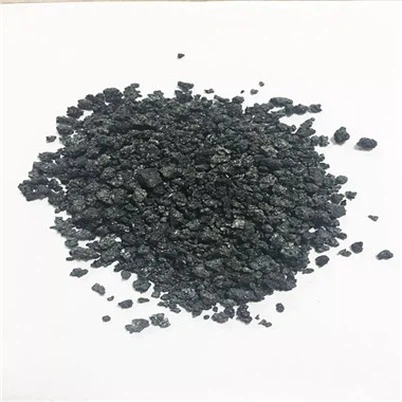

What Is Ferrosilicon Used For in Steelmaking?
Leave a message
Ferrosilicon in Steelmaking: Core Functions and Industrial Value
Ferrosilicon is primarily used in steelmaking as a deoxidizer, alloying agent, and reducing agent, playing a critical role in improving steel purity, enhancing mechanical properties, and ensuring stable production processes. By removing oxygen from molten steel and introducing controlled silicon content, ferrosilicon helps produce cleaner, stronger, and more consistent steel across a wide range of applications.
Typical Specifications and Chemical Composition of Ferrosilicon
| Parameter | Specification |
|---|---|
| Product Name | Ferrosilicon (FeSi) |
| Si Content | 65% / 72% / 75% |
| Fe Content | Balance |
| C (Carbon) | ≤0.10% |
| S (Sulfur) | ≤0.02% |
| P (Phosphorus) | ≤0.04% |
| Al | ≤2.0% |
| Form | Lump / granule / powder |
| Size Range | 10–50 mm / 50–100 mm |
| Appearance | Silver-gray metallic |
| Application | Steelmaking / casting / metallurgy |
How Ferrosilicon Works in Steelmaking Processes
Ferrosilicon plays a central role in steel refining by acting as a strong deoxidizer. During steelmaking, dissolved oxygen in molten steel can lead to defects such as porosity and inclusions. Silicon reacts with oxygen to form stable oxides, which are removed through slag, resulting in cleaner steel.
In addition to deoxidation, ferrosilicon functions as an alloying element. Silicon improves steel strength, hardness, and elasticity, while also enhancing oxidation resistance and magnetic properties in certain grades of steel.
Ferrosilicon is also used as a reducing agent in smelting processes, particularly in the production of other ferroalloys. Its chemical stability and high silicon content make it efficient in high-temperature metallurgical reactions.
Another important function is improving fluidity during casting, which helps reduce defects and ensures uniform solidification in steel products.
Industrial Advantages of Using Ferrosilicon
Ferrosilicon provides several key advantages in steel production:
efficient oxygen removal for cleaner steel
improves strength and hardness through silicon alloying
enhances casting performance and reduces defects
stable and predictable metallurgical reactions
cost-effective solution for large-scale steelmaking
These benefits make ferrosilicon one of the most widely used ferroalloys in the global steel industry.
Ferrosilicon Grade Comparison in Steelmaking
FeSi 72 vs FeSi 75
FeSi 72 is the most commonly used grade in steelmaking, offering a balance between cost and deoxidation efficiency. It is suitable for general structural steel and large-scale production.
FeSi 75 contains higher silicon content, providing stronger deoxidation capability and better alloying efficiency, making it more suitable for high-grade steel requiring stricter oxygen control and improved mechanical properties.
FeSi 75 vs FeSi 65
FeSi 75 offers higher purity and more effective oxygen removal compared to FeSi 65.
FeSi 65 is typically used in lower-grade steel or casting applications, where cost control is more important than maximum performance. FeSi 75 is preferred for higher-quality steel production.
Ferrosilicon vs Silicon Carbide (SiC)
Ferrosilicon mainly acts as a deoxidizer and silicon additive, while silicon carbide provides both deoxidation and carburization.
SiC can improve carbon content along with oxygen removal, but ferrosilicon offers more stable and controlled silicon addition, making it more suitable for precise steel composition control.
Why Ferrosilicon Is Essential in Modern Steel Industry
Ferrosilicon remains essential because it provides a reliable, efficient, and scalable solution for steel refining.
It helps steel producers achieve consistent product quality, reduce defects, and optimize production efficiency. Its versatility allows it to be used across a wide range of steel grades, from basic construction steel to advanced alloy steels.
Conclusion: Key Role of Ferrosilicon in Steelmaking
Ferrosilicon is a fundamental ferroalloy in steelmaking, providing critical functions such as deoxidation, alloying, and process stabilization. Its ability to improve steel quality while maintaining cost efficiency makes it indispensable in modern metallurgical operations.
FAQ for Steelmakers and Buyers
What is ferrosilicon mainly used for?
It is used as a deoxidizer and alloying agent in steelmaking.
Why is deoxidation important in steel?
It removes oxygen to prevent defects and improve steel quality.
Which grade of ferrosilicon is most common?
FeSi 72 is the most widely used in industrial steel production.
Is FeSi 75 better than FeSi 72?
FeSi 75 has higher silicon content and stronger deoxidation ability.
Can ferrosilicon improve steel strength?
Yes, silicon increases hardness and mechanical properties.
Is ferrosilicon used in casting?
Yes, it improves fluidity and reduces casting defects.
Get Reliable Ferrosilicon Supply
We supply high-quality ferrosilicon for global steel industries:
FeSi 65 / 72 / 75 available
Stable chemical composition
Strong deoxidation performance
Bulk supply for steelmaking and casting
📩 Email: info@zaferroalloy.com
📱 WhatsApp: +86 15518824805
Contact us today for a fast quotation and technical support within 24 hours.
Why Choose ZhenAn Ferrosilicon?
European buyers sourcing ferrosilicon (FeSi) typically focus on performance efficiency in steelmaking, composition reliability, compliance readiness, and long-term supply stability. ZhenAn is structured to deliver on these priorities.
1. Reliable Silicon Content Across Grades
ZhenAn supplies multiple FeSi grades (such as 72% and 75%) with tightly controlled composition, ensuring predictable deoxidation efficiency and alloying performance.
2. Efficient Steelmaking Performance
Ferrosilicon provides strong deoxidation capability, improves steel purity, and supports better mechanical properties in finished steel products.
3. Consistent Particle Size & Handling
Uniform sizing improves melting efficiency and dosing accuracy, which is critical for automated steel production lines in Europe.
4. Compliance & Documentation Support
COA, SDS, and export documentation are provided to meet European import standards and reduce clearance risks.
5. Stable Supply with Cost Efficiency
ZhenAn ensures reliable production output and delivery schedules, while factory-direct supply helps optimize procurement costs.
Conclusion
ZhenAn ferrosilicon offers European buyers a dependable combination of process efficiency, consistent quality, and secure supply at competitive pricing.