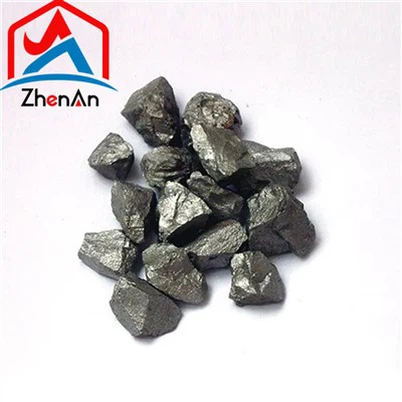

What Is Metallic Silicon?
Leave a message
What Is Metallic Silicon?
ZhenAn Metal Silicon Manufacturers Environment
Metallic silicon is an extremely important chemical element that is widely used in various industries due to its excellent and unique properties. It is a hard, brittle, crystalline solid with an attractive blue-gray metallic luster.

Composed primarily of silicon, with traces of other elements such as iron, aluminum and calcium, it is truly a wonder of nature.

Industrial Silicon Manufacturer
Its complex manufacturing process involves reducing silica, a compound found in quartz, with carbon in a high-temperature furnace. The resulting metallic silicon is approximately 98-99% pure.

Definition and composition of Metal Silicon
It is indeed a chemical element with the symbol Si and atomic number 14. It is a metalloid with both metallic and non-metallic properties, making it a truly fascinating specimen.
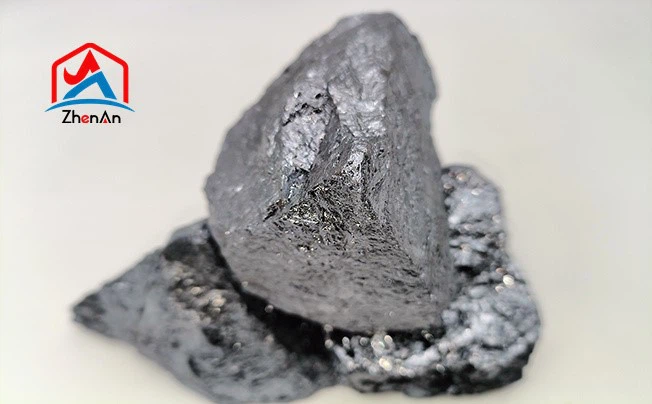
Dear reader, the composition of silicon metal consists mainly of silicon, which forms the basis of its structure. However, depending on the complex production process, it may also contain trace amounts of impurities such as iron, aluminum, calcium and other elements.

The purity of this extraordinary substance is critical to its many applications in various industries.

Physical and chemical properties of metallic silicon
Now, let's delve into the fascinating physical and chemical properties of silicon metal that make it extremely valuable in numerous applications. It has absolute hardness and brittleness, as well as an attractive metallic appearance.

Note that silicon metal has an extremely high melting point of about 1,414 degrees Celsius and a boiling point of 3,265 degrees Celsius. In addition, it has commendable electrical and thermal conductivity, as well as low thermal expansion and excellent thermal stability. Chemically, silicon metal tends to be relatively inert, although it may react with certain substances, such as oxygen, to form silica under certain conditions.