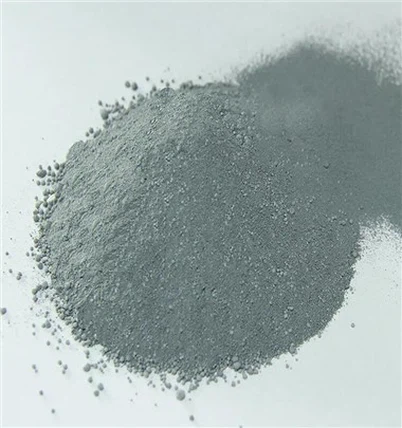

Tungsten Heavy Alloy Density: Boring Bar and Shielding Grades
Leave a message
What "High Density of Tungsten" Means in Purchasing Terms
Pure tungsten is quoted at a theoretical density of 19.25 g/cm3 and a melting point of 3422 deg C, the highest of any metal in routine industrial supply. Those two figures explain most of the metal's commercial behaviour: it is bought where mass must be packed into a small volume, or where a part must survive a temperature that destroys steel, nickel alloys and even many ceramics. What an engineering buyer actually receives, however, is rarely pure tungsten. It is either a sintered and worked pure tungsten product at 99.95% W minimum, or a tungsten heavy alloy in which tungsten powder is cemented with a nickel-iron, nickel-copper or nickel-copper-iron binder. The density of the delivered article, not the handbook value for the pure element, is what governs stiffness, counterweight effectiveness, radiation attenuation and machining behaviour.
Because density is the single most sensitive indicator of tungsten content, it doubles as a chemical check. A two percent shortfall in tungsten fraction moves density by roughly 0.3 g/cm3, which is far outside normal measurement scatter and can be detected with a simple immersion weighing. That is why density is written into purchase orders alongside chemistry, and why a certificate that reports only "high density tungsten" without a class designation, a measured value and a test method is not a usable acceptance document.
How Tungsten Density Compares with Competing Materials
The table below places tungsten and its alloys against the materials they most often replace. Values are nominal handbook figures for the common wrought or sintered condition; actual values for a delivered lot must come from the mill certificate.
| Material | Nominal density (g/cm3) | Relative mass vs carbon steel | Typical reason for selection |
|---|---|---|---|
| Carbon steel (structural) | 7.85 | 1.00 | Baseline cost and availability |
| Austenitic stainless steel | 7.9 - 8.0 | 1.01 - 1.02 | Corrosion resistance at moderate mass |
| Lead (cast or rolled) | 11.34 | 1.44 | Gamma attenuation, low cost, low strength |
| Tungsten carbide, 10% Co binder | 14.5 - 15.0 | 1.85 - 1.91 | Wear resistance, compressive strength |
| Tungsten heavy alloy, 90% W | 17.0 | 2.17 | Mass with machinability and ductility |
| Tungsten heavy alloy, 95% W | 18.0 | 2.29 | Higher mass, shielding, ballast |
| Tungsten heavy alloy, 97% W | 18.5 | 2.36 | Maximum mass in minimum envelope |
| Pure tungsten, sintered and swaged | 19.0 - 19.3 | 2.42 - 2.46 | Furnace hardware, electrodes, targets |
Read the table as a design constraint, not a shopping list. Every step up in density costs ductility, machinability and price, because tungsten powder is the expensive input and the binder that makes the alloy workable is progressively diluted out. The engineering task is to find the lowest tungsten fraction that still meets the mass or attenuation target, not the highest fraction available.
Tungsten Heavy Alloy Classes and Their Chemistry
Tungsten heavy alloys are specified internationally by class, where the class number fixes a nominal tungsten content and a corresponding density band. ASTM B777 is the reference specification most widely used in export contracts for tungsten base high-density metal, and it defines classes built around 90%, 92.5%, 95% and 97% tungsten by weight. The balance is binder: nickel plus iron in a ratio near 7:3, nickel plus copper near 6:4, or a three-component nickel-copper-iron binder. A 90W-6Ni-4Cu grade, for example, is chosen where moderate mass, excellent machinability and non-magnetic behaviour matter more than absolute density.
| Class (ASTM B777 basis) | Tungsten (wt%) | Binder system | Nominal density (g/cm3) | Typical hardness (HRC) | Typical tensile strength (MPa) | Typical elongation (%) |
|---|---|---|---|---|---|---|
| Class 1 | 90 | Ni-Fe or Ni-Cu | 17.0 | 24 - 28 | 850 - 1000 | 10 - 20 |
| Class 2 | 92.5 | Ni-Fe or Ni-Cu | 17.5 | 26 - 30 | 820 - 980 | 8 - 15 |
| Class 3 | 95 | Ni-Fe, Ni-Cu or Ni-Cu-Fe | 18.0 | 28 - 33 | 780 - 930 | 5 - 11 |
| Class 4 | 97 | Ni-Fe or Ni-Cu | 18.5 | 32 - 37 | 700 - 860 | 3 - 7 |
Mechanical values in the table are typical ranges for stress-relieved bar and are quoted to show the trend, not to replace a certificate. Sintering atmosphere, sintering temperature, subsequent swaging or rolling reduction and the final stress-relief cycle can each shift strength and elongation by a wide margin at identical chemistry. A purchase specification should therefore state the required class, the condition of supply and the mechanical properties the certificate must report, rather than copying figures from a catalogue into a drawing note.
WNiFe versus WNiCu versus WNiCuFe: Binder Selection
The binder decision is usually made for reasons that have nothing to do with density. Nickel-iron binders give the highest strength and elongation at a given tungsten level and are the normal choice for structural parts, counterweights, kinetic-energy components and high-load tool shanks. They are ferromagnetic, which rules them out of instruments where stray magnetic fields disturb a measurement or a sensor.
Nickel-copper binders are non-magnetic, machine more freely, and hold slightly better corrosion resistance in humid storage, at the cost of roughly 10 to 15 percent of tensile strength and some ductility. They are the standard choice for gyroscope rotors, medical shielding blocks, aircraft balance weights and any application where a magnetometer, an electron beam or a magnetic clamping fixture is nearby. The three-component nickel-copper-iron binder sits between the two: it recovers part of the strength of a nickel-iron grade while remaining effectively non-magnetic after the correct heat treatment, and it is common in 95% tungsten grades where both mass and moderate toughness are required.
Two practical notes belong in every enquiry. First, binder ratio is a controlled variable: a nominal 7:3 nickel-iron ratio that drifts towards 8:2 reduces tungsten solubility in the matrix and can leave porosity that shows up as a density shortfall. Second, copper-bearing grades must be ordered with an explicit statement of magnetic permeability if the part is going into an instrument, because permeability is not implied by the class number.
Stiffness, Damping and Boring Bar Geometry
The classic use of tungsten heavy alloy bar is the anti-vibration boring bar and toolholder. For a bar of identical outside diameter and overhang, static deflection under a given cutting force is inversely proportional to Young's modulus, and tungsten heavy alloys sit at roughly 310 to 400 GPa against about 200 GPa for steel, so deflection is reduced by roughly a third to a half before any change in diameter is made. Superimposed on that is the mass effect: because the alloy carries around 2.3 times the mass per unit length, the bar absorbs and redistributes vibration energy in a way that a hollow steel bar does not, and the practical overhang-to-diameter ratio that can be run without chatter moves from the three to four diameter region typical of steel to the six to ten diameter region that tungsten alloy bars are routinely applied at.
Three secondary properties support the same application. Thermal conductivity of tungsten heavy alloys is in the region of 120 to 170 W/m.K depending on binder content, far above steel, so heat leaves the cutting edge instead of growing the bar and drifting the bore size. The coefficient of thermal expansion is low, roughly 4.5 to 7 x 10^-6 per K, so a warm bar stays dimensionally stable. And the alloy accepts brazing of a carbide or ceramic insert directly onto the shank without the insert pocket losing its properties, which is why tungsten shanks are often supplied with the tip already attached.
The comparison that matters commercially is against solid carbide boring bars. A carbide bar is stiffer still, but it is brittle, it chips when an operator crashes the tool, and a damaged carbide shank is a write-off. A tungsten heavy alloy shank deforms before it fractures, can be re-machined and re-tipped, and a crack or chip is visible on inspection before it becomes a scrap part. Where a shop runs mixed batches with varying operator experience, that tolerance for mishandling is often worth more than the last increment of stiffness.
Tolerances, Surface Condition and Inspection
Tungsten heavy alloy bar is normally supplied ground or as-sintered, and the purchase order has to say which. Ground bar is specified by diameter with a tolerance band typically in the ISO h7 to h9 region for tool shanks, with straightness quoted in millimetres per metre rather than as a total, and with a surface roughness requirement expressed as Ra. As-sintered bar carries a larger diameter allowance and a surface that must be machined before use, so it is only appropriate when the buyer intends to grind in-house.
For pure tungsten mill products, ASTM B760 covers plate, sheet, strip and foil, and ASTM B759 covers bars, rods and other mill forms produced by powder metallurgy and thermomechanical processing. Contracts should reference the applicable product form rather than a generic "tungsten bar" description, because the mechanical property requirements, the permitted surface imperfections and the sampling frequency all differ between forms.
A workable receiving inspection for a tungsten heavy alloy lot consists of four checks. Verify the class and the measured density on the certificate against the order, then confirm density independently by immersion weighing on one piece per lot. Check chemistry by the method named on the certificate, with tungsten reported as a measured value and not as a nominal. Confirm dimensions, straightness and surface finish against the drawing. Finally, where the application is structural or dynamic, require a tensile result from the same lot and condition, since hardness alone does not predict toughness in these alloys.
Applications Where Density Drives the Decision
Beyond boring bars, the same material property set serves several unrelated industries. Radiation shielding uses 90% to 97% tungsten grades as collimator blocks, syringe shields and isotope containers where lead would be too thick or too soft; the higher density allows a thinner wall, which matters when the shield sits inside a confined detector housing. Counterweights and ballast use the alloy in aircraft control surfaces, racing chassis, sailboat keels and industrial vibration dampers, where the design intent is to add mass inside a volume that cannot grow. Kinetic and ordnance-related components exploit the combination of density and ductility, and those orders are governed by separate regulatory controls that a supplier must be able to document.
Pure tungsten products serve a different set of duties: furnace heating elements, sintering boats, sapphire crystal growth crucibles, glass-melting electrodes, sputtering targets for wear-resistant and diffusion-barrier coatings, and electrical contact tips. In these duties the requirement is high-temperature strength and low vapour pressure rather than mass, so 99.95% W minimum purity and a controlled grain structure become the acceptance criteria, and the applicable ASTM product specification is the one to quote.
Common Specification Mistakes
The first mistake is writing "tungsten bar" on a drawing where "tungsten heavy alloy, class 3, 18.0 g/cm3 nominal, ground to h7, stress relieved" was intended. The two product families are chemically and mechanically different, and a supplier that receives the vague wording may quote either. The second is assuming that a higher tungsten fraction is always better: at 97% W the alloy loses most of its elongation, and a part that is dropped during assembly may crack where a 90% or 92.5% grade would have survived.
The third is relying on density alone as a purity check for pure tungsten. Density confirms the absence of gross porosity but says nothing about interstitial contamination, and oxygen, carbon and nitrogen levels are what determine whether a tungsten crucible survives a thermal cycle. The fourth is ignoring magnetic permeability in instrument applications. The fifth is ordering machinability-critical parts in the hardest available grade; hardness in these alloys tracks tungsten content, and a 97% grade that meets the mass target may double the machining time on a small lot.
FAQ
Q: What is the density of pure tungsten and of tungsten heavy alloy?
Pure tungsten has a theoretical density of 19.25 g/cm3. Tungsten heavy alloys range from about 17.0 g/cm3 at 90 wt% W to about 18.5 g/cm3 at 97 wt% W, with the balance being a nickel-iron, nickel-copper or nickel-copper-iron binder.
Q: Which standard covers tungsten base high-density metal?
ASTM B777 is the specification normally referenced for tungsten base high-density metal and it defines the classes by tungsten content and density. For pure tungsten mill products, ASTM B760 covers plate, sheet, strip and foil, and ASTM B759 covers bars, rods and other worked forms.
Q: Why is tungsten heavy alloy used for boring bars instead of steel?
Young's modulus of the alloy is roughly 310 to 400 GPa against about 200 GPa for steel, so a bar of the same diameter deflects less under the same cutting force, and the higher mass per unit length damps vibration. The result is a usable overhang several times longer than a steel bar of the same diameter.
Q: Is tungsten heavy alloy magnetic?
Grades with a nickel-iron binder are ferromagnetic. Grades with a nickel-copper binder, and correctly heat-treated nickel-copper-iron grades, are effectively non-magnetic, which is why the intended magnetic behaviour must be stated on the order when the part goes into an instrument or near a magnetic clamp.
Q: Can tungsten heavy alloy be machined with normal tooling?
Yes. The alloy machines like a hard, abrasive grey cast iron and can be turned, milled, drilled, tapped and ground with carbide tooling and generous coolant. Low binder grades, particularly 97% W, require slower speeds and more rigid setups than 90% W grades.
Q: How is density verified on a delivered lot?
By immersion weighing in water according to a stated method, compared with the density band of the ordered class. Density is sensitive enough to tungsten fraction that a shortfall of two percentage points in tungsten content produces a deviation well outside the repeatability of a careful immersion measurement.