

Why Is Ferrotitanium Added To Steel?
Leave a message

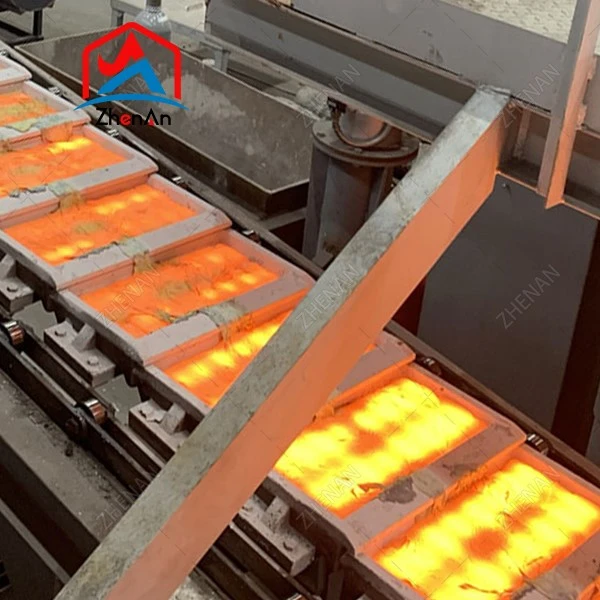
Why Is Ferrotitanium Added to Steel?
Ferrotitanium (FeTi) is a widely used ferroalloy composed primarily of iron (Fe) and titanium (Ti), typically containing 20%–75% titanium depending on grade. It is an essential steelmaking additive used to improve steel cleanliness, control nitrogen and oxygen levels, and enhance mechanical performance.
In modern metallurgy, ferrotitanium is primarily applied as a steel refining and stabilizing agent, especially in high-quality structural steels, stainless steels, and special alloy systems.
What Is Ferrotitanium?
Ferrotitanium is an iron–titanium alloy produced by combining titanium-bearing materials with iron under high-temperature metallurgical processes. It is commonly supplied in lump or crushed form for steelmaking applications.
| Property | Typical Range |
|---|---|
| Titanium Content | 20% – 75% |
| Iron Content | Balance |
| Melting Point | ~1250°C – 1450°C |
| Density | ~4.5 g/cm³ |
| Form | Lumps / crushed alloy |
Why Is Ferrotitanium Added to Steel?
Ferrotitanium plays multiple critical roles in steelmaking. Its primary function is not simply alloying, but controlling impurities and stabilizing the internal structure of steel during solidification and heat treatment.
1. Deoxidation (Oxygen Control)
Titanium has a strong affinity for oxygen. In molten steel, ferrotitanium reacts with dissolved oxygen to form stable titanium oxides, reducing oxygen content and improving steel cleanliness.
2. Denitrification (Nitrogen Control)
Titanium also reacts with nitrogen to form titanium nitrides (TiN), reducing free nitrogen in steel. This improves ductility, toughness, and reduces aging defects.
3. Inclusion Modification
Ferrotitanium modifies non-metallic inclusions in steel, transforming harmful oxides and sulfides into more stable and less damaging compounds, improving fatigue resistance.
4. Grain Refinement
Titanium compounds act as nucleation sites during solidification, refining grain structure and enhancing mechanical strength and toughness.
5. Stabilization of Carbon and Nitrogen
In stainless and alloy steels, titanium binds with carbon and nitrogen to form stable carbides and nitrides, preventing intergranular corrosion and improving high-temperature stability.
Ferrotitanium Role in Steel Chemistry System
| Element | Function in Steel |
|---|---|
| Titanium (Ti) | Deoxidation, denitrification, carbide formation |
| Carbon (C) | Strength control |
| Nitrogen (N) | Controlled by TiN formation |
| Oxygen (O) | Reduced via TiO₂ formation |
| Iron (Fe) | Carrier metal for titanium addition |
Industrial Applications of Ferrotitanium Steel
Stainless Steel Production
Ferrotitanium is used to stabilize carbon and prevent intergranular corrosion in stainless steel grades such as 321 stainless steel.
Structural Steel
In construction steels, it improves strength, weldability, and long-term durability under load conditions.
Automotive Steel
Used in high-strength automotive components requiring fatigue resistance and controlled formability.
Welding Electrodes and Special Alloys
Ferrotitanium is used in electrode coatings and alloy systems requiring controlled oxygen and nitrogen levels.
Ferrotitanium Grade Classification
| Grade | Ti Content | Application |
|---|---|---|
| FeTi 30 | ~30% | General steel refining |
| FeTi 40 | ~40% | Structural steel |
| FeTi 70 | ~70% | High-performance alloy steel |
Why Use Ferrotitanium Instead of Pure Titanium?
Pure titanium is difficult to handle in molten steel due to its high reactivity and cost. Ferrotitanium provides a controlled, cost-effective, and stable method for titanium addition with improved recovery efficiency.
Key Benefits of Ferrotitanium in Steelmaking
- Improves steel cleanliness and purity
- Reduces oxygen and nitrogen content
- Enhances toughness and fatigue resistance
- Prevents intergranular corrosion in stainless steel
- Refines grain structure for better mechanical performance
- Improves high-temperature stability
Ferrotitanium vs Similar Steelmaking Additives: Technical Comparison
In steel metallurgy, ferrotitanium is often compared with other ferroalloys and microalloying elements used for deoxidation, grain refinement, and inclusion control. Although these materials may appear similar in function, their chemical behavior, reaction mechanisms, and metallurgical roles are significantly different.
This section provides a specification-based comparison to support correct selection in steelmaking and alloy design.
1. Ferrotitanium vs Ferrosilicon
| Property | Ferrotitanium (FeTi) | Ferrosilicon (FeSi) |
|---|---|---|
| Main Element | Titanium (Ti) | Silicon (Si) |
| Main Function | Deoxidation + denitrification + grain refinement | Deoxidation + alloying |
| Reaction Behavior | Strong affinity with O and N | Mainly reacts with oxygen |
| Steel Impact | Improves cleanliness and toughness | Improves strength and deoxidation efficiency |
| Primary Role | Microalloying element | Base deoxidizer |
Conclusion: Ferrosilicon is a general deoxidizer, while ferrotitanium provides deeper purification through oxygen and nitrogen control.
2. Ferrotitanium vs Ferrovanadium
| Property | Ferrotitanium (FeTi) | Ferrovanadium (FeV) |
|---|---|---|
| Main Element | Titanium (Ti) | Vanadium (V) |
| Main Function | Impurity control + stabilization | Precipitation strengthening |
| Strengthening Mechanism | Grain refinement + TiN/TiC formation | VC/VN precipitation hardening |
| Application Focus | Clean steel and stainless steel | HSLA high-strength steel |
| Cost Level | Moderate | Higher |
Conclusion: Ferrotitanium improves steel cleanliness, while ferrovanadium primarily enhances mechanical strength in HSLA steels.
3. Ferrotitanium vs Ferrochromium
| Property | Ferrotitanium (FeTi) | Ferrochromium (FeCr) |
|---|---|---|
| Main Element | Titanium (Ti) | Chromium (Cr) |
| Main Function | Deoxidation + stabilization | Corrosion resistance + hardness |
| Steel Role | Refining additive | Alloying element for stainless steel |
| Primary Effect | Improves internal cleanliness | Improves surface corrosion resistance |
Conclusion: Ferrochromium defines corrosion resistance, while ferrotitanium ensures internal steel purity and stability.
4. Ferrotitanium vs Ferromanganese
| Property | Ferrotitanium (FeTi) | Ferromanganese (FeMn) |
|---|---|---|
| Main Element | Titanium (Ti) | Manganese (Mn) |
| Main Function | Deoxidation + nitrogen control | Deoxidation + desulfurization |
| Strengthening Type | Grain refinement + carbide formation | Solid solution strengthening |
| Steel Application | High-quality steels | General structural steels |
Conclusion: Ferromanganese is a general-purpose alloy, while ferrotitanium is used for higher-level steel cleanliness control.
5. Ferrotitanium vs Aluminum (Al) in Steelmaking
| Property | Ferrotitanium (FeTi) | Aluminum (Al) |
|---|---|---|
| Main Function | Deoxidation + stabilization | Strong deoxidizer + inclusion control |
| Byproducts | TiO₂, TiN, TiC | Al₂O₃ inclusions |
| Steel Impact | Improves toughness and cleanliness | Strong deoxidation but may form hard inclusions |
| Application | Controlled high-grade steels | General steel refining |
Conclusion: Aluminum provides strong deoxidation, while ferrotitanium offers more balanced impurity control and microstructural stability.
Selection Guide for Steelmaking Additives
| Steel Requirement | Recommended Material |
|---|---|
| High cleanliness + stainless steel stability | Ferrotitanium |
| High strength HSLA steel | Ferrovanadium |
| Cost-effective deoxidation | Ferrosilicon / Ferromanganese |
| Corrosion-resistant stainless steel | Ferrochromium |
| Basic steel refining | Ferromanganese |
Key Insight: The Role Position of Ferrotitanium in Modern Steelmaking
Ferrotitanium is not a primary strengthening alloy like vanadium or chromium. Instead, it plays a critical metallurgical role in controlling impurities, stabilizing nitrogen and oxygen, and refining grain structure. Its value lies in improving internal steel quality rather than simply increasing hardness or corrosion resistance.
FAQ About Ferrotitanium in Steel
Why is ferrotitanium added to steel?
It is added to control oxygen and nitrogen levels, refine grain structure, and improve steel cleanliness and mechanical properties.
What does titanium do in steel?
Titanium forms stable oxides, nitrides, and carbides that improve steel strength and stability.
Is ferrotitanium a deoxidizer?
Yes, it acts as a strong deoxidizer and denitrification agent in molten steel.
Which steels use ferrotitanium?
It is widely used in stainless steel, structural steel, automotive steel, and special alloy steels.
What is the difference between titanium and ferrotitanium?
Ferrotitanium is a ferroalloy that provides controlled and cost-effective titanium addition compared to pure titanium.
How does ferrotitanium improve steel strength?
It refines grain structure and forms stable compounds that strengthen the steel matrix.
What is the typical titanium content in ferrotitanium?
It usually ranges from 20% to 75% depending on grade.
Can ferrotitanium improve corrosion resistance?
Yes, especially in stainless steel, where titanium stabilizes carbon and prevents intergranular corrosion.
📧 Email: info@zaferroalloy.com
📱 WhatsApp: +86 15518824805
Third-party inspection available
ZhenAn Metallurgy & New Materials Certificates


