
Why Do Buyers Choose High Vanadium Ferro Alloys?
Leave a message

Why Do Buyers Choose High Vanadium Ferro Alloys?
The Role of Vanadium in Modern Steelmaking
Vanadium has earned its place among the most valued microalloying elements in steel production. Added in small but precisely controlled quantities, vanadium transforms the microstructure of steel in ways that directly translate to improved mechanical performance. For buyers evaluating ferroalloy options, understanding why higher vanadium grades matter helps inform purchasing decisions that affect both product quality and production economics.
When vanadium dissolves in molten steel and subsequently precipitates during solidification and cooling, it forms vanadium carbonitrides. These fine particles pin grain boundaries, preventing excessive grain growth during reheating and thermomechanical processing. The result is a finer, more uniform grain structure that simultaneously raises strength and preserves toughness-a combination difficult to achieve with many other alloying strategies.
Beyond grain refinement, vanadium contributes to precipitation strengthening. The carbonitride particles that form in the ferrite matrix during cooling create obstacles to dislocation movement, increasing yield strength without requiring major changes to the base composition or processing route.
Why High Vanadium Grades Make Sense
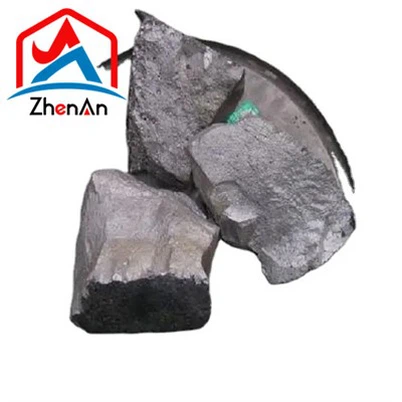
Not all ferro vanadium products carry the same vanadium concentration. FeV80, with its nominal vanadium content of approximately 80 percent, represents a more concentrated source than FeV50, which contains roughly 50 percent vanadium. Buyers choose higher grades for several practical reasons.
Reduced Alloy Mass per Heat. The most immediate advantage is logistical. To achieve a target vanadium addition, less FeV80 by weight is required compared to FeV50. This reduction matters in furnace operations where charge weight limits, bucket capacity or ladle addition constraints make every kilogram count. Less alloy mass also means fewer impurities introduced per unit of vanadium added, which can be relevant when producing steels with tight residual element specifications.
Precise Chemistry Control. High-concentration alloys simplify the arithmetic of charge calculation. Smaller additive quantities reduce the margin of error in weighing and charging, supporting tighter chemistry control in the final product. For grades where vanadium must fall within a narrow specification band, this precision is valuable.
Consistent Melting Behavior. Concentrated alloys can contribute to more predictable melting and dissolution characteristics in the bath, supporting repeatable process parameters from heat to heat. Consistency in the melt shop translates to consistency in the finished product.
Steel Products That Rely on High Vanadium Additions
The demand for high vanadium ferro alloys is driven by specific steel grades where vanadium's metallurgical contribution is essential rather than optional.
High-Speed Steels. These cutting tool materials depend on vanadium to form hard, wear-resistant carbides that maintain performance at the high temperatures generated during machining. High-speed steel specifications typically require vanadium levels that would be impractical to achieve economically with lower-grade ferro vanadium, making FeV80 the preferred addition agent.
Cold Work Tool Steels. Dies, punches and forming tools require a balance of hardness, wear resistance and toughness. Vanadium refines the carbide structure in these steels, distributing hard particles more evenly and preventing the large, brittle carbide networks that can initiate cracking under load.
High-Strength Low-Alloy Steels. Structural plate and strip grades used in construction, mining equipment and pressure vessels use vanadium to achieve strength targets while maintaining good weldability and formability. The fine grain structure promoted by vanadium allows these steels to meet demanding toughness specifications at low temperatures.
Automotive and Aerospace Alloy Steels. Critical components such as gears, shafts and fasteners benefit from vanadium's ability to improve fatigue resistance and strength-to-weight ratios. In these applications, material performance directly affects component life and safety margins.
How Vanadium Content Influences Grade Selection
The decision to specify FeV80 rather than a lower-grade ferro vanadium is not automatic. Buyers evaluate several factors when selecting the appropriate alloy grade for their operation.
Target Vanadium Level. Steels requiring substantial vanadium additions-typically tool steels and certain high-strength grades-naturally favor concentrated alloys. When the required vanadium addition exceeds a few tenths of a percent, the mass savings from FeV80 become significant.
Furnace Type and Practice. Induction furnaces with limited crucible capacity, or operations where alloy additions must fit within a specific charge window, may find FeV80 advantageous. Conversely, large EAF shops with ample furnace capacity and less constrained addition practices may be more flexible in their grade choice.
Residual Element Budget. Every alloying addition brings along trace elements present in the ferroalloy. Buyers working to tight limits on elements such as aluminum, silicon or certain trace impurities may prefer FeV80 because the smaller addition mass contributes fewer residuals per unit of vanadium.
Availability and Supply Security. For buyers with long-term supply agreements, the consistency of alloy quality across shipments matters as much as the nominal composition. Evaluating suppliers on their ability to deliver tested, certified material on schedule is an important part of the selection process.
Industries Driving Demand for Higher Grade Ferro Alloys
The end-use industries that specify vanadium-bearing steels shape the demand patterns for FeV80 and similar high-grade ferroalloys.
Metalworking and Cutting Tools. The global tooling industry consumes significant volumes of high-speed and cold work steels. As machining operations push for higher cutting speeds and longer tool life, the vanadium levels in these steels have trended upward, supporting demand for concentrated ferro vanadium.
Energy and Power Generation. Turbine components, drilling equipment and pipeline steels for oil and gas applications use vanadium-modified grades to withstand cyclic loading, corrosive environments and extreme temperatures.
Transportation Infrastructure. Railway systems specify vanadium-bearing rail grades for improved wear resistance and fatigue life. Heavy truck and off-road vehicle manufacturers use vanadium steels in axles, suspensions and drivetrain components where reliability under load is critical.
Construction and Heavy Equipment. High-strength structural sections and wear plates used in mining, earthmoving and material handling equipment rely on vanadium to achieve the hardness and toughness needed for abrasive service conditions.
Testing Protocols for High Grade Ferro Alloys
Buyers of FeV80 and similar high-grade ferroalloys rely on documented testing to confirm that received material meets order specifications. Standard practice includes:
Chemical Analysis. Vanadium content is verified using established analytical techniques. Test results are reported in certificates of analysis that accompany each shipment, providing the documentation needed for quality records and customer certification requirements.
Size and Form Verification. Alloy sizing is checked against order specifications to ensure that material will flow properly during automatic charging or manual addition. Oversized or undersized material can disrupt furnace operations and affect dissolution rates.
Packaging and Labeling Inspection. Proper lot identification, moisture protection and intact packaging are confirmed before acceptance. Traceability from test certificate to packaged lot is essential for quality systems that require documented chain of custody.
Some buyers arrange independent third-party inspection at the loading point or destination. This practice adds an additional layer of verification and is common for first-time orders or large contract shipments.
Key Factors in the Purchasing Decision
Experienced ferroalloy buyers weigh multiple factors beyond the quoted price per kilogram when selecting a FeV80 supplier.
Composition Consistency. Narrow variation in vanadium content and controlled impurity levels from lot to lot reduce the need for charge adjustment in the melt shop. Consistent alloy quality supports consistent steel quality.
Documentation and Certification. Complete certificates of analysis, packing lists and shipping documents streamline receiving and quality verification. Buyers should confirm what documentation is included as standard and what can be provided on request.
Logistics and Lead Time. Ferroalloy supply security affects melt shop scheduling. Buyers evaluate whether a supplier can meet delivery windows reliably, particularly for recurring orders that must align with production campaigns.
Technical Responsiveness. Questions about alloy behavior, handling recommendations or compatibility with specific steel grades arise regularly. Access to technical support from the supplier can prevent issues before they affect production.
Start with a Sample or Trial Order
Choosing a new ferroalloy supplier involves evaluating both product quality and supply reliability. Rather than committing to a large volume before validating material performance in your specific process, ZhenAn offers a low-risk entry path.
Request a sample or small trial shipment to:
- Verify alloy composition and sizing against your furnace requirements
- Observe dissolution behavior and melting characteristics in your actual melt practice
- Confirm packaging and handling suit your receiving and storage setup
- Evaluate documentation and delivery timing before scaling to production volumes
For sample or trial order inquiries, please share:
- Your company name and steel product focus
- Target steel grade or vanadium addition level
- Preferred alloy form (lump / briquette) and approximate sizing
- Sample quantity or trial shipment volume you have in mind
- Your destination for shipping cost estimation

Contact ZhenAn to arrange your sample or trial order:
WhatsApp: +86 15518824805
Email: info@zaferroalloy.com
A trial shipment lets you validate FeV80 performance in your own melt shop before transitioning to regular production orders. Our team will recommend an appropriate trial quantity based on your furnace size and testing objectives.