

China Ferrosilicon Export Prices On May 28, 2026: FeSi 72 And FeSi 75 FOB Tianjin Stable
Leave a message

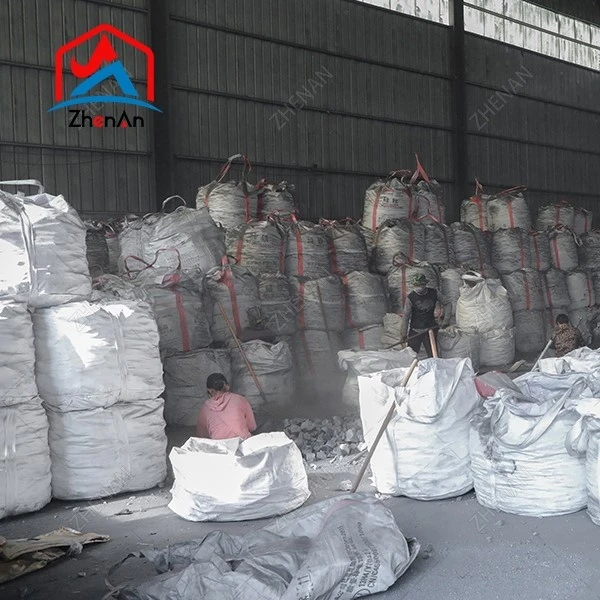
China ferrosilicon export prices remained stable on May 28, 2026.
Ferrosilicon 72% (FeSi 72): export offers were approximately US$1,150–1,170 per tonne FOB Tianjin Port, with no significant market fluctuation reported.
Ferrosilicon 75% (FeSi 75): export offers were approximately US$1,200–1,220 per tonne FOB Tianjin Port, and prices remained stable compared with the previous trading period.
| China's export price of ferrosilicon on May 28 | ||||
| Unit: US dollars/ton | ||||
| product | Brand | Quotation | rise and fall | Remark |
| Ferrosilicon | 72 | 1150-1170 | -- | FOB Tianjin Port |
| Ferrosilicon | 75 | 1200-1220 | -- | FOB Tianjin Port |
What factors are currently supporting the stability of FeSi 72 and FeSi 75 FOB Tianjin export prices in late May 2026?
Several synchronized factors are supporting price stability:
Balanced supply-demand in China: Ferrosilicon producers are operating at moderate utilization rates, avoiding oversupply pressure.
Stable silicon and coke costs: Key inputs (industrial silicon, petroleum coke, electricity) have not shown sharp volatility recently.
Export order smoothing: FOB Tianjin shipments are supported by steady baseline inquiries from Southeast Asia, Middle East, and Europe.
Limited speculative activity: Traders are not aggressively stockpiling due to stable downstream steel demand expectations.
Producer price discipline: Large Chinese mills tend to maintain offer stability to avoid triggering competitive undercutting.
Why are China's ferrosilicon export prices remaining stable in late May 2026?
The stability is mainly driven by macro + industrial equilibrium:
Steel sector operating rate stability: Global steel production is neither expanding rapidly nor contracting sharply.
Weak but steady demand recovery: Post-seasonal demand is flat but not declining.
Energy cost control in China: Electricity pricing in major production hubs (Inner Mongolia, Ningxia, Gansu) remains controlled.
Export parity pricing logic: FOB Tianjin prices are anchored by domestic ex-works costs plus logistics margins.
Currency stability (USD/CNY): Limited FX volatility reduces export pricing pressure.
What factors influence FOB Tianjin pricing for FeSi 72 and FeSi 75 grades?
FOB Tianjin pricing is determined by a combination of:
1. Production cost base
Quartz (SiO₂)
Coke / anthracite
Electricity (largest cost component)
Labor and furnace depreciation
2. Grade-specific silicon content
Higher Si content (FeSi 75) requires slightly higher energy input and tighter control
3. Domestic market parity
Export price must align with domestic steel mill purchase levels
4. Logistics and port costs
Inland freight to Tianjin port
Handling and storage fees
5. International demand signals
Steel production cycles in Asia, Europe, and Middle East
How does demand from steel and foundry industries affect ferrosilicon export prices?
Ferrosilicon demand is strongly downstream-driven:
Steel industry (primary driver)
Used as deoxidizer in steelmaking
Demand rises when:
Steel production increases
Infrastructure spending rises
Demand falls during:
Construction slowdown
High inventory cycles
Foundry industry
Used for cast iron inoculation
Demand is more stable but sensitive to:
Automotive production
Machinery output
Key transmission effect
Steel demand → ferrosilicon consumption → raw material procurement → FOB export price stability or fluctuation
What is the difference between FeSi 72 and FeSi 75 in terms of silicon content and application?
FeSi 72
Silicon content: ~72%
Lower grade, more cost-efficient
Common uses:
General steel deoxidation
Basic cast iron production
Preferred when cost sensitivity is high
FeSi 75
Silicon content: ~75%
Higher purity and efficiency
Advantages:
Better deoxidation efficiency
Lower consumption per ton of steel
Common uses:
High-grade steel
Precision casting
Export quality steel production
Key difference
FeSi 75 is more efficient per unit but slightly more expensive; FeSi 72 is cost-optimized.
How do raw material costs impact ferrosilicon pricing trends in China?
Raw materials directly determine cost floor:
Electricity: 35–50% of total cost → most influential factor
Quartz (silica source): affects silicon yield efficiency
Carbon materials (coke, anthracite): reduction agent cost
Transport fuel costs: affect inland logistics
Price transmission logic:
Raw material increase → production cost rise → mill offer price increases → FOB export prices adjust upward with delay
Current stability implication:
Stable energy and coke prices = stable ferrosilicon FOB prices
Are global steel production trends affecting China's ferrosilicon export market stability?
Yes, but currently in a neutral stabilization phase:
China steel output: stable, not expanding aggressively
EU steel: slow recovery, no strong upward demand shock
US steel: steady but policy-driven fluctuations
India & Southeast Asia: moderate growth, supporting baseline demand
Result:
No major global demand shock → ferrosilicon prices remain range-bound
What should buyers consider when sourcing FeSi 72 and FeSi 75 from China under FOB terms?
Key procurement considerations:
1. Specification clarity
Silicon content (72% vs 75%)
Size grading (10–50 mm, 50–100 mm, etc.)
Impurity limits (Al, C, S, P)
2. FOB Tianjin structure
Price includes loading at port only
Buyer bears:
Ocean freight
Insurance
Destination clearance
3. Supplier reliability
Furnace type (submerged arc furnace preferred)
Production consistency
Export experience
4. Shipment timing risk
Port congestion or seasonal shipping delays
5. Price validity
FOB offers often valid 3–7 days due to energy-sensitive market
6. Market timing strategy
Buy during stable energy cost windows
Avoid peak construction season demand spikes
Visit https://www.ferro-silicon-alloy.com/ to learn more about the product. If you would like to learn more about the product price or are interested in purchasing, please email info@zaferroalloy.com. We will get back to you as soon as we see your message.


