
What Is Ferro Vanadium and Why Is It Added to Steel?
Leave a message

What Is Ferro Vanadium and Why Is It Added to Steel?
Steel has been the backbone of industrial construction, transportation, and machinery for well over a century. Yet the steels used in a modern bridge, a high-pressure pipeline, or a high-speed rail are not the same as the plain carbon steels of the past. One of the elements that has made this evolution possible is vanadium, and the material through which it enters most steel melts is ferro vanadium.
This article explains what ferro vanadium is, how it is produced, and the metallurgical reasons steelmakers add it to their heats. It is written for technical staff and procurement professionals who need to understand the material they are buying, not just the price per kilogram.
What Is Ferro Vanadium?
Ferro vanadium is a master alloy-an alloy of iron and vanadium manufactured specifically for use as a raw material in steelmaking. Its purpose is to introduce vanadium into liquid steel in a controlled, predictable way.
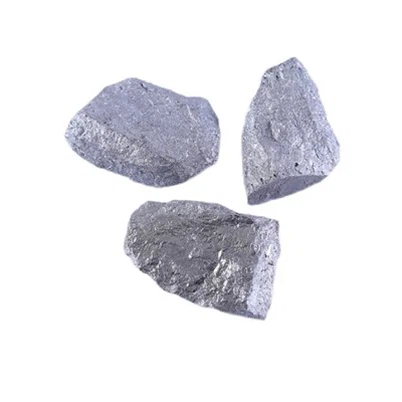
In nature, vanadium is not found in metallic form. It occurs in minerals and is extracted and reduced to metal, then combined with iron to produce a product that is dense, handleable, and compatible with steelmaking temperatures. The result is a hard, silver-gray material that is typically supplied in lumps or briquettes and added to the ladle or electric arc furnace during the refining stage.
The vanadium content in commercially available ferro vanadium falls into two principal bands:
- FeV50, with a nominal vanadium content of approximately 50 percent by weight
- FeV80, with a nominal vanadium content of approximately 80 percent by weight
These designations are industry-standard labels. The actual vanadium percentage in any given batch is determined by the production process and is reported on the certificate of analysis that accompanies the shipment. Buyers should treat the "50" and "80" figures as nominal reference points rather than exact guarantees, and should always request the lot-specific assay before finalizing a purchase decision.
Because ferro vanadium is used as a deliberate alloying addition rather than a bulk charge material, the quantities involved are relatively modest compared with the main ferroalloys such as ferro silicon or ferro manganese. A typical vanadium addition to structural steel might range from roughly 0.05 to 0.15 percent of the steel mass, depending on the target grade. That small addition, however, has a disproportionately large effect on the steel's final properties.
Why Is Vanadium Added to Steel?
Vanadium is added to steel because it forms stable carbides and nitrides that modify the microstructure during solidification and subsequent thermomechanical processing. These modifications translate directly into improved mechanical properties that are difficult or impossible to achieve with carbon and manganese alone.
The two primary metallurgical mechanisms are:
1. Grain refinement. During hot rolling or forging, vanadium in solution suppresses austenite grain growth. When the steel cools, the prior austenite grains are smaller, and the resulting ferrite grains are finer. A finer grain structure increases both yield strength and toughness, which is why vanadium-microalloyed steels can achieve higher strength grades without becoming brittle.
2. Precipitation strengthening. Vanadium that remains in solution at high temperature precipitates as vanadium carbonitride (V(C,N)) during controlled cooling after rolling. These extremely fine precipitates-measured in nanometres-act as obstacles to dislocation movement, raising the yield strength of the steel. Because the particles are so small and uniformly dispersed, they strengthen the material without the severe loss of ductility associated with larger carbide networks.
In practical terms, this means a steel producer can hit a higher strength specification while using less carbon. Lower carbon content, in turn, improves weldability and reduces the risk of cold cracking in welded structures-a combination that has made vanadium-microalloyed steels the default choice for welded construction, pipelines, and automotive chassis components.
What Role Does Vanadium Play in Alloy Steel?
Beyond plain structural grades, vanadium has an established role in several families of alloy steel where its contribution is tailored to the service demands of the finished component.
High-Strength Low-Alloy (HSLA) Steels
HSLA grades are designed to deliver strength levels of 355 MPa and above in the as-rolled condition, without requiring costly heat treatment. Vanadium is one of the principal micro-alloying elements-alongside niobium and titanium-that makes this possible. In HSLA plate and strip, vanadium allows producers to meet thickness-reduction targets while maintaining structural performance, which is why automakers and shipbuilders specify these grades.
Tool and Die Steels
In high-speed steels and cold-work tool steels, vanadium is added at higher levels-sometimes exceeding 1 percent or more of the steel composition-to form hard vanadium carbides. These carbides confer wear resistance and help the cutting edge retain hardness at elevated temperatures during machining operations. In this context, ferro vanadium is the standard addition vehicle, though the total vanadium requirement is higher than in structural applications.
Heat-Resistant and Creep-Resistant Steels
Certain power-generation and petrochemical applications require steels that resist deformation under sustained load at elevated temperature. Vanadium contributes to creep resistance through its effect on sub-grain structure and precipitate stability, making it a specified addition in some boiler tubing and pressure-vessel grades.
In each of these alloy families, the vanadium addition level, the processing route (thermomechanical control processing versus normalizing versus quenching and tempering), and the interaction with other alloying elements determine the final result. There is no universal "best" vanadium level; the right specification depends on the steel grade, the product form, and the property targets the producer is trying to meet.
Which Steel Products Use Vanadium?
Vanadium additions are found in a broad cross-section of steel products that are subject to strength, fatigue, or wear requirements. The following categories represent the largest volume applications:
Reinforcing bar (rebar). Seismic-grade and high-strength rebar used in reinforced concrete construction relies on vanadium micro-alloying to achieve yield strengths of 500 MPa and higher while maintaining the bendability required for on-site forming. The ability to produce these grades through controlled rolling rather than quenching and self-tempering simplifies mill practice and reduces energy use.
Linepipe plate. Oil and gas transmission pipelines operate under high internal pressure and, in arctic or offshore environments, must resist brittle fracture at low temperature. Vanadium contributes to the strength-toughness balance required for grades such as X70 and X80, often in combination with niobium and titanium.
Automotive structural components. Body-in-white and chassis parts benefit from HSLA grades that use vanadium to achieve weight reduction through down-gauging. Thinner, stronger sheet reduces vehicle mass without compromising crash performance.
Railway rails. Heavy-haul and high-speed rail systems subject rails to rolling contact fatigue and plastic deformation. Vanadium-alloyed rail steels offer improved wear resistance and longer service life compared with plain carbon rail grades.
Wear-resistant plate. Mining equipment, dump truck bodies, and material-handling systems use hardfacing and through-hardened plate grades that leverage vanadium carbide formation for abrasion resistance.
The common thread across all of these products is that vanadium enables property improvements that justify the additional raw-material cost. For procurement professionals, understanding which product category you are supplying helps frame the conversation about grade selection, specification limits, and acceptable substitution.
How Is Ferro Vanadium Produced?
Ferro vanadium production follows a broadly consistent route, though specific technology and raw-material sources vary by producer.
The starting point is vanadium-bearing material. This may be vanadium pentoxide (V₂O₅), which is produced from vanadium-rich slag generated during the smelting of vanadium-bearing iron ore, or from vanadium extracted from oil residues and spent catalysts. The vanadium compound is reduced in the presence of iron, typically in an electric arc furnace or aluminothermic reactor, to produce a ferro vanadium alloy.
The reduction process is highly exothermic and must be carefully controlled to achieve the target vanadium content and to limit impurities. After the reaction, the molten alloy is cast into molds and allowed to cool and solidify. The solidified product is then crushed and screened to the size fractions required by steelmaking customers.
Quality control involves sampling and chemical analysis of each production batch. The resulting certificate of analysis documents the vanadium content and the measured levels of residual elements such as carbon, silicon, sulfur, phosphorus, and aluminum. Because ferro vanadium is an addition agent rather than a bulk charge, the consistency of its chemistry from batch to batch is critical: variations in vanadium content affect the addition mass required per heat, and elevated impurity levels can push the finished steel outside specification.
Buyers should verify that their supplier provides lot-specific certificates and maintains traceability from raw material through crushing and screening. At ZhenAn, we coordinate with production facilities that follow these standard quality practices and provide documentation in English for export orders.
What Factors Affect Ferro Vanadium Selection?
Choosing between FeV50 and FeV80-or deciding whether ferro vanadium is the right addition vehicle at all-requires matching the material to the steel grade, the melt shop, and the commercial constraints of the order.
Target vanadium level in the finished steel. Low-alloy structural grades that require vanadium additions in the range of 0.05 to 0.10 percent are usually satisfied with FeV50. Grades that demand higher vanadium, or melt shops that prefer to minimize the total ferroalloy mass charged, may favor FeV80.
Furnace or ladle capacity. FeV80 contains more vanadium per kilogram, so the physical volume and mass of alloy added to a heat are lower. In operations where furnace space or ladle mixing time is constrained, the smaller addition mass of FeV80 can be an operational advantage.
Residual element limits. The iron and impurity balance differs between FeV50 and FeV80. If the steel grade has tight limits on carbon, silicon, or phosphorus, the grade with the lower residual contribution per unit of vanadium added may be preferred. Exact impurity levels vary by production lot, so buyers should compare certificates rather than relying on nominal grade averages.
Price and availability. Ferro vanadium pricing tracks the vanadium market, but freight, packing, and lot size also affect the landed cost. FeV80's higher vanadium density means fewer tonnes to ship for the same vanadium content, which can reduce per-tonne freight cost on long-haul routes. Conversely, FeV50 may be more readily available in certain markets. The optimal choice shifts with market conditions and should be evaluated on a per-order basis.
Compatibility with other ferroalloys. Vanadium is rarely the only micro-alloying addition. Niobium and titanium are often used in combination with vanadium, and the total alloy package must be compatible with the steel composition window. Understanding how vanadium interacts with the other additions in your melt recipe is essential for avoiding unintended effects on weldability or heat-affected-zone toughness.
Match Your Steel Application to the Right Ferro Vanadium Grade
Every steel grade has different vanadium requirements, and the best way to select the right ferro vanadium product is to start with the steel you are producing rather than the alloy you are buying. By describing your application-whether it is rebar, linepipe, automotive sheet, tool steel, or rail-you allow the supplier to recommend a grade, composition, and size specification that aligns with your melt practice and property targets.
Tell us about your steel product, and we will advise on vanadium addition:
1. Steel grade or product type – rebar, HSLA plate, linepipe, tool steel, rail, or other 2. Target mechanical properties – yield strength, toughness, or wear-resistance requirements 3. Current melt route – EAF, BOF, or induction furnace; ladle addition or furnace addition 4. Other micro-alloying additions used – niobium, titanium, or vanadium-only 5. Processing route – controlled rolling, normalizing, quench and temper, or as-rolled 6. Annual or per-order volume – to confirm lot size and packing configuration
Contact ZhenAn directly:
- WhatsApp: +86 15518824805
- Email: info@zaferroalloy.com
Our technical team reviews application inquiries to recommend the appropriate ferro vanadium grade and addition practice for your specific steel product. Whether you are qualifying a new supplier or optimizing an existing alloy program, we can provide grade comparisons, sample material for mill trials, and documentation to support your quality system.