

Turning molybdenum rod
Leave a message
After surface treatment of the turned molybdenum rod, the surface shows a metallic luster, but is relatively rough. Compared with ground molybdenum rods and polished molybdenum rods, the surface of ground molybdenum rods is smoother.
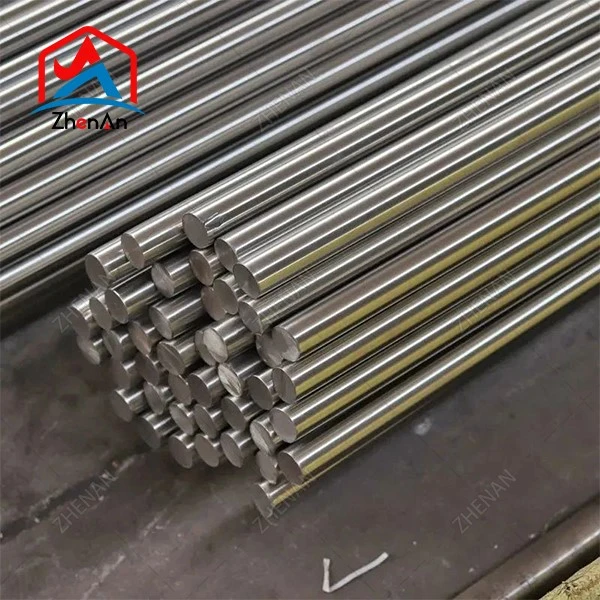
Commonly molybdenum rod specification:
| Diameter(mm) | Length(mm) |
| Ø 0.3~10 | 2500 |
| Ø 10~30 | 2000 |
| Ø 30~60 | 1500 |
| Ø 60~100 | 1000 |
| Ø 100~200 | 600 |

Molybdenum rod impurities(≤%):
| Grade | Fe | Mo2 | MoTi0.5 |
| Mo1 | 0.001 | 0.015 | 0.010 |
| Ni | 0.005 | 0.005 | 0.005 |
| Al | 0.002 | 0.005 | 0.002 |
| Si | 0.010 | 0.010 | 0.010 |
| Ca | 0.002 | 0.004 | 0.004 |
| Mg | 0.002 | 0.005 | 0.002 |
| C | 0.010 | 0.020 | 0.01~0.04 |
| O | 0.008 | 0.020 | 0.008 |
| N | 0.003 | 0.008 | 0.001 |
| Ti | - | - | 0.4~0.6 |

The ground is generally divided into grinding and grinding wheel polishing. Grinding can be vibration grinding or wind turbine grinding. Grinding wheel polishing usually uses a cloth roller or linen roller to apply polishing paste for polishing.

Turning molybdenum rods generally uses engraving machines or CNC turning high-gloss surfaces to achieve a high-gloss effect. In addition, this process is usually done to process dimensional requirements.

If you have any questions about molybdenum, please feel free to contact us via email: info@zaferroalloy.com or phone: +8615896822096.


