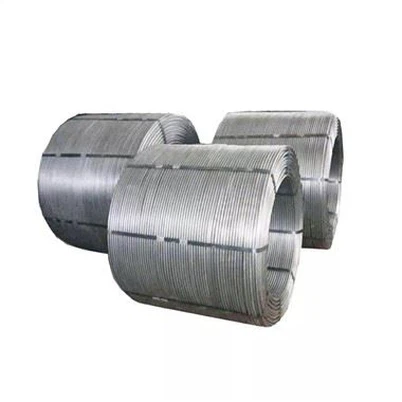

Slag-Free Smelting of Silicon Metal 98: Charge Design, Reductants and Grade Control
Leave a message
What a Slag-Free Process Means for Silicon Metal 98
Silicon metal 98 covers smelting grades whose silicon content sits at or just below 99 percent, with iron, aluminium and calcium held to tight ceilings. A slag-free process is a charge-design discipline rather than a single additive: the furnace is fed so that impurities either enter the metal or leave with the off-gas, so that little or no liquid slag has to be tapped, cooled and disposed of. The practical gains are higher silicon recovery, lower specific power consumption and a burden that is easier to keep stable.
Silica intended for chemical-grade smelting therefore has to be selected with unusual care. Producers look for high silicon dioxide content, low and consistent impurity levels, adequate mechanical strength, sufficient thermal stability, and a particle size distribution that keeps the furnace charge permeable to gas.
Quartz and Silica Sources: Purity, Strength and Size
Natural silicon dioxide occurs as standalone quartz mineral, as rock quartz, or as sandstone in which silica grains are cemented together. Whichever source is chosen, the material must survive thermal shock at the top of the furnace without crumbling into fines. Fines block gas flow and force the operator to raise electrode positions, which wastes energy and destabilises the reaction zone.
High silicon dioxide content, with iron, aluminium and calcium kept as low as the deposit allows.
High mechanical strength so the charge resists handling and thermal shock.
Sufficient thermal stability so the burden does not fracture into dust at high temperature.
A controlled particle size mix that balances reactive surface area against gas permeability.
Consistent chemistry from lot to lot, because the furnace is tuned to one charge recipe.
Impurities in the silica follow different paths through the furnace. Some are completely reduced during smelting, some report to the metal as compounds, and some generate slag. That is exactly why a slag-free route demands a raw material carrying as little slag-forming material as possible: every gram of alumina or calcium oxide entering the charge must either be removed from the metal or accumulate as slag, and neither outcome is free.
Carbon Reductants: Fixed Carbon, Ash and Volatiles
The main reducing agents used for chemical silicon smelting are petroleum coke, pitch charcoal and charcoal. To raise the resistivity of the charge and improve its chemical activity, producers also blend coal coke, semi-coke, low-temperature coke, blue charcoal and wood chips. The carbonaceous material is specified above all on fixed carbon, ash, volatile components and moisture.
| Reductant property | Preferred direction | Effect on a slag-free charge |
|---|---|---|
| Fixed carbon | High | Less total reductant needed per tonne of silicon |
| Ash | Low | Fewer impurities entering the charge and less slag formed |
| Volatile components | Moderate and consistent | Predictable carbon reactivity and stable furnace operation |
| Moisture | Low and steady | Stable charge resistance and stable power input |
| Resistivity | High | Better electrical behaviour and deeper electrode immersion |
| Porosity | High | Greater reaction surface and higher silicon recovery |
High fixed carbon means a smaller mass of reductant is required, which directly reduces the impurity load carried in with the carbon. High resistivity and high porosity raise the resistance of the charge as a whole, and because charge resistance depends mainly on the carbonaceous component, the reductant choice governs how deep the electrodes can sit and how large the reaction zone becomes. A porous, chemically active carbon gives a higher yield of silicon for the same power input.
Low ash is what makes a slag-free campaign possible, because ash is the main carrier of slag-forming oxides into the furnace. High volatile matter has the opposite effect to high fixed carbon: the carbon content is diluted by gas that is released above the reaction zone without performing reduction work, so the reductant is consumed less efficiently and more of it is needed for the same silicon output.
Grade Control: Composition of Silicon Metal 98 and Related Grades
Silicon metal is graded by silicon content and by the maximum permissible iron, aluminium and calcium, following the national silicon metal specification GB/T 2881. The table below lists the grades most frequently traded, including the 98 percent silicon metal group represented by grade 553.
| Grade | Si (%, min) | Fe (%, max) | Al (%, max) | Ca (%, max) |
|---|---|---|---|---|
| Silicon Metal 1101 | 99.79 | 0.1 | 0.1 | 0.01 |
| Silicon Metal 2202 | 99.58 | 0.2 | 0.2 | 0.02 |
| Silicon Metal 3303 | 99.37 | 0.3 | 0.3 | 0.03 |
| Silicon Metal 411 | 99.4 | 0.4 | 0.1 | 0.1 |
| Silicon Metal 421 | 99.3 | 0.4 | 0.2 | 0.1 |
| Silicon Metal 441 | 99.1 | 0.4 | 0.4 | 0.1 |
| Silicon Metal 551 | 98.9 | 0.5 | 0.5 | 0.1 |
| Silicon Metal 553 | 98.7 | 0.5 | 0.5 | 0.3 |
The grade code is shorthand for the impurity ceilings. Grade 553 allows iron and aluminium up to 0.5 percent each and calcium up to 0.3 percent, leaving silicon at 98.7 percent or better, which is why it is the workhorse of the 98 percent silicon metal family. Grade 441 accepts the same iron level but holds aluminium and calcium lower, and the 2202 and 3303 grades tighten every limit at once for duty where conductivity or downstream chemistry is sensitive.
Additional compositions and particle size ranges can be produced to order, but the slag-free logic does not change: the cleaner the charge, the easier it is to hold a tight grade without resorting to extra refining or slag treatment.
Smelting Practice: Resistivity, Reactivity and Silicon Recovery
In a slag-free campaign the operator manages three linked variables. Charge resistivity sets how the electrical energy is distributed in the furnace. Carbon reactivity sets how quickly silica is reduced and how much silicon leaves in the off-gas as dust. Burden permeability sets whether gas can escape evenly or channels through the charge and wastes heat.
Because all three are controlled through the silica and the reductant rather than through additions, quality control begins at the mine and the coke yard. A stable ore source and a consistent reductant blend deliver a stable furnace, and a stable furnace is what allows silicon recovery to stay high while the tap analysis holds within one grade band.
Frequently Asked Questions
Q: What is metal silicon 98?
It is the family of smelting-grade silicon metal with silicon content at or just below 99 percent, represented by grades such as 553, in which iron and aluminium are capped at 0.5 percent each and calcium at 0.3 percent.
Q: Why is a slag-free process preferred for silicon metal 98?
It keeps more silicon in the metal and less in the slag, lowers specific power consumption, cuts the cost of handling and disposing of slag, and gives a more stable furnace burden.
Q: Which raw materials are required for chemical silicon smelting?
A silica source with high silicon dioxide content and low impurities and a carbonaceous reductant such as petroleum coke, pitch charcoal or charcoal, often blended with other cokes and wood chips.
Q: How does the reductant affect silicon recovery?
High fixed carbon reduces the mass of reductant needed, while high resistivity and porosity deepen electrode immersion and enlarge the reaction zone, both of which raise silicon recovery.
Q: Why is ash content important in the carbon reductant?
Ash carries slag-forming oxides into the furnace. Low ash means less slag, fewer impurities in the metal and a burden that stays closer to slag-free operation.
Q: Which standard defines the silicon metal grades?
The grades are set out in the national silicon metal specification GB/T 2881, which fixes the minimum silicon content and the maximum iron, aluminium and calcium for each grade code.