Calcium Silicon Cored Wire: Grades, Sizes and Purchase Notes
Leave a message
What Silicon Calcium Cored Wire Is
Silicon calcium cored wire, also written as calcium silicon cored wire, is a composite product used in secondary steelmaking. A thin low-carbon steel strip is formed into a tube and filled with crushed calcium silicon alloy powder, then rolled closed so that the powder stays inside a continuous, flexible wire. The wire is uncoiled by a cored-wire feeder and injected through a guide tube below the surface of molten steel in the ladle, where the sheath melts and releases the calcium and silicon where they can act efficiently.
The product exists because calcium silicon alloy in lump form is almost impossible to add effectively to a ladle of steel: calcium has a boiling point of 1484 degrees Celsius, far below steelmaking temperature, so a lump thrown onto the bath surface vaporises and escapes before it can react. Sealing the crushed alloy inside a steel tube and injecting it deep into the bath converts a wasteful addition into a controllable one, because the wire delivers the reactive elements under the ferrostatic pressure of the liquid steel.
Because of this, the product is bought on two levels at the same time: the chemistry of the filler alloy, which determines the metallurgical result, and the physical construction of the wire, which determines whether the feeder can deliver the powder into the steel at the right depth and rate. A quotation that only names a calcium percentage describes half of the product.
Core Material: Calcium Silicon Grades and Typical Chemistry
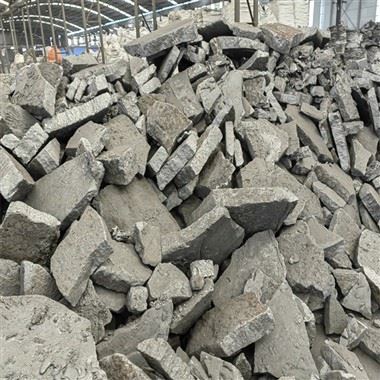
The filler is calcium silicon alloy, usually designated by its calcium and silicon content, for example Ca30Si60 or Ca28Si60. The alloy is produced in an electric reduction furnace from lime, silica and a carbon reductant, which is why its cost is dominated by electricity, lime quality and reductant prices. Table 1 sets out the indicative ranges normally quoted in trade; the contractual values are those on the mill certificate and in the applicable standard for calcium silicon alloy.
| Designation | Calcium | Silicon | Carbon and aluminium | Typical use |
|---|---|---|---|---|
| Ca30Si60 | about 28-32% Ca | about 55-62% Si | carbon roughly 1.0% max, aluminium roughly 1.5% max | inclusion modification, deoxidation in aluminium-killed steels |
| Ca28Si60 | about 26-30% Ca | about 55-62% Si | as above or slightly wider | general ladle treatment and desulphurisation support |
| Lower-calcium grades | below about 26% Ca | about 55-65% Si | depends on the ore and reductant used | deoxidation and slag conditioning where less calcium is required |
| Silicon calcium barium inoculant | a few percent calcium | main component with barium addition | controlled to suit the foundry specification | graphite inoculation of cast iron |
For cored wire the filler is crushed and screened, commonly to a fine powder size band agreed with the wire maker, because coarse particles bridge in the forming section and create voids while excessively fine material carries dust away with the air. Particle size of ferroalloy products is normally controlled against GB/T 13247, and the same logic applies to the core material. Moisture in the filler matters as much as chemistry: calcium silicon reacts with water and moist air, so a damp core not only loses calcium value but can generate gas inside a sealed wire.
Wire Construction Parameters
The wire itself is a manufactured article with its own specification. Diameter, sheath thickness, core-to-sheath ratio and linear weight together decide how many kilograms of calcium can be injected per minute and how deep the wire penetrates before it melts. Table 2 gives ranges that are commonly supplied; the exact values depend on the wire drawing and forming line and on the buyer's feeder and guide-tube configuration.
| Parameter | Commonly supplied range | Why it matters |
|---|---|---|
| Outside diameter | about 9 mm to 13 mm | must suit the feeder rollers and the guide tube bore; larger wire carries more powder per metre |
| Sheath steel strip thickness | about 0.35 mm to 0.50 mm | thinner strip reduces cost but risks splitting during forming and injection |
| Core fill ratio | roughly 40% to 55% of total mass | controls the delivered calcium per metre and the economics of the treatment |
| Linear weight | roughly 150 g/m to 280 g/m depending on diameter and fill | used to convert metres consumed into kilograms of alloy added |
| Coil weight and core diameter | coils of about 500 kg to 1500 kg, wound to fit the feeder mandrel | affects handling, coil changes and the risk of wire tangling during feeding |
| Sheath steel grade | low-carbon steel strip, often with a specified maximum carbon and sulphur | the sheath dissolves into the steel, so its chemistry becomes part of the melt balance |
Because the sheath contributes to the addition, its mass must be included in the treatment calculation rather than treated as packaging. A wire with a high fill ratio delivers more calcium per metre and less steel sheath per metre, which is usually desirable, but it is also more prone to powder loss during forming if the strip gauge is too thin for the drawing line.
Why Calcium Is Injected: Metallurgical Function
Calcium performs three related jobs in a steel ladle. First, it deoxidises and combines with remaining oxygen and with sulphur, helping to lower dissolved oxygen and to support desulphurisation when the slag is correctly conditioned. Second, it modifies solid alumina inclusions that would otherwise clog the casting nozzle, converting them into calcium aluminate phases that are liquid at steelmaking temperatures, so they stay small, remain deformable and do not build up in the tundish nozzle. Third, it controls the shape of the sulphide inclusions that form during solidification, replacing long brittle manganese sulphide stringers with compact globular inclusions that improve transverse ductility and low-temperature toughness.
The efficiency of the treatment depends on getting calcium into the steel rather than into the atmosphere. Recovery is therefore governed by injection depth, wire feed rate, bath stirring, the amount of oxygen still present and the sequence of additions relative to aluminium and slag work. Feeding too early, before the bath has been deoxidised, burns calcium on residual oxygen; feeding too slowly or too shallowly allows vapour to escape at the surface. In practice, most shops inject the wire into a well-stirred bath with argon or inductive stirring, then allow a short holding period so that the modified inclusions can float out before casting.
Feeding Practice and Consumption
A cored-wire treatment is documented as a set of parameters rather than a single addition figure. The usual record includes wire diameter, core composition, feed rate in metres per minute, total metres consumed, the corresponding kilograms of alloy, the heat weight in tonnes, and the resulting calcium content in the finished steel. From these figures the shop calculates calcium recovery and the cost of the treatment per tonne of steel.
Practical points that determine whether the treatment works:
Injection depth below the meniscus, so that the vapour bubble forms inside the bath and is condensed by the surrounding steel.
Feed rate matched to wire diameter and sheath thickness, so the wire reaches depth before the sheath melts away.
Guide tube condition and alignment, because a damaged tube causes wire buckling and inconsistent delivery.
Sulphur and oxygen levels before treatment, since high oxygen consumes calcium that was intended for inclusion modification.
Holding time and stirring after injection, so that liquid calcium aluminates can grow and float out.
Calcium and sulphur balance in the final product, checked against the agreed target window.
Consumption itself is not a fixed number. It scales with the sulphur load, the oxygen content and the inclusion population of each heat, so a shop that changes its aluminium practice or its slag regime will usually change its wire consumption even when the steel grade is unchanged.
What Drives the Export Price of Silicon Calcium Cored Wire
The price of cored wire is the sum of four cost blocks, and offers diverge mainly because the blocks are weighted differently rather than because one seller has a secret advantage. The first block is the calcium silicon alloy itself: its cost rises with calcium content, with the purity of the lime and the quality of the reductant, and above all with electricity prices in the producing region, since the reduction furnace is a large power consumer. The second block is the steel strip used for the sheath, whose cost tracks the general market for low-carbon cold-rolled or formed strip; a heavier sheath increases the mass of steel shipped and therefore the cost per metre. The third block is processing: slitting, forming, filling, sealing, winding, and the measurement and scrap losses incurred on the line. The fourth block is logistics and compliance, including inland transport, port handling, ocean freight, and any third-party inspection the buyer requires.
Other variables that buyers should factor into a comparison:
Calcium content and form of the core, because a higher calcium grade increases both the value delivered and the cost per tonne of wire.
Wire diameter, sheath thickness and fill ratio, which together determine delivered calcium per metre.
Core particle size and moisture, because caked or damp filler causes feed problems and gas defects.
Sheath chemistry, since the strip becomes part of the steel being treated.
Coil weight, winding pattern and spool dimensions, which affect handling and line downtime.
Packaging and moisture protection, including inner wrapping and palletising for sea transport.
Exchange rates, import duties at destination, and the payment instrument and credit terms.
Freight mode and season, since both flexible and container routes for coiled wire carry very different costs.
An offer that looks cheapest per tonne of wire is not necessarily the cheapest treatment. A wire with a low fill ratio and a heavy sheath can deliver noticeably less calcium per metre, so the meaningful comparison is cost per kilogram of calcium actually delivered into the bath, adjusted for observed recovery.
Quotation Bases and How to Compare Offers
Cored wire is quoted either per tonne of finished wire or per metre, on FOB, CFR or CIF terms. Because the sheath-to-core ratio varies between suppliers, per-tonne and per-metre quotations are not directly comparable, and a buyer should convert every offer to the same basis before ranking them. The most useful common denominator is the cost of one kilogram of calcium delivered, which can be calculated from the fill ratio, the calcium content of the core and the wire weight per metre.
| Comparison parameter | What to ask for | Why it changes the result |
|---|---|---|
| Core chemistry | calcium, silicon, carbon and aluminium figures with the analysis method | sets the metallurgical value delivered per kilogram |
| Fill ratio and linear weight | grams of core and grams of wire per metre | converts a wire price into a calcium price |
| Diameter and sheath thickness | millimetres and strip gauge | affects injection depth and feeder compatibility |
| Core particle size | agreed size band and the screening standard applied | controls feeding stability and dust loss |
| Moisture protection | wrapping, sealing and shelf-life statement | prevents gas generation and calcium loss |
| Quotation basis | FOB, CFR or CIF, currency, and the weight basis used | determines the true landed cost |
| Inspection | who samples and how, and which standard applies | protects both parties if a dispute arises |
Where a buyer requires certification, the sampling of ferroalloy shipments is normally performed under ISO 3713 or GB/T 4010, and packaging requirements are commonly agreed along the lines of GB/T 3650 for ferroalloy products. The wire itself should be specified against the applicable GB/T or YB/T specification for cored wire, together with the mill certificate for the calcium silicon filler, so that both the carrier and the payload are traceable.
Storage, Handling and Safety
Calcium silicon reacts with water and with humid air, so cored wire should be stored indoors on dry pallets, kept in its original sealed wrapping until the coil is loaded onto the feeder, and used in rotation so that no coil sits in a damp warehouse for an extended period. A wet core loses calcium, corrodes the strip from the inside, and can produce gas when the wire enters the ladle. Dust from the fine fraction is a respiratory and combustible-dust hazard, so filling lines, feeder hoppers and coil change points should be kept clean and ventilated.
During treatment, the injection point should be shielded, since the reaction of calcium with the bath releases vapour and creates splashing. Wire ends must be secured when coils are moved, because a released coil of steel-sheathed wire stores considerable energy. On the commercial side, the same moisture sensitivity should be reflected in the contract: a statement of packaging, a maximum permissible moisture or a defined handling requirement, and a delivery condition that can be verified on arrival.
FAQ
Q: What is the difference between calcium silicon alloy and silicon calcium cored wire?
Calcium silicon is the alloy itself, supplied as lump or crushed product. Cored wire is that crushed alloy sealed inside a low-carbon steel tube, so that it can be injected deep into molten steel instead of vaporising at the surface.
Q: What calcium content should a cored wire have?
Commercial wire is normally filled with a calcium silicon grade such as Ca30Si60 or Ca28Si60, giving a core calcium content of roughly the high twenties to low thirties percent. The delivered effect depends on the fill ratio as well as on the core chemistry.
Q: Why does wire diameter matter for the treatment?
Diameter sets how much powder is delivered per metre and how deeply the wire penetrates before the sheath melts. A wire that is too small for the required feed rate may melt before reaching the correct depth, wasting calcium at the surface.
Q: How is calcium recovery measured?
Recovery is calculated from the calcium injected, derived from metres of wire consumed and the core analysis, compared with the calcium actually found in the steel after treatment. It is strongly affected by injection depth, stirring, feed rate and the oxygen content of the bath.
Q: Can cored wire be compared on price per tonne alone?
No. Two wires at the same price per tonne can deliver very different amounts of calcium per metre if their fill ratios and sheath thicknesses differ. Converting offers to cost per kilogram of delivered calcium gives a fair comparison.
Q: How should cored wire be stored before use?
Indoors, dry, on pallets and in the original sealed wrapping, used in rotation. Calcium silicon reacts with moisture, so a damp coil can lose calcium value, corrode the steel sheath and generate gas when it is injected.