How Particle Size Affects Ferrosilicon Casting Applications
Leave a message

How Particle Size Affects Ferrosilicon Casting Applications
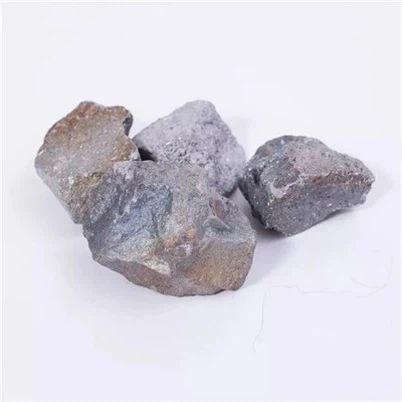
Ferrosilicon particle size refers to the dimensional distribution of crushed ferrosilicon alloy, typically classified into lump, granule, and fine fractions that determine dissolution kinetics, recovery rates, and compatibility with specific furnace or ladle addition methods in steelmaking and foundry operations.
Why Size Matters in Ferrosilicon Handling
Particle size is rarely the first specification buyers examine, yet it directly controls how quickly the alloy dissolves, how uniformly it distributes in molten metal, and how much material oxidizes before reaching the bath. The same chemical grade-FeSi72 at nominal \~72% silicon-behaves differently depending on whether it enters the melt as coarse lumps, mid-size granules, or fine powder. Matching physical form to furnace type, ladle geometry, and addition practice is essential for consistent metallurgical outcomes.
Size also influences operational safety and inventory handling. Fine fractions generate more dust during transfer, increasing respiratory exposure and raising dust ignition risk in confined storage. Coarser fractions flow more predictably through chutes and conveyors, reducing blockages. Fine material also tends to consolidate under pressure during stacking, forming clumps that complicate discharge from silos. Segregation during transport-where vibration causes finer particles to migrate to the bottom of a bulk bag-can produce non-uniform batches if the load is not remixed before use.
ZhenAn International, with 30+ years of ferroalloy supply experience, supplies FeSi72 in multiple size fractions for foundries and steelmakers worldwide.
Common Supply Size Fractions
| Size Category | Typical Fraction | Primary Addition Method | Dissolution Speed | Oxidation Sensitivity |
|---|---|---|---|---|
| Lumps | \~10–100 mm | Furnace charging, bulk ladle | Slow | Low |
| Coarse granules | \~3–10 mm | Ladle addition, foundry ladle | Moderate | Low–moderate |
| Mid-range granules | \~1–3 mm | Ladle deoxidation, inoculation | Moderate–fast | Moderate |
| Fine granules / fines | \~0.1–1 mm | In-mold inoculation, wire feed | Fast | High |
| Powder | <0.1 mm | Injection systems, cored wire | Very fast | Very high |
Exact screen boundaries and nominal size ranges remain subject to confirmation with the supplier, as crushing and screening practices vary by producer. Buyers should verify size distribution on the certificate of analysis alongside chemical composition.
How Size Affects Dissolution Speed
Dissolution proceeds from the particle surface inward. Smaller particles present more surface area per unit mass, accelerating the reaction. In ladle metallurgy, fine granules achieve full dissolution before the heat is poured, ensuring uniform silicon distribution. Coarse lumps may survive partially undissolved, creating localized silicon-rich zones or undissolved inclusions in the final cast product.
For foundries running short holding times-common in high-volume gray iron production-faster dissolution is not merely convenient; it is necessary to hit chemistry targets before pouring begins. Mid-size granules often represent the practical compromise: rapid enough for process timing, coarse enough to minimize dust losses and oxidation.
The dissolution behavior of each fraction follows distinct kinetics. Lumps in the 50–100 mm range may require several minutes of exposure to molten metal before complete breakdown, making them suitable only for furnace charging where residence time is measured in tens of minutes. Coarse granules at 3–10 mm typically dissolve within one to three minutes in a vigorously stirred ladle, while mid-range granules at 1–3 mm can achieve near-complete dissolution in under sixty seconds. Fine granules below 1 mm dissolve almost instantaneously upon contact with the bath, advantageous for inoculation but carrying the penalty of higher oxidation if the material lingers at the slag-metal interface. Powder fractions dissolve so rapidly that the limiting factor becomes mixing efficiency rather than particle kinetics, which is why pneumatic injection or wire feeding is used to drive the material below the surface before reaction completes.
How Size Affects Silicon Recovery
Recovery rate-the percentage of added silicon that reports to final metal chemistry-varies with particle size. Fine material dissolves quickly but is more susceptible to oxidation at the melt surface and entrainment in slag. Coarse material resists surface oxidation but may sink and dissolve incompletely if added too late in the process.
The optimal size fraction for maximum recovery depends on bath temperature, stirring intensity, slag cover thickness, and addition timing. What maximizes recovery in a 30-ton ladle with active argon stirring may underperform in a small induction furnace with minimal agitation. Foundry engineers typically experiment across fractions to identify the recovery peak for their specific practice.
Practical selection criteria can guide buyers without extensive trial campaigns. For operations with long holding times and active stirring, coarse to mid-range granules generally deliver the highest recovery because surface oxidation is minimized and dissolution completes well before pouring. For operations with short holding times or minimal agitation, fine granules may recover more silicon simply because coarse material does not dissolve fully. In automatic dispensing systems, size consistency matters as much as nominal size-material with a broad distribution containing excessive fines will behave like fine powder regardless of the labeled fraction. Buyers should request not only the nominal size but also the allowable percentage of fines and oversize.
How Size Determines Addition Method Compatibility
Different furnace and ladle configurations demand different size fractions:
- Furnace charging: Coarse lumps are preferred. They settle through the scrap burden or slag layer and dissolve as bath temperature rises. Fine material added at this stage tends to oxidize at the furnace atmosphere interface before reaching the metal.
- Ladle addition: Mid-size granules perform best. They sink through the slag quickly enough to reach the metal phase, yet dissolve fast enough to complete reaction within the available processing window.
- In-mold and stream inoculation: Fine granules or controlled-size specialty products are required. The brief transit time from addition to solidification demands rapid dissolution.
- Wire injection and pneumatic feeding: Very fine granules or powder fractions are needed for reliable flow through injection equipment. Size consistency is critical to prevent clogging or uneven feed rates.
When selecting an addition method, operators should consider the sequence of alloy additions and the bath temperature profile. Adding ferrosilicon before other alloys with higher melting points allows more time for dissolution but may expose the silicon to longer oxidation windows. In electric arc furnace operations, adding coarse lumps during the initial scrap melt-in period takes advantage of extended residence time, whereas adding mid-range granules during the refining phase matches the shorter processing window. For ladle metallurgy stations, the ladle depth and porous plug configuration influence whether particles reach the metal before being trapped in the slag layer. Deeper ladles with bottom stirring generally tolerate a wider range of sizes than shallow ladles with only top stirring.
Size Distribution Control Through Screening
Ferrosilicon size distribution is controlled during crushing and screening after furnace production. Sequential mesh screens separate crushed material into fractions. Quality control involves checking the percentage retained on each screen and the percentage passing the finest screen.
Consistent size distribution requires controlled feed rate to the screens, regular mesh inspection for wear, and rejection of out-of-spec batches. Reputable producers document size distribution on the certificate of analysis. Buyers receiving ferrosilicon should verify that the actual size distribution matches their specification. Excessive fines in a nominally coarse fraction indicate screening degradation or improper handling during packing. Excessive lumps in a fine fraction suggest mesh failure or batch mixing errors.
Custom size fractions can be produced by adjusting crushing and screening parameters. Custom sizing is common for specialized addition equipment-pneumatic injection systems, cored wire feeders, or automated inoculation stations-that require tight size tolerances. Minimum order quantities and longer lead times typically apply.
Screening quality also depends on the moisture content of the crushed material. Wet ferrosilicon tends to blind screen meshes, causing oversized particles to pass through and contaminate finer fractions. Producers typically allow crushed material to cool and dry before screening, or use heated air to accelerate moisture removal. The hardness of ferrosilicon causes gradual screen mesh wear, so high-volume producers replace or rotate screens on scheduled intervals rather than waiting for out-of-spec product to trigger replacement.
Packaging by Size Category
| Size Category | Typical Packaging | Protection Level | Rationale |
|---|---|---|---|
| Lumps | Steel drums, woven bulk bags | Standard | Low surface area; minimal oxidation risk |
| Coarse granules | Steel drums, bulk bags | Standard | Moderate surface area; standard protection sufficient |
| Mid-range granules | Sealed drums, double-bagged bulk bags | Enhanced | Higher surface area; moisture protection needed |
| Fine granules / fines | Sealed drums with desiccant, moisture-barrier bags | High | High surface area; humidity-sensitive |
| Powder | Sealed moisture-barrier bags, drums with gasket seals | Maximum | Very high surface area; nitrogen flushing sometimes requested |
Packaging decisions should factor in transit duration, destination climate, and storage conditions at the buyer's facility. For long ocean freight routes, additional moisture protection is recommended regardless of size category.
Particle size and packaging are directly linked through handling and transport logistics. Coarse lumps in bulk bags can be moved with standard forklift equipment and emptied by gravity discharge or simple tipping. Fine powders require sealed systems to prevent dust release during transfer and may need pneumatic conveying or vacuum loading equipment at the receiving end. The packaging format therefore affects not only material protection but also the capital equipment required at the buyer's facility. Buyers should discuss their unloading and storage infrastructure with the supplier during quotation to ensure compatibility. For containerized ocean shipments, coarse fractions tolerate standard containers with minimal special requirements, while fine fractions may need lined containers or desiccant packs to maintain quality across multi-week voyages through varying humidity zones.
FAQ
| Question | Answer |
|---|---|
| Why is particle size important for ferrosilicon? | Particle size controls dissolution speed, distribution uniformity, and silicon recovery rate. It also affects handling behavior, oxidation losses during storage, and compatibility with automated addition equipment. |
| What FeSi72 sizes are commonly supplied? | FeSi72 is typically available in lump, coarse granule, mid-range granule, and fine granule or powder fractions. Exact screen boundaries vary by producer and are subject to confirmation. |
| How does size affect melting performance? | Smaller particles dissolve faster due to higher surface-area-to-mass ratio, ensuring complete reaction before pouring. Coarse particles dissolve more slowly and may leave undissolved residues if process time is limited. |
| Can particle size be customized? | Yes. Custom crushing and screening can produce size fractions outside standard offerings. Custom sizing usually requires minimum volumes and advance scheduling. |
| How is size distribution controlled? | Size distribution is controlled through sequential screening of crushed material, with quality checks on percentage retained and passed at each screen. COA documentation should include size verification. |
| What packing is used for different sizes? | Coarse fractions use drums or bulk bags; fine fractions require more protective packaging such as sealed drums or moisture-barrier bags with liners. Powder fractions typically need the highest level of packaging protection. |

Request Size and Packaging Recommendations
When you contact us, we can provide representative COA samples and arrange trial shipments for independent verification. Please include:
Your company & main steel/casting products
Required grade & impurity limits (e.g. Si≥72% and required size fraction)
Target application / steel grade
Packing & labeling needs
Annual or trial order volume
WhatsApp: +86 15518824805 | Email: info@zaferroalloy.com