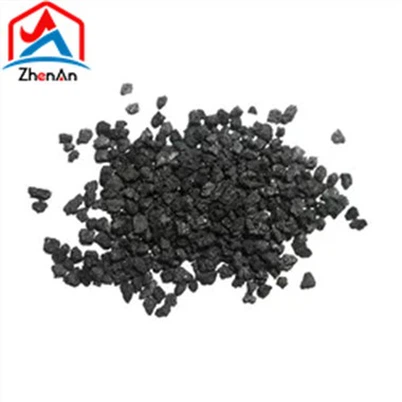

FeTi Ferrotitanium Prices in Major Chinese Regions: Grade Guide and May 2025 Levels
Leave a message
What FeTi Ferrotitanium Is
Ferrotitanium, usually abbreviated FeTi, is an iron-titanium master alloy used as a deoxidiser, a grain refiner and an alloying addition in steelmaking, and as a core component in welding consumable coatings. It is produced in three commercial families. Low titanium iron carries about 30% titanium, medium ferrotitanium about 40%, and high titanium iron is made from scrap titanium feedstock and carries titanium in the 65-75% range. Each family has its own price basis, because scrap-based high titanium iron follows a different raw material chain from the mineral-based lower grades.
Titanium has a strong affinity for oxygen, nitrogen and carbon, so it is normally added after the main deoxidation step. In steel it fixes nitrogen and carbon into stable particles, which protects boron additions, controls ageing in low-carbon grades and refines grain size. In welding electrodes it stabilises the arc and transfers titanium to the weld metal.
Grade and Composition Reference
The following table shows typical maximum levels for the standard ferrotitanium grades. Values are percentage limits by mass, with titanium shown as a range; the balance is iron.
| Grade | Ti (%) | Al max | Si max | P max | S max | C max | Cu max | Mn max |
|---|---|---|---|---|---|---|---|---|
| FeTi30-A | 25-35 | 8.0 | 4.5 | 0.05 | 0.03 | 0.10 | 0.2 | 2.5 |
| FeTi30-B | 25-35 | 8.5 | 5.0 | 0.06 | 0.04 | 0.15 | 0.2 | 2.5 |
| FeTi40-A | 35-45 | 9.0 | 3.0 | 0.03 | 0.03 | 0.10 | 0.4 | 2.5 |
| FeTi40-B | 35-45 | 9.5 | 4.0 | 0.04 | 0.04 | 0.15 | 0.4 | 2.5 |
| FeTi70-A | 65-75 | 3.0 | 0.5 | 0.04 | 0.03 | 0.10 | 0.2 | 1.0 |
| FeTi70-B | 65-75 | 5.0 | 4.0 | 0.06 | 0.03 | 0.20 | 0.2 | 1.0 |
| FeTi70-C | 65-75 | 7.0 | 5.0 | 0.08 | 0.04 | 0.30 | 0.2 | 1.0 |
The A, B and C suffixes describe progressively wider tolerances on aluminium and silicon. A buyer who needs low aluminium for a clean-steel application specifies the A grade; where cost matters more than residual control, the B or C grade is acceptable. Titanium content is the primary price driver, which is why the high titanium grades command a substantial premium over the 30% and 40% grades.
Prices in Major Chinese Regions, May 6, 2025
Quotations collected from mainstream producers on May 6, 2025 for low titanium iron carrying 30% titanium, quoted on a 25 basis, tax inclusive, in CNY per tonne.
| Product | Specification | Price (CNY/t, 25 basis) | Change | Region |
|---|---|---|---|---|
| Low titanium iron | Ti 30% | 12,200 - 12,500 | -- | Jiangsu |
| Low titanium iron | Ti 30% | 12,200 - 12,500 | -- | Yingkou |
| Low titanium iron | Ti 30% | 12,200 - 12,500 | -- | Jinzhou |
| Low titanium iron | Ti 30% | 12,200 - 12,500 | -- | Henan |
| Low titanium iron | Ti 30% | 12,200 - 12,500 | -- | Changzhou |
Medium and high grade ferrotitanium from the same producers on the same day:
| Product | Specification | Price (CNY/t, 25 basis) | Change | Region |
|---|---|---|---|---|
| Ferrotitanium | Ti 40% | 12,200 - 12,500 | -- | Jinzhou |
| Ferrotitanium | Ti 40% | 12,200 - 12,500 | -- | Henan |
| Ferrotitanium | Ti 40% | 12,200 - 12,500 | -- | Jiangsu |
| High titanium iron | Scrap titanium type | 28,500 - 29,500 | -- | Jiangsu |
| High titanium iron | Scrap titanium type | 28,500 - 29,500 | -- | Liaoning |
| High titanium iron | Scrap titanium type | 28,500 - 29,500 | -- | Henan |
The pattern is clear from the two tables. Low and medium grade material traded in a narrow band across all five regions, which indicates that the 30% and 40% grades are effectively a single national market with regional logistics as the only meaningful differentiator. High titanium iron sits in a completely separate price environment at more than twice the level, reflecting the cost of scrap titanium feedstock rather than the ferrotitanium conversion step.
Recent Transaction Levels
Transaction prices recorded in the domestic market, provided for reference, tax inclusive.
| Product | Specification | Price (CNY/t) | Change | Region |
|---|---|---|---|---|
| Low titanium iron | Ti 30% | 12,000 - 12,300, 25 basis | -- | Liaoning |
| Ferrotitanium | Ti 40% | 12,000 - 12,300, 25 basis | -- | Liaoning |
| High titanium iron | 70A | 28,300 - 29,300, actual weight | -- | Liaoning |
| High titanium iron | 70B | 27,300 - 28,300, actual weight | -- | Liaoning |
Note the two different weight bases in this final table. Low and medium grade material is quoted on a 25 basis, while the high titanium 70A and 70B grades are quoted on actual weight. Failing to normalise the weight base is the most common error when comparing two suppliers of high titanium iron, and it can create an apparent price difference that does not exist. The 70A to 70B gap of about 1,000 CNY per tonne is a genuine grade spread, since the B grade allows higher aluminium and silicon.
Size Ranges and Delivery Forms
Ferrotitanium is supplied in lump form for steelmaking ladle additions, with 10-50 mm being the standard size range so that the pieces sink through the slag and dissolve at a predictable rate. For welding consumable and powder metallurgy applications the material is supplied as powder, typically 60-325 mesh or 80-270 mesh, with custom cuts available to match a customer mesh specification. Powder users should confirm the mesh distribution required for their coating or pressing line, because an over-coarse fraction will not disperse evenly and an over-fine fraction creates handling dust.
Packing should protect the material from moisture, since titanium-bearing powder oxidises on prolonged exposure to damp air. Bulk bags and sealed steel drums are both common, and buyers should specify the packed weight that matches their charging equipment rather than accepting whatever unit the seller prefers.
Frequently Asked Questions
Q: What is ferrotitanium used for?
It is used to deoxidise and refine grain structure in steel, to fix nitrogen and carbon in low-carbon grades, to protect boron additions, and as a stabilising component in welding electrode coatings.
Q: What are the main FeTi grades?
Low titanium iron with about 30% Ti, medium ferrotitanium with about 40% Ti, and scrap-based high titanium iron with 65-75% Ti. The high grades are further divided into A, B and C tolerances.
Q: Why is high titanium iron so much more expensive?
It is made from scrap titanium feedstock, so its cost is set by the titanium scrap market rather than by the mineral ore chain that supplies the 30% and 40% grades.
Q: What does the 25 basis in the price table mean?
It identifies the quotation basis used for the low and medium grades. High titanium 70A and 70B are quoted on actual weight instead, so the two bases must be normalised before comparing suppliers.
Q: Which size should be ordered for steelmaking?
Lump in the 10-50 mm range is standard for ladle additions. Powder grades in the 60-325 mesh or 80-270 mesh range serve welding and powder applications.
Q: Does ferrotitanium work in any steel grade?
It suits grades where titanium is wanted for deoxidation, grain refinement or nitrogen control. Grades with a low titanium ceiling or strict cleanliness requirements need a grade and addition level selected for that analysis.