Ferro Molybdenum Price on January 10 and the Oxide Conversion Gap
Leave a message
Ferro Molybdenum Price and How the Two Quotation Bases Work
Ferro molybdenum and molybdenum oxide are quoted on different units, which is the single most common source of confusion in molybdenum purchasing. The January 10 reference below shows both bases side by side.
| Product | Specification | Minimum Price | Maximum Price | Unit |
|---|---|---|---|---|
| Ferro molybdenum | 65 - 70% Mo | 72.00 | 73.90 | USD per kg Mo |
| Molybdenum oxide | 57% Mo | 30.50 | 31.75 | USD per lb Mo |
Converting Between USD per kg and USD per lb
Ferro molybdenum in the Chinese and Asian trade is priced per kilogram of contained molybdenum, while oxide is priced per pound of contained molybdenum. Because one kilogram equals 2.20462 pounds, a per-kilogram quotation is converted to a per-pound figure by dividing by 2.20462, and a per-pound quotation is converted to a per-kilogram figure by multiplying by 2.20462. Applied to this session, the oxide band of 30.50 - 31.75 USD/lb is equivalent to roughly 67.2 - 70.0 USD/kg of contained molybdenum. The ferro molybdenum band of 72.00 - 73.90 USD/kg is therefore about 4.8 - 3.9 USD/kg above the oxide equivalent, and that gap is the conversion margin: it covers the aluminothermic reduction step, the iron unit, screening and packing, and the producer margin. When the gap widens materially beyond its normal range, the usual causes are converter outages in a producing region or a squeeze in oxide supply rather than a change in steel demand.
Why the Conversion Margin Matters to a Buyer
Steelmakers and alloy blenders that can charge either oxide or ferro molybdenum in the ladle watch the conversion margin as a switching signal. When the margin is narrow, ferro molybdenum is the more efficient route because the alloy is a finished, screened product with a known dissolution behaviour. When the margin is wide, blending oxide briquettes with a lower-cost carrier can be the cheaper path, provided the recovery and the handling losses are actually measured. The decision has to be made on recovered molybdenum per tonne of steel, not on the quoted price, because oxide fines and dust losses can easily absorb the apparent savings. A practical test is to compare delivered cost per kilogram of recovered molybdenum, adding normal handling loss to the oxide route and using certified recovery for the alloy route.
Grade and Specification Framework
Specifications for ferro molybdenum are written around the molybdenum band, the carbon and sulphur ceilings and the size fraction. ASTM A132, the standard specification for ferromolybdenum, covers the chemical composition and the available size ranges of the alloy, with the required analysis stated for molybdenum along with the interstitial and residual elements. GB/T 3649, the Chinese ferromolybdenum standard, designates grades by nominal molybdenum content, with FeMo60 and FeMo55 covering the material that dominates the export market, the number referring to the nominal molybdenum content of the grade. Molybdenum oxide for steelmaking and for ferroalloy production is specified separately, and its purity is normally stated on a calcined, moisture-free basis with limits on sulphur, phosphorus and copper; ASTM A146 covers molybdenum oxide products. Buyers should always confirm whether the quoted analysis is on a dry basis and whether the molybdenum figure is a minimum or an average, because a 57% oxide and a 60% oxide are not interchangeable in a charge calculation.
Market Context and Cost Drivers
Molybdenum is produced largely as a by-product of copper porphyry mining, so supply responds to copper economics rather than to molybdenum demand, and that structural feature is the reason molybdenum prices can stay elevated through a steel downturn and fall sharply while steel output is still rising. On the demand side, ferro molybdenum is consumed in stainless steels, tool steels, high-strength low-alloy grades, and in the heat-resistant alloys used in process plant and power equipment. Because molybdenum additions are usually small, often under 1% of the heat, the alloy cost per tonne of steel is moderate but the technical effect on hardenability and on elevated-temperature creep resistance is large, which is why procurement normally treats it as a specification item rather than a simple commodity substitution. End-user buying tends to be hand-to-mouth on a two to six week window, while producers carry ore and oxide inventory, so short-term price swings are dominated by converter availability and by Chinese steel mill restocking cycles.
Buying and Inspection Practice
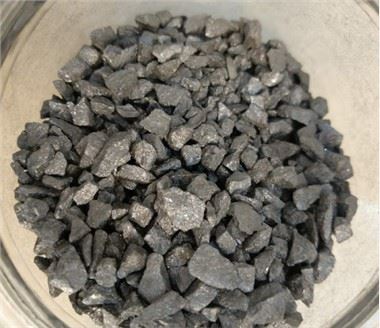
Ferro molybdenum is normally shipped in the 10-50 mm band for steelmaking, in drums or 1 MT bags; a finer band is used where briquettes and oxide blends feed a continuous charge system. Sampling is done on the crushed lot, with the sample prepared and split before analysis, and an independent assay at the loading port is standard practice. The elements that require the most attention on a certificate are molybdenum, carbon, sulphur, copper and phosphorus, together with the size fraction report. Retention samples held by both parties for the same period, and a stated analytical method where results differ, keep a shipment from being priced on a disputed analysis.
Frequently Asked Questions
Q: Why is ferro molybdenum quoted per kg while oxide is quoted per lb?
A: Ferro molybdenum in the Asian trade is priced per kilogram of contained molybdenum, while oxide follows the pound-based convention; the two require conversion before they can be compared.
Q: How do I convert a per-pound molybdenum price to a per-kilogram price?
A: Multiply the per-pound figure by 2.20462, because one kilogram equals 2.20462 pounds. A 30.50 USD/lb oxide quote is therefore about 67.2 USD/kg.
Q: What is the conversion margin?
A: It is the difference between the ferro molybdenum price and the oxide equivalent, covering aluminothermic reduction, the iron unit and processing. On this date it was roughly 3.9 - 4.8 USD/kg.
Q: Which standards apply to ferro molybdenum?
A: ASTM A132 specifies ferromolybdenum composition and size ranges, GB/T 3649 designates ferromolybdenum grades by nominal molybdenum content such as FeMo60 and FeMo55, and ASTM A146 covers molybdenum oxide products.
Q: Is a 57% molybdenum oxide equivalent to a 60% oxide in a charge calculation?
A: No. Charge calculations must use contained molybdenum per tonne of material, so the oxide grade and the moisture basis have to be normalised before the two materials can be substituted.
Q: Do these figures represent an offer?
A: No. They are single-session market references for that date, used for budgeting and supplier comparison rather than as a firm quotation.