
Chemical Properties of Silicon Carbide: Stability, Hardness and Oxidation
Leave a message
Composition and Structure
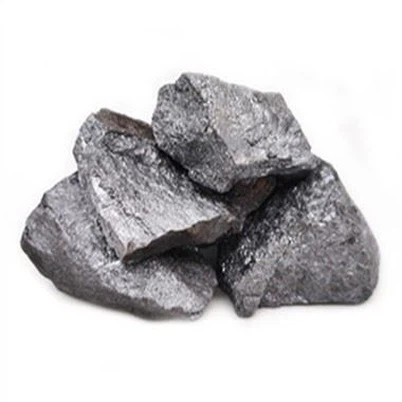
Silicon carbide is a compound of silicon and carbon with the formula SiC, containing roughly 70% silicon and 30% carbon by mass. The two elements are joined by strong covalent bonds arranged in a tetrahedral network, and that structure is the origin of most of the material's useful properties: high hardness, high thermal conductivity, a small coefficient of thermal expansion and pronounced chemical inertness.
Industrial silicon carbide is produced in electric resistance furnaces from silica sand and a carbon source. The product is graded by purity, most commonly as black silicon carbide at roughly 98% SiC and green silicon carbide above 99% SiC, with the finer and purer grades reserved for abrasive and ceramic duties.
Chemical Stability and Oxidation Behaviour
Silicon carbide has stable chemical performance. It resists attack by most acids at room temperature and is unaffected by common solvents and by molten salts used in some metal treatment operations. It is attacked by hydrofluoric and nitric acid mixtures and by molten alkalis, which is why those media are used when the material must be etched or dissolved.
At high temperature the material is oxidation resistant, and that behaviour is self-limiting. Above roughly 1000 to 1200 degrees Celsius in air, a thin silica film forms on the surface and slows further oxidation, protecting the underlying material for long service periods. The film is the reason silicon carbide components tolerate kiln, furnace and burner environments that destroy ordinary carbon refractories.
Hardness and Wear Behaviour
Silicon carbide is one of the hardest materials produced in bulk. Its Mohs hardness is 9 to 9.5, second only to diamond, which is rated 10 on the same scale. That hardness, combined with good thermal conductivity, is what makes the material effective as an abrasive and as a wear-resistant component.
Mohs hardness: 9 to 9.5, against 10 for diamond
Primary abrasive uses: grinding wheels, coated abrasives, blasting media, polishing compounds
Wear-resistant uses: pump components, nozzles, linings and mechanical seals
Thermal shock resistance supports use in cyclic high-temperature service
Hardness also explains the low volume of material consumed in abrasive applications: a very hard grain keeps its cutting edges longer, so less abrasive is needed per unit of work performed.
Thermal, Electrical and Physical Properties
Silicon carbide conducts heat well, with a thermal conductivity of roughly 120 watts per metre-kelvin for dense material, and it expands only slightly on heating, with a coefficient of thermal expansion of about 4.0 to 4.5 parts per million per kelvin. The low expansion is the reason the material survives rapid heating and cooling cycles better than many oxides.
It is also a semiconductor. That combination of semiconducting behaviour with high thermal conductivity and high-temperature stability is what allows silicon carbide to be used as a heating element: the silicon carbon rod is the classic high-temperature radiant element in industrial furnaces, capable of operating in air at temperatures well above the limit of metallic elements.
| Property | Typical Value | Practical Consequence |
|---|---|---|
| Chemical formula | SiC | Silicon and carbon, covalently bonded network |
| Mohs hardness | 9 to 9.5 | Abrasive and wear-resistant service |
| Thermal conductivity | About 120 W/(m.K) | Rapid heat transfer, low thermal gradients |
| Thermal expansion | About 4.0-4.5 x 10⁻⁶ /K | Good resistance to thermal shock |
| Oxidation onset in air | About 1000-1200 C | Protective silica film limits further attack |
Metallurgical and Refractory Applications
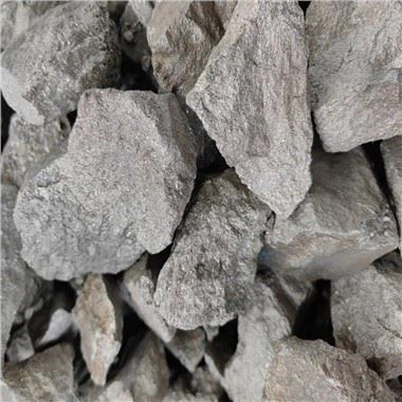
In metallurgy, silicon carbide serves a dual role. Because it supplies both silicon and carbon, low-grade material containing about 85% SiC is an effective deoxidising agent in steelmaking: it reacts with dissolved oxygen, speeds up the treatment of the heat, assists control of the chemical composition and helps improve the quality of the steel. The same material is also a strong refractory, notable for volume stability, light weight, high strength and a favourable energy balance in furnace linings.
Surface engineering uses the material in another way. Deposits of silicon carbide applied by specialised processes to surfaces such as turbine impellers and cylinder walls improve wear resistance; reported experience indicates service life extended by one to two times compared with untreated surfaces. Heating element production, where silicon carbon rods convert electrical energy into radiant heat at very high temperature, is the third major outlet, alongside abrasives, refractories and ceramics.
Selecting, Handling and Storing the Right Grade
Grade selection follows the duty. Abrasive and ceramic users need high-purity fine grades, black or green depending on the required toughness and cutting behaviour, while metallurgical users accept lower-purity material because the silicon and carbon content is what the process consumes. Refractory and heating element producers specify by grain size, purity and forming method rather than by chemistry alone.
All grades share a single handling requirement: keep the material dry and free of contamination. Moisture and foreign fines degrade the performance of bonded products and refractories far more than small variations in the SiC percentage, so packaging, storage and transfer practices belong in the specification as much as the chemistry does.
Frequently Asked Questions
Q: What is the chemical formula of silicon carbide?
SiC, a compound of silicon and carbon containing roughly 70% silicon and 30% carbon by mass, bonded in a covalent tetrahedral network.
Q: How hard is silicon carbide?
It rates 9 to 9.5 on the Mohs scale, placing it just below diamond, which is rated 10, and it is used extensively as an abrasive and wear material.
Q: Does silicon carbide oxidise at high temperature?
Above roughly 1000 to 1200 C in air a protective silica film forms and slows further oxidation, which is why the material performs well in furnace environments.
Q: Why is low-grade silicon carbide used in steelmaking?
Material containing about 85% SiC supplies both silicon and carbon and acts as a deoxidising agent, supporting faster treatment, better composition control and improved steel quality.
Q: What is the material used for besides abrasives?
Refractories, heating element silicon carbon rods, wear-resistant components, ceramics and surface coatings applied to items such as turbine impellers and cylinder walls.
Q: How should silicon carbide be stored?
It should be kept dry and free from contamination, since moisture and foreign fines affect bonded and refractory products more than small differences in SiC content do.