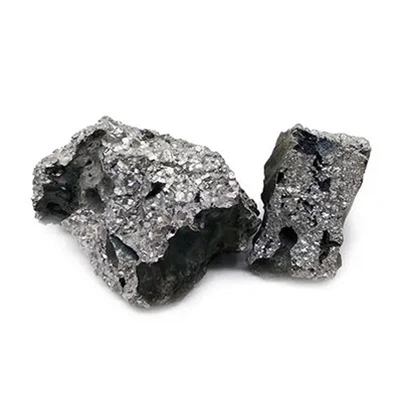

88 mesh SiC 88% vs 100 mesh 90% – which removes rust faster from steel structures?
Leave a message
In industrial sandblasting for rust removal from steel structures, the choice of abrasive - defined by mesh size and purity - directly influences material removal rate and surface profile. A common comparison is 88 mesh SiC (88% purity) versus 100 mesh SiC (90% purity). While their numeric labels are close, the coarser/finer balance and purity difference change how aggressively and quickly they strip rust, especially on heavy corrosion found in bridges, tanks, and structural frameworks.
At ZhenAn, with 30 years of experience supplying SiC for abrasive blasting, we analyze which performs better for fast rust removal on steel structures and explain why.
1. Sandblasting Rust Removal: Core Mechanisms
Sandblasting removes rust and mill scale by:
Kinetic impact breaking loose loosely adhered oxides
Micro-cutting action of sharp SiC particles shearing rust layers
Fracture of abrasive particles exposing fresh cutting edges
Key parameters:
Particle size → determines depth of cut per impact and coverage rate
Purity → affects wear resistance (abrasive longevity) and surface contamination risk
Hardness & sharpness of SiC ensures effective removal even on hard, adherent rust
For steel structures, speed is often critical to reduce downtime and labor costs.
2. Mesh Size: 88 vs 100 - Coarser Means Faster Removal
Mesh number = openings per linear inch; lower number = larger particle.
88 mesh ≈ 180 µm particles - coarser
100 mesh ≈ 150 µm particles - finer
Impact on removal rate:
Coarser (88 mesh): Larger mass and contact area per particle → removes rust faster in a single pass; better for thick, heavy rust and mill scale.
Finer (100 mesh): Smaller mass → less material removed per impact → slower rust removal, but creates a finer, more uniform surface profile.
Thus, for pure speed on heavy rust, 88 mesh has the advantage.
3. Purity: 88% vs 90% SiC - Wear & Surface Impact
88 mesh (88% SiC): ~12% impurities (mainly silica, free carbon, metal oxides) → faster breakdown in recycling, possible surface contamination.
100 mesh (90% SiC): ~10% impurities → more consistent cutting, longer life, cleaner surface with fewer embedded residues.
Impact on surface finish:
88% SiC: Impurities cause irregular fracture and occasional deeper pits; may leave trace silica residue affecting coating adhesion.
90% SiC: Cleaner cutting action, more uniform surface profile, better for applications requiring consistent Ra and minimal contamination.
However, purity's effect on removal speed is secondary to mesh size - impurities mainly affect longevity and finish, not initial cutting rate.
4. Performance Comparison for Steel Structure Rust Removal
|
Factor |
88 Mesh SiC 88% Purity |
100 Mesh SiC 90% Purity |
|---|---|---|
|
Particle Size |
Coarser (180 µm) → faster removal |
Finer (150 µm) → slower removal |
|
SiC Purity |
Lower → faster wear, more impurities |
Higher → longer life, cleaner finish |
|
Rust Removal Speed |
Faster (for heavy rust) |
Slower |
|
Surface Profile |
Deeper anchor pattern |
Finer, more uniform profile |
|
Surface Contamination |
Higher (silica residue risk) |
Lower |
|
Reuse Potential |
Lower (faster breakdown) |
Higher |
|
Best Use Case |
Heavy rust, non-critical surface |
Light rust, coating prep, sensitive substrates |
Conclusion:
88 mesh (88% SiC) removes rust faster from steel structures due to its coarser particle size - ideal for heavy rust and thick scale where speed is the priority.
100 mesh (90% SiC) yields a finer, cleaner surface with less contamination and better reuse potential, making it preferable for final surface preparation and coating-critical applications.
5. Practical Selection Guidelines
Heavy Rust / Thick Mill Scale on Structural Steel → Choose 88 mesh (88% SiC) for maximum removal rate.
Light Rust / Final Surface Prep Before Coating → Choose 100 mesh (90% SiC) for controlled finish and low contamination.
Recycling Blast Systems → 100 mesh (90% SiC) lasts longer and keeps consistent profile over multiple cycles.
Coating Adhesion Critical → Higher purity (90% SiC) reduces risk of weak boundary layers from impurity residues.
Cost vs. Lifecycle → 88 mesh may be cheaper per kg but wears faster; 100 mesh may reduce total abrasive consumption in reusable systems.
6. Industry Example
A structural steel contractor working on bridge rehabilitation:
Used 88 mesh (88% SiC) for initial heavy rust removal on main girders → fast stock removal.
Switched to 100 mesh (90% SiC) for final pass on connection plates and welds → ensured uniform profile and cleaner surface for paint adhesion.
Result: Reduced rework, met coating spec with fewer abrasive changes.
7. Why Choose ZhenAn for Sandblasting SiC
30 years of experience producing consistent SiC abrasives for heavy-duty and precision blasting
Full range: 88 mesh, 100 mesh, SiC 88, high-purity options
ISO & SGS certified for reliable quality and performance
Custom packaging for single-use or recycling systems
Global supply ensuring on-time delivery to blasting contractors & manufacturers
Conclusion
For rust removal from steel structures, 88 mesh (88% SiC) removes rust faster thanks to its coarser particle size, making it ideal for heavy rust and thick scale. However, 100 mesh (90% SiC) produces a finer, cleaner surface with less contamination and better reuse potential, making it preferable for final surface preparation and coating-critical applications. Selecting between them depends on whether the priority is speed or surface finish quality.
For expert advice on SiC grit and purity selection for your sandblasting projects, contact our team at:
FAQ
Q1: Can I use 100 mesh (90% SiC) for heavy rust and still get fast removal?
A: It will be slower than 88 mesh; may require multiple passes or higher pressure, but gives a finer finish.
Q2: Does higher purity SiC really reduce surface contamination?
A: Yes - fewer silica and carbon residues lower the risk of weak spots in coating adhesion.
Q3: What surface profile does 88 mesh leave compared to 100 mesh?
A: 88 mesh leaves a deeper anchor pattern; 100 mesh leaves a finer, more uniform profile.
Q4: When should I pick 88 mesh (88% SiC) over 100 mesh (90% SiC)?
A: When maximum removal speed is the priority and surface cleanliness or reuse is not critical.
Q5: Does ZhenAn supply 100 mesh with 90% SiC?
A: Yes, we offer both mesh sizes in various purities, including 100 mesh (90% SiC) for controlled finish jobs.
Why Choose ZhenAn
Stable, Verified Quality – Controlled sourcing and batch inspection ensure consistent metallurgical performance.
One-Stop Product Range – Silicon carbide, ferro alloys, silicon metal, cored wire, zinc wire, Electrolytic Manganese Metal Flakes.
Custom Specifications – Flexible grades, sizes, and packaging to fit different production processes.
Proven Export Experience – Professional handling of inspection, documents, and international shipping.
Reliable Supply – Stable factory partnerships and dependable delivery schedules.
Fast Support – Quick quotations and practical technical guidance.
Strong Cost–Performance – Balanced pricing with real process value.