

What are the main uses of Ferro Silicon 45?
Leave a message

If you've ever worked in steel manufacturing, foundry operations, or even just the metal production space, you've probably run into ferrosilicon in one form or another. But today, I wanna talk specifically about Ferro Silicon 45-one of the workhorse alloys that doesn't always get as much spotlight as its higher-silicon cousins (like Ferro Silicon 75 or 72, which I'll link to later). As a supplier of Ferro Silicon 45, I get tons of questions: what is it actually used for, why would you pick this over other ferrosilicon grades, and how does it fit into all those metal production processes? Let's break it down simply, no jargon overload.
First, a quick refresher for anyone new: ferrosilicon is an alloy made of iron and silicon, with silicon content ranging from like 10% up to 90% depending on the grade. The number after "Ferro Silicon" is the approximate silicon percentage-so Ferro Silicon 45 is right in the middle, with ~45% silicon, plus small amounts of aluminum, calcium, and carbon (that's where it differs from higher grades like Ferro Silicon 75, which has way more silicon and less of those additives). This mid-range silicon count is what makes Ferro Silicon 45 so unique for certain jobs, and that's exactly what I see day in and day out as a supplier.
Let's start with the biggest use case, and the one that keeps my order books steady: deoxidation in steelmaking. Wait, I know what you're thinking-don't we use Ferro Silicon 75 for deoxidizing? Sure, sometimes, but Ferro Silicon 45 has its own niche here. When you're melting steel, oxygen gets trapped in the molten metal, and that's a huge problem. It leads to weak spots, porosity, and even cracks in the final steel product. To fix that, you add deoxidizers-materials that react with oxygen to form a harmless byproduct that you can skim off. Higher silicon grades like Deoxidizer Ferro Silicon 75 Ferrosilicon work great for deep deoxidation, but Ferro Silicon 45 is perfect for that middle step, or for smaller steel mills that don't need the full punch of 75% silicon. It's more cost-effective for mid-tier deoxidation needs, and the lower silicon content means it doesn't overdo the silicon in the steel if that's not what you're going for. I've had a few regular steel mill clients tell me they use a mix: 75% for the final deep deoxidation and 45% for the initial smaller deoxidation pass. Makes total sense when you think about it-why pay for more silicon than you need for a part of the process?
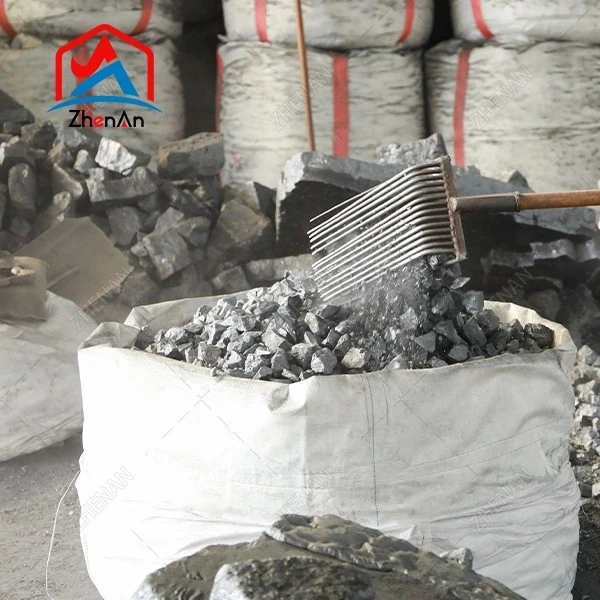
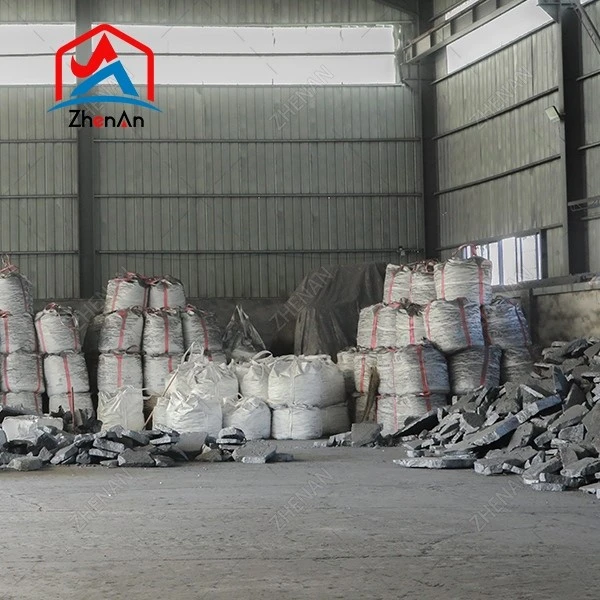
Next up: alloying elements in steel and cast iron production. This is another area where Ferro Silicon 45 shines, even if it's not the first alloy people reach for. When you're making steel, you need to adjust the composition to hit specific mechanical properties-tensile strength, hardness, ductility, all that good stuff. Silicon is a key alloying element here; it boosts strength and improves resistance to corrosion. But if you add too much, you can make the steel brittle. Ferro Silicon 45 gives you a controlled way to add smaller amounts of silicon without spiking the composition too quickly. For cast iron, it's even more versatile. Grey cast iron, which is used for engine blocks, pipes, and those big metal parts you see in construction, relies on silicon to help graphite form in the iron structure. That graphite is what makes grey cast iron machinable and shock-resistant. Ferro Silicon 45 is often used in the initial alloying step for grey cast iron because it adds just the right amount of silicon to get that graphite formation started, before you might top up with a higher grade later. Unlike some other alloys, Ferro Silicon 45 has consistent impurity levels, so you don't have to worry about messing up your cast iron's properties mid-process.
Wait, another use that a lot of people don't talk about: reducing agent in other chemical and metal production processes. Yeah, it's not just for steel. When you're producing things like magnesium, or even certain types of alloys that use other metals, you need a reducing agent-a substance that takes oxygen away from other materials to get the pure metal. Ferro Silicon 45 works as a reducing agent here because silicon has a high affinity for oxygen. The mid-range silicon content means it's reactive enough to pull oxygen from metal oxides, but not so reactive that it causes unwanted side reactions. For example, in magnesium production, some plants use ferrosilicon as part of the Pidgeon process (if you're familiar with that), and Ferro Silicon 45 is a common choice because it's easier to handle in the temperatures used for that process than higher silicon grades. I've supplied Ferro Silicon 45 to a couple of specialty metal manufacturers, and they swear by it for their smaller-scale reduction runs where cost is a factor too.
Oh, and don't sleep on its use in welding electrodes. Welding might not be the first thing you associate with ferrosilicon, but it's a big one. Welding electrodes are the filler metals that melt and join two pieces of metal together, and they have to do a lot: protect the weld from air, remove impurities, and add alloying elements to make the weld strong. Ferro Silicon 45 is often a component in the flux coating of welding electrodes. The silicon deoxidizes the weld pool as it forms, preventing porosity and ensuring the weld is strong. It also helps with the stability of the arc while you're welding, so you get a cleaner, more consistent weld bead. As a supplier, I've had a few welding equipment companies ask for small batches of Ferro Silicon 45 for their electrode production, and that's another use I didn't fully grasp until I started working with clients directly-way more hands-on than just looking up specs online.
Now, let's talk about why Ferro Silicon 45 stacks up against other grades, because that's a question I get all the time. You've got higher grades like Ferro Silicon 75 Size 10-100Mm or High Carbon Ferro Silicon, and even Good Stability Ferrosilicon 75 with extra additives. But Ferro Silicon 45's sweet spot is its versatility and cost. It's not as pricey as the high-silicon grades, but it's still reliable. For small to medium foundries or steel mills that don't need bulk high-silicon for large batches, it's way more economical. Also, its composition is pretty stable-no weird fluctuations in silicon or impurity levels, which is super important when you're working with molten metal where tiny changes can throw off the entire batch. I always tell new clients: if you're doing mid-level deoxidation, small alloying adjustments, or anything that doesn't call for a heavy silicon hit, Ferro Silicon 45 is your guy.
Wait, I should also mention how it's processed, briefly, because that affects its use. Most Ferro Silicon 45 is made in electric arc furnaces, smelting iron ore, coke, and quartz (which is where the silicon comes from). It's then crushed and sorted into different sizes-from fine powder for welding fluxes to larger chunks for steel mill additions. As a supplier, I can send it in whatever size you need, which is a big plus. If you're adding it to molten steel, you might want smaller chunks so it melts faster, while if you're using it as a reducing agent, larger chunks work better for slower, more controlled reactions. It's all about matching the size to the job.
Now, let's address the elephant in the room: is Ferro Silicon 45 still relevant in a world with all these newer metal production technologies? Absolutely. Sure, there are advanced steelmaking processes that use more synthetic deoxidizers, but they're super expensive and not feasible for smaller operations, or for companies that need to keep costs competitive. Ferro Silicon 45 is tried and true-been around for decades, and it's not going anywhere anytime soon. I see it in orders from foundries making everything from cast iron cookware to construction pipes, steel mills making everything from structural beams to automotive parts, and even small specialty metal shops. It's that reliable workhorse that doesn't get the praise, but everyone who uses it knows how essential it is.
As someone who supplies Ferro Silicon 45, I've learned a lot over the last few years. The biggest takeaway is that there's no "one size fits all" when it comes to ferrosilicon. A lot of new buyers come in asking for Ferro Silicon 75 because they think higher silicon is better, but once we walk through their process, they realize they don't need that much silicon, and Ferro Silicon 45 does exactly what they need at a better price. I've even had clients switch from Ferro Silicon Alloys 72 For Steelmaking to 45 for certain parts of their process and saved 15-20% on materials without any drop in quality. That's the kind of value I love delivering as a supplier.
If you're in the market for Ferro Silicon 45, or you're just curious about how it fits into your metal production process, feel free to reach out. I know it can be overwhelming sorting through all the different ferrosilicon grades, sizes, and uses, and I'm happy to walk through your specific needs to make sure you get the right product at the right price. Whether you're a small foundry just starting out, a large steel mill looking to optimize costs, or any business in between, I've got you covered. We supply Ferro Silicon 45 consistently, with reliable quality, so you don't have to worry about missing a production deadline because of bad materials.
References
- Association for Iron and Steel Technology. (2021). Ferrosilicon Alloys: Properties and Industrial Applications. AIST Journal of Steelmaking and Raw Materials.
- Foundry Management & Technology. (2022). The Role of Mid-Range Ferrosilicon Grades in Grey and Ductile Iron Production.
- International Magnesium Association. (2020). Reducing Agents in Pidgeon Process Magnesium Production: Performance and Cost Considerations.
- Welding Journal. (2021). Flux Coating Additives for Low-Hydrogen Welding Electrodes: Composition and Functionality.
- US Geological Survey. (2023). Ferrosilicon: Global Production, End-Use Applications, and Market Trends.


