
Where Is FeV50 Ferro Vanadium Used in Steel Production?
Leave a message

Where Is FeV50 Ferro Vanadium Used in Steel Production?
Vanadium has long served as a critical microalloying element in modern steelmaking. In its ferroalloy form, ferro vanadium-commonly supplied as FeV50 with a nominal vanadium content around 50%-provides steel producers with a practical means of introducing controlled vanadium levels into liquid steel. Unlike pure vanadium metal, ferro vanadium integrates more readily into conventional steelmaking workflows, making it the material of choice for mills producing a wide spectrum of alloy and microalloyed grades.
The FeV50 designation refers to a ferro vanadium grade with approximately 50% vanadium by weight, with the balance consisting primarily of iron and small amounts of other elements. This concentration level offers a practical compromise: high enough to minimize the total ferroalloy addition required per heat, yet not so concentrated that handling and dissolution become problematic in standard steelshop conditions.
This article examines the practical application landscape of FeV50 across industries, steel products, and production stages. The focus remains on how buyers and metallurgists actually use this material rather than on theoretical metallurgy alone. Understanding these practical dimensions helps procurement teams select the right product form and negotiate specifications that align with their operational realities.
Industries That Rely on FeV50
The primary consumers of FeV50 fall into three broad industrial categories: structural steel manufacturers, tool and die steel producers, and specialty alloy mills.
Structural steel producers use FeV50 to achieve grain refinement and precipitation hardening in high-strength low-alloy (HSLA) grades. Vanadium carbonitrides form during controlled cooling, pinning grain boundaries and raising yield strength without proportional loss of toughness. This mechanism allows structural steel makers to reduce overall alloy costs while meeting strength requirements for construction beams, columns, and plate applications.
Tool steel and die steel manufacturers represent another significant demand segment. These producers require precise vanadium levels-often in the 0.5% to 2% range depending on the grade-to achieve wear resistance and red hardness. FeV50 provides a manageable addition unit for these relatively high vanadium contents compared to lower-grade ferro vanadium alternatives.
Specialty alloy producers, including those manufacturing aircraft-grade steels and certain stainless grades, also incorporate FeV50 when specific mechanical property targets demand vanadium's contribution to creep resistance and elevated-temperature performance.
Steel Grades and Products Requiring FeV50
The range of steel products that incorporate FeV50 spans from commodity construction materials to highly engineered components.
In the construction sector, FeV50 finds application in rebar, structural sections, and bridge plate where high yield strength and weldability must coexist. Microalloyed rebar grades with vanadium additions demonstrate improved seismic performance characteristics, an increasingly important consideration in earthquake-prone regions.
Automotive steel producers employ FeV50 in certain high-strength sheet and bar products where crashworthiness and weight reduction drive material selection. The ability to achieve higher strength levels through microalloying rather than heavy alloying keeps production costs competitive while meeting OEM material specifications.
Pipeline steel represents another key application. Transmission line pipe grades requiring high toughness at low temperatures benefit from vanadium's grain-refining action, which improves Charpy impact values across the wall thickness. This is particularly relevant for arctic and subsea pipeline projects where ductile fracture resistance is non-negotiable.
Forging-grade steels for crankshafts, gears, and connecting rods also specify vanadium content, with FeV50 serving as the typical addition medium in electric arc furnace and basic oxygen furnace operations. The vanadium contributes to through-hardenability and temper resistance in these heavy-section components.
Rail steel producers constitute a further application area. High-carbon rail grades use vanadium to improve wear resistance and extend rail service life under heavy axle loads. The precipitation-strengthening effect helps maintain rail head hardness without the cracking susceptibility associated with higher carbon contents alone.
How FeV50 Is Added During Steel Production
The method and timing of FeV50 addition depend on the steelmaking route, target chemistry, and available equipment.
In electric arc furnace (EAF) operations, FeV50 typically enters the melt during the tapping or ladle metallurgy stage. Adding ferro vanadium too early in the EAF cycle risks oxidation losses, as vanadium has higher oxygen affinity than some companion elements. Most producers prefer to introduce FeV50 after deoxidation is well established, either into the tapping stream or directly into the ladle.
Basic oxygen furnace (BOF) operations follow a similar logic. Primary vanadium-bearing hot metal may already contain residual vanadium from the iron ore, but precise adjustment to target levels requires FeV50 addition during secondary metallurgy. The ladle furnace or vacuum degassing station provides the controlled atmosphere and stirring necessary for homogeneous vanadium distribution.
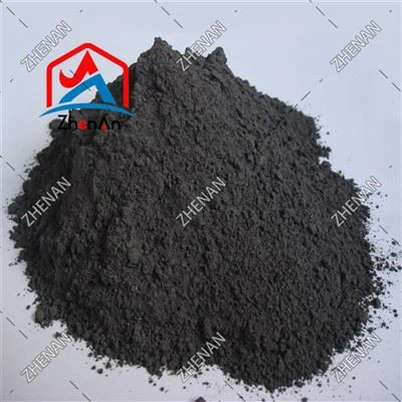
The physical form of FeV50-commonly supplied as lumps or briquettes-affects dissolution behavior. Larger lumps suit bulk additions to large ladles, while smaller fractions or briquetted forms dissolve more predictably in smaller heats or when precise trim additions are required. Buyers should match the supplied form to their addition point and ladle size.
FeV50's Role in Alloy Production
Beyond direct steel alloying, FeV50 supports the broader ferroalloy and master alloy supply chain.
Some alloy producers use FeV50 as a raw material input for producing higher-value vanadium chemicals or specialized master alloys. The approximately 50% vanadium content provides a concentrated yet manageable starting point for downstream processing.
In steel foundries producing alloy castings, FeV50 serves the same fundamental purpose as in wrought steel production: controlled vanadium introduction for mechanical property development. Foundry practice differs in that additions may occur directly to the induction furnace charge or to inoculation packets rather than through ladle metallurgy.
Factors That Determine FeV50 Usage
Several practical considerations govern how much FeV50 a given heat requires and how suppliers and consumers structure their procurement.
The first factor is the target vanadium content specified in the steel grade. A heat requiring 0.08% V in a 150-tonne ladle needs a straightforward mass calculation based on FeV50's nominal vanadium content and anticipated recovery rates, which industry practice suggests typically fall in the 85-95% range depending on slag conditions and timing.
Second, the base iron chemistry influences FeV50 consumption. Heats with high titanium or nitrogen levels may require adjusted addition practices, as these elements interact with vanadium during solidification and subsequent heat treatment.
Third, the steelmaking route itself constrains FeV50 usage. Shops without ladle metallurgy facilities may face greater difficulty achieving narrow vanadium ranges, potentially requiring higher addition factors or more precise process control.
Fourth, the form of FeV50 supplied affects practical usage. Briquetted material may command a premium but offers more predictable dissolution kinetics, while standard lump material provides cost savings for large-volume consumers with established addition practices.
Finally, supplier consistency matters. Variation in actual vanadium content between FeV50 batches-despite falling within nominal specifications-can affect final chemistry control. Buyers working with reliable suppliers experience fewer chemistry excursions and reduced need for corrective additions. Over time, this consistency translates into smoother production schedules and lower quality control costs at the mill level.
Frequently Asked Questions
Which industries use FeV50?
The construction, automotive, pipeline, tool steel, and specialty alloy sectors represent the primary industrial consumers of FeV50. Each sector exploits vanadium's grain-refining and precipitation-strengthening effects for specific mechanical property targets.
Is FeV50 suitable for structural steel?
Yes. FeV50 is widely used in structural steel production, particularly for high-strength low-alloy grades and microalloyed rebar. The vanadium addition improves strength-to-weight ratios and can enhance weldability compared to heavier alloyed alternatives.
How is FeV50 added during steel production?
FeV50 is typically introduced during tapping or secondary metallurgy-after primary deoxidation-to minimize oxidation losses. Addition occurs either into the tapping stream or directly into the ladle, with the specific method depending on the steelmaking route and equipment configuration.
What steel products require FeV50?
Rebar, structural sections, bridge plate, automotive high-strength steels, pipeline steels, forging grades, rail steels, and tool steels all commonly specify vanadium additions supplied through FeV50.
How does FeV50 support alloy production?
FeV50 provides a concentrated vanadium source for steel alloying and also serves as an input material for downstream vanadium chemical and master alloy production. Its approximately 50% vanadium content balances concentration against handling practicality.
What factors determine FeV50 usage?
Target vanadium content, base iron chemistry, steelmaking route capabilities, supplied physical form, and supplier batch consistency all influence how FeV50 is applied in practice.

Match Your Production Stage with the Right FeV50 Supply
Selecting the correct FeV50 specification goes beyond chemistry. The point of addition-furnace, tapping stream, or ladle-directly influences which physical form and particle size distribution will dissolve most effectively in your operation.
To help us recommend the most suitable FeV50 product for your process, please include the following details in your inquiry:
Your typical point of addition (furnace, tapping stream, or ladle)
Your preferred addition method (bulk, wire injection, or cored wire)
Target vanadium content range for your typical grades
Typical heat size and steelmaking route (EAF, BOF, or induction)
Required particle size or lump size distribution
Estimated monthly or quarterly volume
ZhenAn supplies FeV50 in forms and size fractions suited to various steelmaking configurations. Contact us to discuss your specific production setup.
WhatsApp: +86 15518824805 Email:info@zaferroalloy.com