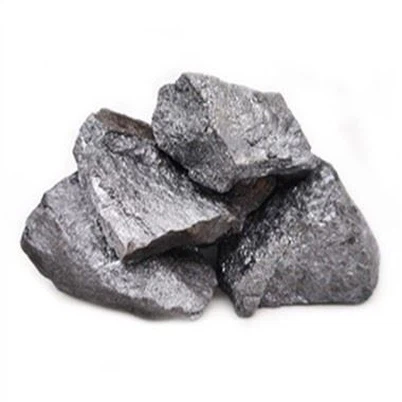

What Is The Market Price For Manganese?What Is Electrolytic Manganese Metal Used For?
Leave a message
What is the price of manganese metal flakes per kg?
| China's export price of manganese metal on September 2 | ||||||
| Unit: (US dollars/ton) | ||||||
| product | Brand | Quote | Rise and fall | Sold Price | Rise and fall | Remark |
| Electrolytic manganese metal | 99.70% | 1940-1950 | -- | 1940-1950 | -- | Tianjin Port, FOB |
| Manganese metal ingots | 95# | 1995-2005 | -- | 1975-1995 | -- | Tianjin Port, FOB |
| Manganese metal ingots | 97# | 2005-2015 | -- | 2005 | -- | Tianjin Port, FOB |
What is the market price for manganese?
| European electrolytic manganese market price on September 2 | ||||||
| Unit: US dollars/ton | ||||||
| product | Specification | Lowest Price | Rise and fall | Highest Price | Rise and fall | Price Description |
| Electrolytic manganese | 99.70% | 1975 | -- | 1995 | -- | European market |
What is the price of manganese metal flakes?
| China's electrolytic manganese factory price on September 2 | ||||||
| Unit: Yuan/ton, ex-factory cash price including tax (for reference) | ||||||
| Product Name | Specification | Factory Quote | Rise and fall | Factory transaction price | Rise and fall | area |
| Electrolytic manganese flakes | DJMn99.7 | 13400-13500 | -- | 13400-13500 | -- | Guangxi |
| Electrolytic manganese flakes | DJMn99.7 | 13400-13500 | -- | 13400-13500 | -- | Hunan |
| Electrolytic manganese flakes | DJMn99.7 | 13400-13500 | -- | 13400-13500 | -- | Hubei |
| Electrolytic manganese flakes | DJMn99.7 | 13400-13500 | -- | 13400-13500 | -- | Guizhou |
| Electrolytic manganese flakes | DJMn99.7 | -- | -- | -- | -- | Ningxia |
What is electrolytic manganese metal used for?
Electrolytic Manganese Metal (EMM) is a high-purity form of manganese (typically 99.7% to 99.9% Mn). Its exceptional purity makes it unsuitable for bulk steelmaking (where cheaper ferromanganese is used) but essential for highly specialized applications where impurities like carbon, iron, and phosphorus would be detrimental.
Its primary uses are:
1.
Specialty Alloys: This is the largest application. EMM is a critical ingredient in alloys that require extreme precision and specific properties.
•
Aluminum Alloys: Especially for beverage cans (3004 alloy) and automotive parts. Manganese prevents crystallization and improves strength and corrosion resistance.
•
Stainless Steel: Used in the production of ultra-low carbon stainless steel (e.g., 200 and 300 series) where even the carbon from standard ferromanganese would ruin the alloy's properties.
•
Superalloys & Titanium Alloys: Used in aerospace and jet engine components for its high-temperature strength and stability.
•
Copper-Manganese Alloys: Used for their high electrical resistance and temperature coefficient, found in electrical instruments.
2.
Electronics:
•
Lithium-Ion Battery Cathodes: This is a rapidly growing and critically important application. EMM is a key precursor for producing lithium manganese oxide (LMO) and, more significantly, nickel manganese cobalt (NMC) cathode materials. These batteries power electric vehicles (EVs), smartphones, and laptops. High purity is essential for battery performance and longevity.
3.
Chemical and Pharmaceutical Industry:
•
Used as a catalyst or reagent in fine chemical synthesis.
•
Used in the production of manganese dioxide for dry-cell batteries (like alkaline batteries).
•
A source of pure manganese for nutritional supplements and animal feed.
What are manganese metal flakes used for?
Manganese metal flakes are simply the physical form in which Electrolytic Manganese Metal (EMM) is produced and sold.
During the electrolysis process, pure manganese is deposited onto cathode plates in a brittle, layered form. This deposit is then stripped from the plates and broken into small, flat pieces-these are the "flakes."
Therefore, their uses are identical to those listed for EMM above. The flake form is not chosen for a specific function but for practical reasons:
•
Handling and Storage: Flakes are easier to handle, transport, and store than a giant, brittle cathode sheet.
•
Melting/Dissolving: The high surface-area-to-volume ratio of flakes allows them to melt much more quickly and uniformly when added to a furnace or dissolve more efficiently in a chemical process.
Can manganese be extracted by electrolysis?
Yes, absolutely. Electrolysis is the primary method for producing high-purity manganese metal (>99.7%). The process is known as the Electrowinning process.
Here is a simplified overview of how it works:
The Process of Extracting Manganese by Electrolysis (Electrowinning):
1.
Ore Preparation: Manganese ore (usually MnO₂) is first crushed and ground.
2.
Leaching: The powdered ore is dissolved ("leached") in a sulfuric acid (H₂SO₄) solution. This converts the manganese into a soluble manganese sulfate (MnSO₄) solution.
MnO₂ + H₂SO₄ → MnSO₄ + H₂O + ½O₂
3.
Purification (Crucial Step): The impure MnSO₄ solution contains other dissolved metals like iron, nickel, and heavy metals. These must be removed to extreme levels to allow for the plating of pure manganese. This is done through a complex series of steps:
•
pH adjustment
•
Precipitation
•
Solvent extraction
4.
Electrolysis (Electrowinning): The ultra-purified manganese sulfate solution is pumped into massive electrolytic cells.
•
Cathodes: Made of stainless steel. Pure manganese metal plates onto these cathodes.
•
Anodes: Often made of lead alloy.
•
When current is applied, manganese ions (Mn²⁺) in the solution are reduced at the cathode, forming solid manganese metal.
Mn²⁺ + 2e⁻ → Mn (at the cathode)
•
Simultaneously, water is oxidized at the anode, producing oxygen gas.
2H₂O → O₂ + 4H⁺ + 4e⁻ (at the anode)
5.
Harvesting: Every 24 hours, the cathodes are removed, and the thick layer of brittle, high-purity manganese is stripped off and broken into the flakes described above.
Key Difference from Ferromanganese Production: It's important to contrast this with ferromanganese production, which uses a carbothermic reduction process in a blast or submerged arc furnace. That process is much cheaper and yields large volumes of alloy, but it introduces carbon and other impurities, making it useless for high-purity applications. Electrolysis is the only viable route to achieve "five-nines" (99.999%) purity.
Visit ferro-silicon-alloy.com to learn more about the product. If you would like to know more about the product price or are interested in purchasing, please send an email to info@zaferroalloy.com. We will get back to you as soon as we see your message.