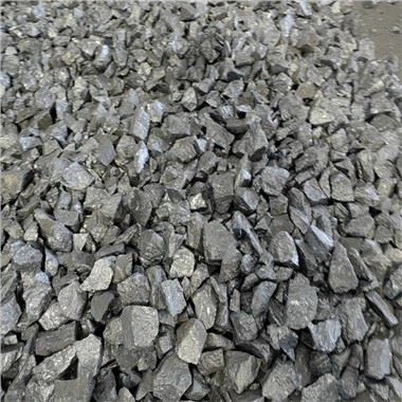

Material Properties Of Silicon Carbide
Leave a message
Silicon carbide has stable chemical properties, high thermal conductivity, small thermal expansion coefficient and good wear resistance. In addition to being used as abrasives, there are many other uses, such as: coating silicon carbide powder on the inner wall of the impeller or cylinder block of a hydraulic turbine by a special process, which can improve its wear resistance and prolong its service life by 1 to 2 times; It is a high-grade refractory material, which is resistant to shock, small in size, light in weight and high in strength, and has good energy-saving effect. Low-grade silicon carbide (containing about 85% SiC) is an excellent deoxidizer, which can speed up steelmaking, facilitate chemical composition control, and improve steel quality. In addition, silicon carbide is also widely used to make silicon carbide rods for electric heating elements.
Silicon carbide has a very high hardness, with a Mohs hardness of 9.5, second only to the world's hardest diamond (Grade 10), with excellent thermal conductivity, is a semiconductor, and can resist oxidation at high temperatures.
Silicon carbide has at least 70 crystalline forms. α-Silicon carbide is the most common allomorph, formed at high temperatures above 2000 °C, and has a hexagonal crystal structure (like wurtzite). β-Silicon carbide, a cubic crystal structure similar to diamond, is produced below 2000 °C, and the structure is shown on the page. Although in the application of heterogeneous catalyst support, it is noticeable because of its higher unit surface area than the α-type, and another kind of silicon carbide, μ-silicon carbide is the most stable, and has a more pleasant sound when colliding, But until today, these two types have not been used commercially.
Because of its specific gravity of 3.2g/cm3 and high sublimation temperature (about 2700 °C), silicon carbide is very suitable as a raw material for bearings or high-temperature furnaces. It does not melt at any achievable pressure and has fairly low chemical activity. Due to its high thermal conductivity, high breakdown electric field strength and high maximum current density, many people try to use it to replace silicon in the application of semiconductor high-power components. In addition, it has a strong coupling effect with microwave radiation, and all its high sublimation points make it practical for heating metals.
Pure silicon carbide is colorless, and industrially produced brown to black is due to iron-containing impurities. The iridescent luster on the crystal is due to the protective layer of silica produced on its surface.