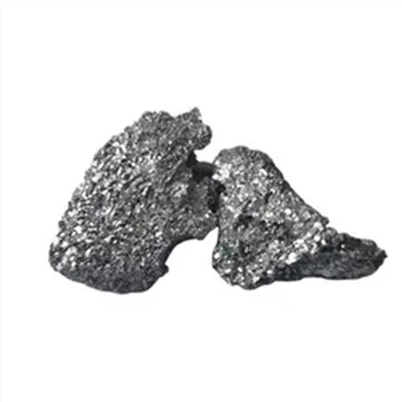
Low Aluminum Ferrosilicon Specification And Quality Control Guide
Leave a message

Low Aluminum Ferrosilicon Specification and Quality Control Guide
Low aluminum ferrosilicon is a refined ferrosilicon grade in which aluminum is controlled to a lower ceiling than standard commercial FeSi, typically manufactured in submerged arc furnaces with charge compositions selected to limit aluminum pickup while maintaining a target silicon content of approximately 72–75%.
What Is Low Aluminum Ferrosilicon?
Standard ferrosilicon carries some aluminum because both silicon and aluminum are reduced from oxide-bearing raw materials in the same smelting process. For steelmakers producing high-grade structural steels, automotive sheets, and electrical steels, even modest aluminum levels in the deoxidizer can alter grain structure, promote alumina-based inclusions, affect magnetic characteristics in silicon steel grades, and introduce surface defects. Low aluminum ferrosilicon delivers the deoxidizing and alloying benefits of silicon without the unwanted aluminum baggage.
In continuous casting operations, aluminum-bearing inclusions tend to agglomerate at temperature gradients, increasing submerged entry nozzle build-up and forcing unplanned casting speed reductions. For producers of ultra-low-carbon steels and oriented silicon steels, the aluminum ceiling is a process requirement that determines whether the heat can be cast at all.
The aluminum in ferrosilicon originates primarily from the raw materials charged into the submerged arc furnace. Quartzite and iron ore both contain trace aluminum in their gangue minerals, and reducing agents-metallurgical coke or charcoal-may contribute additional aluminum depending on ash content. Producers aiming for low aluminum output must select raw materials with low alumina levels and adjust slag chemistry to direct more aluminum into the slag phase rather than the metal. Furnace temperature and slag basicity also influence aluminum partition, requiring tight process control.
Key Specification Parameters
The only reliable specification is the one written into the purchase contract and verified on the certificate of analysis for each batch. Buyers should define the aluminum limit as a maximum value, state whether it applies per heat or as a lot average, and specify the sampling protocol. The table below summarizes typical parameter ranges that buyers and suppliers negotiate.
| Parameter | Industry-Typical Range / Limit | Notes for Contract Drafting |
|---|---|---|
| Silicon (Si) | 72–75% nominal | Tighter ranges available by agreement |
| Aluminum (Al) | ≤0.5% or ≤1.0% typical ceiling | Define max per heat or lot average |
| Calcium (Ca) | ≤1.0–2.0% | May be restricted further for clean steels |
| Carbon (C) | ≤0.1–0.2% | Check against end-steel carbon budget |
| Sulfur (S) | ≤0.02–0.05% | Standard ferroalloy concern |
| Phosphorus (P) | ≤0.04–0.05% | Standard ferroalloy concern |
| Titanium (Ti) | ≤0.05–0.10% | Relevant for micro-alloyed grades |
| Particle size | 10–100 mm, or as agreed | Specify screen fractions and max fines |
| Packaging | 50 kg bags, 1 t bulk bags, or steel drums | Moisture barrier liners for ocean transit |
Each supplier operates within its own process envelope defined by furnace configuration, charge mix, and operational practices. Generic marketing claims should be treated as a starting point for negotiation rather than a guarantee.
Understanding why each parameter matters helps buyers write tighter specifications. Silicon content determines alloy yield per kilogram and must be high enough to achieve target bath chemistry without excessive additions. Aluminum directly controls inclusion type and distribution in the final steel. Calcium influences sulfide morphology-high calcium levels can modify manganese sulfides from elongated stringers to more spherical forms, desirable for through-thickness properties in plate steels. Carbon reversion from the ferroalloy adds to the heat's carbon balance, critical for low-carbon grades. Sulfur and phosphorus limits reflect the producer's raw material quality control. Titanium, present in trace amounts, can form stable nitrides affecting grain size control in micro-alloyed steels.
How Aluminum Content Is Analyzed
Optical emission spectrometry is the most common approach for rapid multi-element screening, providing simultaneous readouts for silicon, aluminum, calcium, and other trace constituents. The method requires careful sample preparation, including grinding to consistent particle size and pressing into a briquette or dissolving into a solution matrix.
For referee or dispute-level accuracy, wet chemical methods such as gravimetric or titrimetric analysis remain the accepted fallback. Some laboratories also employ X-ray fluorescence on pressed powder pellets. XRF offers minimal sample destruction and rapid turnaround, but its precision at low aluminum levels depends on matrix correction models and matrix-matched standards.
Buyers should ask suppliers which methods are used in-house, what the measurement uncertainty is at the specification limit, and whether independent third-party testing is available. Laboratory accreditation, instrument calibration frequency, use of certified reference materials, and participation in proficiency testing programs all influence the trustworthiness of reported values.
The analytical workflow begins with representative sampling from the cast product or crushed material lot. For OES analysis, the sample is ground flat to expose a clean surface before excitation in the spectrometer spark stand. The instrument compares emission intensities against calibration curves built from certified reference materials. Because ferrosilicon is hard and brittle, preparation requires silicon carbide grinding media-irregular surfaces can produce erratic spark behavior and biased results. For wet chemical referee analysis, the sample is dissolved in acid, then aluminum is separated and determined gravimetrically as aluminum oxide or titrimetrically using complexometric methods. The entire analytical chain introduces uncertainty at each step, which is why accredited laboratories document measurement uncertainty alongside reported values.
What Other Elements Should Buyers Verify?
Depending on the steel grade, buyers often need visibility into calcium, titanium, carbon, sulfur, and phosphorus. Calcium affects inclusion morphology and sulfide shape distribution in plate steels. Titanium influences nitride formation in micro-alloyed steels and high-strength low-alloy grades. Carbon, sulfur, and phosphorus are perennial concerns because they can revert to the steel or affect slag chemistry. In electric arc furnace operations, unexpectedly high carbon in the ferrosilicon can force last-minute adjustments to the decarburization strategy.
Experienced buyers align the testing scope with the risk profile of their steel grade rather than requesting a full elemental sweep for every delivery.
The detection significance of each element extends beyond its immediate metallurgical effect. Calcium levels exceeding the ceiling may indicate high-lime slag practice, which can correlate with higher aluminum pickup in some furnace systems. Elevated titanium may signal contamination from titanium-bearing raw materials or refractory erosion. High carbon can result from excessive coke in the charge mix, which may also correlate with higher sulfur if coke sulfur content is uncontrolled. Phosphorus limits reflect the geological origin of the quartzite and iron ore, and unusually high phosphorus may indicate a change in raw material sourcing. Buyers tracking these elements over multiple deliveries can build a supplier performance profile that reveals process trends before they become quality failures.
Applicable Standards and Their Role
Low aluminum ferrosilicon is traded under internationally recognized standards covering chemical composition, sizing tolerances, packaging, and labeling. Standards under the GB, ASTM, and JIS systems provide the baseline vocabulary for contract negotiations, even when the aluminum limit is stricter than the general-grade specification. Buyers and suppliers typically reference such standards in purchase orders and append a supplementary technical agreement for custom requirements.
Because standards are periodically revised, buyers should confirm which edition the supplier references. The presence of a referenced standard provides a useful arbitration framework if a dispute arises over testing method or sampling protocol.
In practice, the referenced standard serves multiple functions. It defines agreed test methods, eliminating disputes over whether OES, XRF, or wet chemistry governs acceptance decisions. It establishes sampling protocols and specifies packaging and marking requirements. When buyer and supplier operate in different jurisdictions, referencing an internationally recognized standard reduces the risk of regulatory conflict. Buyers should note, however, that standards typically define general-grade limits looser than the low aluminum requirement, so the supplementary technical agreement remains essential.
Pre-Shipment Quality Confirmation
Quality is confirmed through a batch-specific certificate of analysis tied to the furnace heat or lot number. The COA reports silicon, aluminum, and other agreed elements, usually accompanied by sampling date, laboratory method, analyst identification, and measurement uncertainty where available.
Additional assurance can include witnessed sampling at the supplier's works or independent laboratory testing of sealed samples drawn by a third-party inspector. Packaging integrity also matters: ferrosilicon is typically packed in moisture-resistant steel drums or woven polypropylene bulk bags with inner polyethylene liners. Damaged packaging can lead to oxidation or moisture pickup during ocean transit, affecting ladle reactivity. Visual inspection of container loading, documented with photographs, provides an extra checkpoint.
Buyers should also ask whether the supplier retains representative samples for six to twelve months, has a written procedure for out-of-specification material, and can trace packaging records back to the heat number for every package.
When reviewing a COA, buyers should perform several verification steps. First, confirm that the heat or lot number on the COA matches the markings on the packaging received. Second, check that all contract-specified elements appear on the COA with appropriate units and measurement uncertainty. Third, verify that sampling and analysis dates are reasonable-excessive delays may suggest the material was held pending a favorable result. Fourth, cross-check the laboratory identification against the supplier's stated facility. If third-party testing was specified, confirm the testing body is named. Finally, retain the COA in a quality file indexed by heat number, so downstream issues can be traced quickly.
Frequently Asked Questions
| Question | Answer |
|---|---|
| What aluminum content is controlled in low Al FeSi? | The aluminum ceiling is negotiated per contract based on the target steel grade. Typical practice uses maximum values such as ≤0.5% or ≤1.0%, but buyers should define the limit explicitly and state whether it applies per heat or as a lot average. |
| How is aluminum analyzed? | Optical emission spectrometry is the most common rapid method. Wet chemical gravimetric or titrimetric analysis serves as the referee method. X-ray fluorescence is also used, though its accuracy at low aluminum levels depends on matrix-matched calibration standards. |
| What other elements should buyers check? | Beyond aluminum, buyers commonly monitor calcium, titanium, carbon, sulfur, and phosphorus. The exact scope should match the risk profile of the target steel grade. |
| What standards apply to low Al FeSi? | GB, ASTM, and JIS ferrosilicon standards provide the baseline for composition, sizing, and packaging. Buyers should confirm which edition the supplier references and append stricter limits in a supplementary technical agreement. |
| Can specifications be customized? | Yes. Customization may include tightening the aluminum ceiling, narrowing the silicon range, restricting calcium or titanium, specifying particle size, or selecting alternative packaging. Early discussion during quotation is essential because dedicated low-aluminum heats may require charge adjustments. |
| How is quality confirmed before shipment? | Quality is confirmed through a batch-specific COA tied to the heat or lot number. Additional assurance includes witnessed sampling, third-party laboratory testing, and visual packaging inspection documented with photographs. |

Get a Representative Sample and Trial Shipment
When you contact us, we can provide representative COA samples and arrange trial shipments for independent verification. Please include:
Your company & main steel/casting products
Required grade & impurity limits (e.g. Si≥75%, Al≤0.5%)
Target application / steel grade
Packing & labeling needs
Annual or trial order volume
WhatsApp: +86 15518824805 | Email: info@zaferroalloy.com