
How Can European Steel Mills Address Molten Steel Composition Variation During Specialty Steel Refining Processes?
Leave a message

Specialty steelmaking within the European Union operates under some of the world's most stringent metallurgical standards, driven by high-end automotive, aerospace, and renewable energy engineering specifications. In the production of clean steels, tool steels, and bearing alloys, minimizing chemical composition variation during secondary metallurgy is crucial. Variations in elemental concentration lead directly to unpredictable mechanical properties, increased rejection rates during non-destructive testing (NDT), and inconsistent responses to downstream heat treatments.
To eliminate these costly processing variations, European ladle metallurgy furnace (LMF) and vacuum degassing (VD/RH) operators are replacing traditional bulk alloy dumping with high-precision metallurgy treatments. Utilizing specialized composite alloy linear inputs allows mills to introduce active elements directly into the deep, high-pressure zones of the melt. This precise approach bypasses oxidizing slag layers, balances trace element ratios, and significantly improves product uniformity. This industry report outlines the structural definitions, production chemistry, and application frameworks required to control molten chemistry variations, showing how partnering with a certified global cored wire supplier like ZhenAn supports production stability.
---
What Is the Role of a Global Cored Wire Supplier in Addressing Melt Variation?
In modern secondary metallurgy, a certified cored wire supplier provides specialized, composite materials designed to inject highly reactive or easily oxidized alloying elements into liquid metal matrices. These products consist of a continuous, cold-formed steel sheath tightly encasing micro-granular or solid-core alloy powder cores, engineered specifically to feed precise elemental quantities into the ladle.
By protecting reactive materials until they reach the deep zones of the melt, this technology prevents contact with atmosphere and oxidizing slag. This localized delivery enables steelmakers to make precise, micro-ppm adjustments to molten steel chemistry, achieving tight composition control that cannot be achieved through bulk ladle alloy additions.
---
How Does an Advanced Ladle Wire Feeding System Process Consumables for Core Integrity?
Manufacturing high-performance linear additives requires high-precision cold-forming and automated powder blending. The process begins with low-carbon, deep-drawing steel strips selected for specific thickness consistency and clean surfaces. This steel jacket acts as a thermal barrier, delaying the core material from melting prematurely as it enters the hot furnace zones.
Concurrently, internal core alloy fillers-such as pure calcium, calcium-silicon mixtures, or specialized ferroalloys-are crushed and sized to eliminate ultra-fine particles and moisture. The metal strip is fed through a multi-stage profile rolling mill that shapes it into a continuous U-channel. The filling equipment then feeds a highly accurate, continuous volumetric stream of core powder into the moving steel channel.
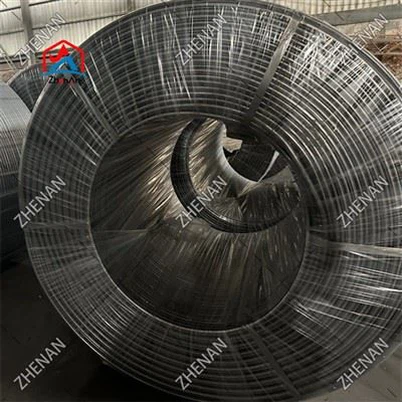
The filled channel passes through final closing rollers that form a tight, mechanical lock-seam (such as a double-fold or overlap joint), compressing the core material to eliminate internal air pockets. The finished product is pulled by automated spooling lines into high-density coils, ensuring smooth feeding through modern multi-strand injection equipment without catching or bending.
---
Which Solutions Form the Core of Modern Steelmaking Wire Injection Networks?
To establish a reliable metallurgical process, sourcing departments must select specific core compositions optimized for the steel chemistry under treatment. Automated steelmaking wire injection programs generally utilize several specialized chemical grades:
- Alkaline Earth Metal Systems: This critical group includes specialized calcium wire for steelmaking and composite CaSi cored wire options, engineered for high-efficiency inclusion modification and deep deoxidation lines.
- Bulk and Micro-Alloying Matrix Cores: Incorporates structural core types such as FeSi cored wire, aluminum cored wire, and high-purity carbon cored wire for steel, specified for rapid, localized adjustments to base carbon, silicon, and aluminum targets.
- Specialty Forging Modifiers: Incorporates advanced technical selections including titanium wire for steelmaking and custom rare earth cored wire types, designated for micro-alloying grains and altering sulfide morphologies in ultra-high-strength steel grades.
---
What Values Dictate a Professional Ladle Wire Feeding System Specification?
A reliable procurement datasheet must verify strict tolerance boundaries for both chemical filler metrics and physical dimensions. For European specialty steel shops, the following parameters serve as the standard baseline for batch quality verification:
| Technical Parameter Dimension | Standard Metallurgical Reference Value | Direct Operational Impact on Refining |
|---|---|---|
| Outer Diameter (OD) Tolerance | 13.0mm ± 0.5mm Standard | Guarantees smooth, high-speed feeding without jamming in guide tubes. |
| Steel Jacket Strip Thickness | 0.40mm to 0.60mm Baselines | Controls the exact structural melting depth relative to ladle injection velocity. |
| Core Powder Weight Ratio | ≥ 60% of Total Linear Mass | Maximizes active element density and stabilizes chemical addition calculations. |
| Core Moisture Limitation | ≤ 0.05% H2O Maximum | Eliminates hydrogen pick-up risks and prevents hazardous furnace splashing. |
| Coil Outer Dimensions | Horizontal/Vertical Cage Wrapped | Matches standard European uncoiling pay-off systems for seamless line integration. |
---
How Do Specialized Calcium Wire for Steelmaking Precursors Serve Non-Ferrous Chemistry?
While the steel sector consumes the majority of wire materials, advanced chemical processing facilities utilize high-purity core fillers for non-ferrous extraction and purification. In these chemical settings, the material functions as a high-affinity reducing agent rather than a typical alloying component.
Chemical processing operations use calcium wire for steelmaking precursors to reduce rare earth metal oxides and purify titanium sponge matrices. The steel sheath provides a protective barrier against atmospheric oxygen and moisture, allowing chemical processing lines to achieve high reduction yields, avoid air contamination, and maintain precise control over sensitive high-temperature chemical reactions.
---
How Do Steelmaking Wire Injection Technologies Optimize Inclusion Morphology?
Within European ladle metallurgy shops, integrating a professional ladle wire feeding system is standard practice for modifying non-metallic inclusions. During secondary refining, aluminum deoxidation creates hard, crystalline alumina ($Al_2O_3$) clusters that can plug continuous casting nozzles and form structural defects in finished steel.
Injecting certified CaSi cored wire deep into the ladle introduces active calcium that reacts with these alumina inclusions, converting them into liquid calcium aluminates ($12CaO \cdot 7Al_2O_3$). These liquid phases agglomerate easily, floating upward into the slag layer to be removed from the melt. Any remaining inclusions stay small, spherical, and uniformly distributed throughout the matrix. This modification significantly improves steel cleanliness, prevents casting nozzle build-up, and enhances the fatigue life and impact toughness of the final specialty steel products.
---
Calcium Silicon Cored Wire VS Calcium Cored Wire
Selecting between these two dominant calcium delivery lines depends on the silicon restrictions of the targeted steel chemistry:
- Calcium Silicon Cored Wire (CaSi cored wire): The traditional choice for silicon-killed steel grades, such as structural alloys and structural plate steels. It introduces both calcium for inclusion modification and silicon for supplementary deoxidation, providing excellent element recovery and cost-efficiency.
- Calcium Cored Wire (Pure Calcium Wire): The mandatory choice for silicon-restricted steels, including ultra-low carbon automotive sheets and clean line-pipe steels. It allows metallurgists to perform comprehensive inclusion modification without adding any silicon, preventing composition drift and keeping materials well within strict quality limits.
---
Aluminum Cored Wire VS Titanium Cored Wire
Evaluating these two micro-alloying materials requires analyzing their specific deoxidation affinities and grain-refining characteristics:
- Aluminum Cored Wire: Primarily used as a powerful primary deoxidizer to remove dissolved oxygen from the melt. It establishes a clean base chemistry, controls the initial oxygen activity, and provides affordable grain refinement during early ladle refining stages.
- Titanium Cored Wire (titanium wire for steelmaking): Injected during final refining stages after primary deoxidation is complete. It functions as a specialized micro-alloying agent, forming stable titanium nitrides and carbides that pin grain boundaries, prevent grain growth at high temperatures, and stabilize interstitial carbon in stainless steels.
---
How Can European Mills Evaluate a Cored Wire Supplier Under Standard Packaging Frameworks?
To reduce risk when importing materials into competitive industrial markets, procurement departments should integrate three core quality assurance practices into their supply contracts:
- Verify Sectional Core Linear Density: Supply contracts must specify strict limits on core weight consistency per meter. Sourcing teams should require the supplier to verify that alloy filler distribution remains completely uniform across the entire coil length, preventing localized addition errors in the ladle.
- Enforce Airtight Steel-Cage Packaging Rules: Reactive materials like calcium degrade rapidly when exposed to ambient moisture. Purchasing contracts should always specify heavy-duty Standard Packaging, utilizing waterproof shrink-wrap, internal desiccant packs, and rugged steel support cages to keep product chemistry stable during long-distance transit and warehouse storage.
- Build Direct Refiner Alliances: Move away from volatile spot-market brokers. Building direct relationships with integrated manufacturers like ZhenAn guarantees consistent volume allocations during high-demand cycles and gives technical teams direct access to lot-specific analytical data.
Contact ZhenAn's European Metallurgy Sourcing Desk:
Email: info@zaferroalloy.com
WhatsApp/WeChat: +86 15518824805
---
FAQ
Q1: What causes molten steel composition variation during specialty steel refining?
A: Molten steel composition variation is primarily caused by unequal exposure to oxidizing furnace slags, unpredictable alloy losses during bulk gravity dumping, and variable re-oxidation from ambient air contact. Additionally, uneven temperature distribution and inconsistent stirring kinetics within the ladle furnace can create localized chemical stratification, preventing the uniform distribution of micro-alloys throughout the melt volume.
Q2: How can cored wire injection help improve molten steel composition control?
A: Utilizing a professional ladle wire feeding system allows operators to inject precise amounts of alloying elements directly into the lower regions of the ladle. The protective steel sheath prevents the core material from reacting prematurely with top slag or air. This targeted delivery achieves high, highly predictable elemental recovery yields, enabling metallurgy teams to make accurate micro-adjustments and hit tight composition targets.
Q3: Why is consistent cored wire composition important for steel refining stability?
A: In high-volume specialty steel shops, automated calculation models rely on strict raw material uniformity. If the linear density or chemical ratio of a product like FeSi cored wire varies along its length, the resulting elemental additions will deviate from model predictions. This variation leads to unexpected chemistry shifts, requires time-consuming re-testing, extends refining cycle times, and increases production costs.
Q4: How do steel mills evaluate cored wire quality for alloy addition accuracy?
A: Steel mills evaluate quality through a combination of physical and chemical testing. Laboratory technicians cut cross-sectional samples from incoming coils to verify total linear weight, check steel jacket thickness, and measure internal powder filling ratios. The core powder is analyzed via precise spectrometry methods to ensure its chemical profile matches the target Chemical Composition Specification and contains no moisture.
Q5: Can stable cored wire performance reduce element recovery fluctuations in steelmaking?
A: Yes, sourcing from an established cored wire supplier like ZhenAn dramatically reduces elemental recovery fluctuations. Delivering a completely uniform core filler and a tightly sealed lock-seam structure ensures the material dissolves at an identical depth in every heat, stabilizing elemental recovery yields and helping mills maintain high process capability indexes ($C_{pk}$).
Q6: What cored wire specifications affect alloy recovery efficiency during refining?
A: The primary specifications include the outer diameter consistency, the thickness of the external steel jacket, the core filling ratio, and the absolute moisture content of the powder. The thickness of the steel strip is especially critical, as it dictates the wire's survival time in the hot steel bath and determines whether the core material melts at the optimal depth for maximum dissolution and recovery.
Q7: How does cored wire quality influence final steel cleanliness and consistency?
A: High-quality consumables-such as certified calcium wire for steelmaking-ensure complete transformation of hard, brittle alumina clusters into low-melting-point liquid calcium aluminates. This uniform conversion allows non-metallic inclusions to float out efficiently into the slag layer, reducing internal micro-defects and ensuring excellent microstructure cleanliness and fatigue resistance across every production lot.
Q8: What quality control methods are used to ensure stable cored wire performance?
A: Premium manufacturers utilize continuous on-line laser diameter tracking, automated strip tension monitors, and electronic powder feeding scales during production. Every production batch undergoes strict pre-shipment laboratory analysis and is packed in heavy-duty, moisture-barrier Standard Packaging to ensure the material arrives free from contamination and ready for direct furnace charging.