FeSi72 Applications in Gray Iron And Ductile Iron Casting
Leave a message

FeSi72 Applications in Gray Iron and Ductile Iron Casting
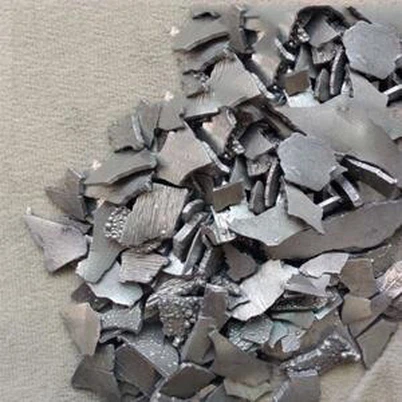
Ferrosilicon FeSi72 is an iron-silicon alloy with a nominal silicon content around 72 percent, employed in gray iron and ductile iron foundries to promote graphite formation and refine as-cast microstructure.
The Casting Challenge: Controlling Graphite and Matrix Structure
Gray iron and ductile iron production depend on the controlled precipitation of carbon as graphite rather than as hard, brittle cementite. Achieving this balance requires precise chemistry management, and silicon is the single most influential element after carbon in determining how carbon behaves during solidification.
Foundries face a practical tension: base iron melted from pig iron and steel scrap rarely contains the exact silicon level needed for the final casting specification. Furthermore, the graphite nucleation environment degrades over time as molten iron waits in the ladle or pouring vessel. Inoculation-the deliberate addition of nucleating agents-restores favorable conditions for graphite formation just before solidification begins. FeSi72 serves as the primary silicon-bearing material in both chemistry adjustment and inoculation workflows.
How Silicon Shapes Cast Iron Microstructure
Understanding why FeSi72 is effective requires looking at the metallurgical mechanisms silicon controls in liquid and solidifying iron.
Graphite Promotion
Silicon is a powerful graphitizing element. In the iron-carbon-silicon system, silicon increases the thermodynamic driving force for carbon to precipitate as graphite rather than remaining in combined form as iron carbide. Without adequate silicon, castings risk solidifying with carbide phases that reduce machinability, increase tool wear, and lower ductility.
In gray iron, the graphite appears as flakes that provide vibration damping and good machinability. In ductile iron, the graphite takes a nodular form after magnesium treatment, delivering higher strength and elongation. In both cases, silicon level determines whether the desired graphite morphology develops fully or is compromised by carbide formation in thin sections or at chilled edges.
The nucleation potency of FeSi72 is influenced not only by its silicon content but also by the presence of trace calcium and aluminum, which can form submicroscopic compounds that serve as heterogeneous nucleation sites for graphite. This is why foundries sometimes observe better inoculation response from certain FeSi72 sources than from others with nominally identical silicon levels.
Carbon Equivalent and Fluidity
Foundries calculate carbon equivalent (CE) using the relationship CE = %C + (%Si / 3), sometimes with minor adjustments for phosphorus. This value predicts liquidus temperature, fluidity, and shrinkage behavior. Because daily scrap mix variations cause carbon content to drift, foundries use FeSi72 to adjust silicon and thereby stabilize CE within the narrow window required for consistent casting quality.
Maintaining a consistent CE is particularly important in jobbing foundries where the same furnace may produce thin-wall pump housings in one heat and heavy-section valve bodies in the next. A stable CE reduces the frequency of mold-filling defects such as misruns and cold shuts, and it simplifies gating system design by keeping liquidus temperature within a predictable band.
Ferrite Stabilization and Mechanical Properties
Silicon dissolves in the metallic matrix and stabilizes ferrite. The resulting microstructure influences hardness, tensile strength, and machinability. Castings for brake drums, machine bases, and pump housings each target different hardness ranges, and foundries achieve these targets by adjusting silicon through controlled FeSi72 additions rather than changing furnace charge recipes for every heat.
In pearlitic gray iron grades, silicon must be held within a specific band: high enough to ensure full graphitization, yet low enough to preserve the pearlitic matrix that provides wear resistance. In ferritic ductile iron grades, higher silicon is desirable because it strengthens the ferritic matrix while maintaining the elongation required for pressure-vessel and pipe applications.
Eutectic Shift and Section Sensitivity
Silicon shifts the eutectic point in the iron-carbon system. In heavy-section castings that cool slowly, higher silicon prevents centerline carbides. In thin-wall castings that cool rapidly, excessive silicon can produce a fully ferritic matrix with insufficient strength. Foundries therefore size FeSi72 additions to match the section thickness distribution of their current production mix.
This section sensitivity explains why a single foundry may stock two or more FeSi72 size fractions. Coarse lumps added to the furnace charge dissolve gradually and raise the bulk silicon level of the heat. Fine granules added at the ladle or stream provide a rapid, last-minute silicon boost and inoculation effect that is tuned independently of the furnace chemistry.
Recommended FeSi72 Specifications by Casting Application
The appropriate FeSi72 size fraction and addition rate depend on the casting type, melting practice, and inoculation method. The following table provides industry-typical guidance. Final parameters should be confirmed against the foundry's own process data.
| Casting Type | Target Si in Final Iron | Recommended FeSi72 Size | Typical Addition Point | Notes |
|---|---|---|---|---|
| Gray iron, thin wall | 1.6–2.0% | 1–10 mm granules | Ladle or stream inoculation | Rapid cooling requires adequate silicon to prevent carbides |
| Gray iron, heavy section | 1.8–2.4% | 3–25 mm granules | Ladle inoculation | Higher Si promotes complete graphitization in slow-cooling centers |
| Ductile iron, pre-treatment | 1.0–1.4% base | 1–10 mm granules | Post-Mg treatment ladle | Base iron held low; Si raised after magnesium nodularization |
| Ductile iron, final | 2.2–2.8% | 1–10 mm granules | Secondary inoculation at pour | Fine granules dissolve quickly in turbulent transfer flow |
| Counterweight / non-critical | 1.4–2.2% | 10–50 mm lumps | Furnace charge | Coarse material acceptable when chemistry tolerance is wide |
| High-strength engineered | 2.0–2.6% | 1–10 mm granules | Stream or in-mold inoculation | Tight chemistry control; trace-element limits may apply |
These ranges are approximate and subject to confirmation against the specific melt practice, base iron chemistry, and cooling conditions at each foundry. Buyers should always verify that the selected FeSi72 specification aligns with their internal process capabilities and quality standards.
Typical Foundry Use Cases
While individual plant practices vary, the following scenarios illustrate how FeSi72 is commonly deployed in production environments.
Gray Iron Engine Blocks and Machine Tool Bases
Foundries producing large gray iron castings for engine blocks, gearboxes, or machine beds typically melt in medium-frequency induction furnaces. They aim for a carbon equivalent near the eutectic composition to maximize fluidity and minimize shrinkage porosity in heavy sections. FeSi72 granules are added to the ladle during tapping to raise silicon to the 1.8 to 2.2 percent range. The inoculation effect fades over approximately 10 to 15 minutes, so pouring schedules are designed to complete before nucleation efficiency drops below acceptable levels.
Ductile Iron Pipe Fittings and Automotive Components
Ductile iron foundries producing pipe fittings, suspension components, or crankshafts follow a two-stage silicon strategy. The base iron is melted to a deliberately low silicon level, typically 1.0 to 1.4 percent, to leave headroom for post-treatment adjustments. After magnesium treatment in a converter or treatment ladle, FeSi72 granules are added to the pouring ladle to bring final silicon into the 2.2 to 2.8 percent range. This sequence prevents silicon from interfering with magnesium recovery during nodularization while ensuring adequate graphitization potential in the final iron.
Small Jobbing Foundries with Variable Scrap Mix
Jobbing foundries that cast a wide variety of part sizes and grades from a variable scrap charge face daily chemistry fluctuations. Rather than reformulating the furnace charge for every heat, these foundries use FeSi72 as a flexible correction tool. A quick spectrographic check before tapping indicates how much silicon is needed to reach the day's target, and FeSi72 is weighed and added accordingly. Granule sizing of 1 to 10 mm dissolves rapidly enough for last-minute chemistry adjustments without extending tap-to-pour time.
Frequently Asked Questions
| Question | Answer |
|---|---|
| Why is FeSi72 used in casting? | FeSi72 introduces silicon in a concentrated, controllable form. Silicon promotes graphite formation, raises carbon equivalent, stabilizes ferrite in the matrix, and shifts the eutectic composition-all of which are essential for producing castings with the desired microstructure and mechanical properties. |
| Which casting processes use FeSi72? | FeSi72 is used in cupola melting, induction furnace melting, ladle inoculation, stream inoculation, and in-mold inoculation. The choice depends on the foundry's equipment, casting volume, and quality control requirements. |
| Is FeSi72 suitable for ductile iron production? | Yes. FeSi72 is commonly used for silicon adjustment after magnesium treatment in ductile iron operations. It raises silicon to final specification without introducing unwanted elements that could interfere with nodular graphite formation. |
| How does silicon content affect casting? | Silicon promotes graphitization, raises carbon equivalent and fluidity, stabilizes ferrite in the metallic matrix, and influences hardness and machinability. The optimal level depends on casting section thickness, cooling rate, and the target mechanical property profile. |
| What factors influence FeSi72 selection? | Key factors include base iron chemistry, casting section thickness, inoculation method, required dissolution rate, trace-element limits for specific applications, and the foundry's historical recovery data. Buyers should share these details when requesting a quotation. |
| How is FeSi72 added during casting production? | FeSi72 is added either to the furnace charge as lumps, to the ladle as granules during tapping, into the pouring stream via a controlled feeder, or into an in-mold reaction chamber. Consistent weighing, sizing, and timing are essential to avoid casting-to-casting variation. |

Get a FeSi72 Quotation
When you contact us, we can provide representative COA samples and arrange trial shipments for independent verification. Please include:
Your company & main steel/casting products
Required grade & impurity limits (e.g. Si≥72%)
Target application / steel grade
Packing & labeling needs
Annual or trial order volume
WhatsApp: +86 15518824805 | Email: info@zaferroalloy.com