

Electrolytic Cobalt Prices On October 26, 2026
Leave a message

Electrolytic Cobalt Prices on October 26, 2026
The three Chinese hubs that publish a daily electrolytic cobalt price reference for high-purity metal closed the October 26, 2026 session inside a narrow band on the mid price, even though the low-to-high ranges they reported were anything but narrow. Shanghai held its mid price at RMB 231,000 per tonne with no reported change. Yangtze and Guangdong each moved down RMB 3,000 per tonne on the mid price, to RMB 232,000 and RMB 233,500 respectively. For a buyer building a purchase around this session, the useful signal is less the direction, which was one hub flat and two lower, than the spread between the published low and high figures, which differs sharply from market to market. This report records the day's full ≥99.8% quotes, sets out what changed, explains how the grade and the three hubs differ, and lists the checks worth completing before a lot is confirmed.
Current Price
Table 1. Electrolytic cobalt (≥99.8%) prices, October 26, 2026
All figures in RMB per tonne (RMB/t), as published for the October 26, 2026 session. "Change" refers to the movement on the mid price; "--" indicates that no change was reported for that quote.
| Market | Grade | Low (RMB/t) | High (RMB/t) | Mid (RMB/t) | Change |
|---|---|---|---|---|---|
| Shanghai | ≥99.8% | 227,000 | 235,000 | 231,000 | -- |
| Yangtze | ≥99.8% | 222,000 | 242,000 | 232,000 | Down 3,000 |
| Guangdong | ≥99.8% | 217,500 | 249,500 | 233,500 | Down 3,000 |
Note: the Shanghai quote carried no reported change on the day. The Yangtze and Guangdong quotes each moved down RMB 3,000/t on the mid price. No other cobalt price data appears in this table, and the low and high columns should be read as the published session range rather than as firm offers at those levels.
The cobalt price table has two layers that are easy to confuse. The low and high figures mark the boundaries of the range quoted in each market during the session, while the mid price is the single reference number that most contracts and indices track. A buyer who negotiates only against the mid price is negotiating against a number that sits between the extremes, not at either of them. In Shanghai the mid sits close to the middle of a comparatively tight range. In Guangdong the mid sits inside a range more than three times as wide, so the same headline mid can sit behind very different sets of actual offers.
Price Trend vs Previous
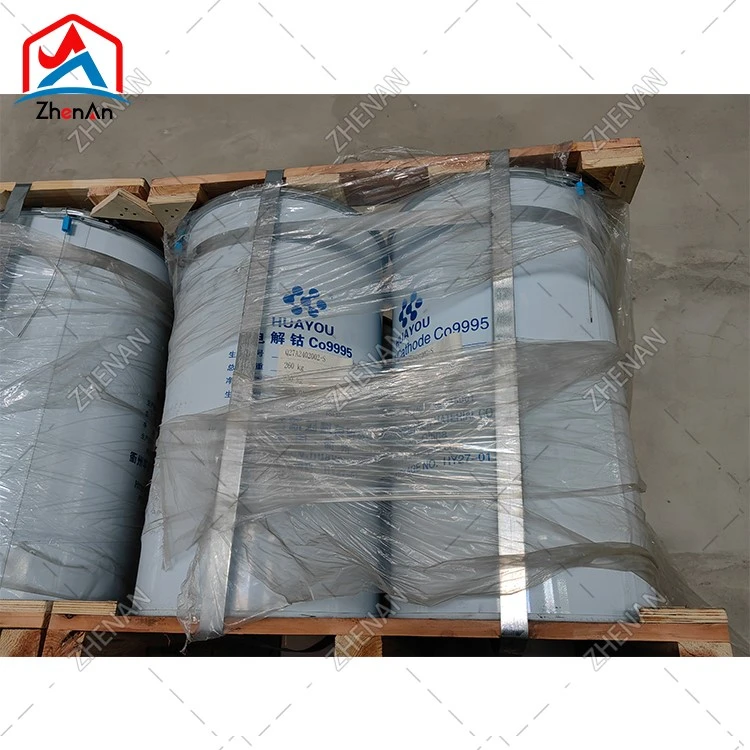
The October 26 session produced movement in two hubs and none in the third, and the two moves were the same size.
Shanghai - mid price RMB 231,000/t, with no change reported. It is the only one of the three quotes that held.
Yangtze - mid price RMB 232,000/t, down RMB 3,000/t on the mid price.
Guangdong - mid price RMB 233,500/t, down RMB 3,000/t on the mid price.
Because the same RMB 3,000 step was applied to the mid price in both Yangtze and Guangdong, the distance between those two hubs did not widen or narrow, while the distance between each of them and the flat Shanghai quote narrowed by RMB 3,000. The rank order of the three markets is therefore unchanged: Shanghai carries the lowest mid price, Guangdong the highest, and Yangtze sits between them.
Two cautions follow. The change column is defined on the mid price, so it is not a statement about where the low or high end of each range went; the figures do not track the extremes separately. And this report does not attribute the two moves to any specific cause - the data set records direction and magnitude only, and a single session is not a trend. Compare against the quotes published on the surrounding days before treating one day's step as a turning point.
Grade and Market Context
The grade line is the same across all three hubs: ≥99.8%. That designation is a floor on cobalt content, not a fixed analysis. Material sold against it is expected to contain at least 99.8% cobalt, with the balance made up of trace impurities that vary by producer, feedstock and production campaign. Electrolytic in this context describes the production route: cobalt is deposited from solution by electrolysis, and the product leaves the cell as a cathode plate or as cut cathode, which is then packed for sale. That route is one reason the grade is traded as a distinct benchmark rather than as a generic cobalt unit.
Purity at this level matters because of what the downstream process does with the metal. In superalloy melting, battery precursor dissolution, hard-facing powders and catalyst preparation, the trace elements that accompany the cobalt can affect the behaviour of the melt or the chemistry of the next step. A certificate of analysis stating 99.8% or better is a starting point rather than a complete answer, because two lots that both clear the floor can still differ in the impurities that matter to a given furnace. Buyers who need a narrow impurity profile generally specify it alongside the grade, not instead of it.
The three hubs in the table are not three separate products. They are three quoting points for the same grade, and the differences between them reflect freight, local availability, delivery terms and the mix of material being offered on the day. Shanghai, as the main trading and delivery point, tends to publish a tighter range: on October 26 the gap between its low and high was RMB 8,000/t. Yangtze quoted a range RMB 20,000/t wide, and Guangdong a range RMB 32,000/t wide. A wider range points to more different parcels, specifications and terms being quoted at once, a normal feature of a consuming region with many small and mid-sized buyers. The practical consequence is that the mid price is a weaker guide in the wider markets: a Guangdong buyer who assumes the mid price is achievable may find actual offers sitting well above it, depending on parcel size and delivery.
Comparing the Three Markets
Table 2. Market-by-market comparison, October 26, 2026
| Dimension | Shanghai | Yangtze | Guangdong |
|---|---|---|---|
| Published low (RMB/t) | 227,000 | 222,000 | 217,500 |
| Published high (RMB/t) | 235,000 | 242,000 | 249,500 |
| Published mid (RMB/t) | 231,000 | 232,000 | 233,500 |
| Movement on the mid | No change reported | Down 3,000 | Down 3,000 |
| Low-to-high spread (RMB/t) | 8,000 | 20,000 | 32,000 |
| Mid position across hubs | Lowest | Middle | Highest |
| Range character | Narrowest of the three | 2.5 times the Shanghai width | Four times the Shanghai width |
The comparison shows why a single national number is a poor substitute for a delivered price. Shanghai has the tightest quotation and the lowest mid, which reads as the most settled market of the three. Guangdong has the highest mid and the widest range, a combination that points to a market where the headline number and the achievable number can diverge. Yangtze sits in between on both counts. A buyer sourcing into a specific plant should work from the relevant hub's quote and adjust for freight and delivery terms, not take the lowest published mid as a target.
What Buyers Should Check Before Ordering
Published quotes set the reference; a confirmed lot is a separate document. These checks close the gap.
- Assay per lot. Ask for a certificate of analysis for the specific lot, showing cobalt content at or above 99.8% and the impurity figures relevant to your process. A grade statement on a quotation is not an assay.
- Which figure you are contracting against. Confirm whether the price is fixed on the published mid, the low, the high or a negotiated number between them, and which session date the reference is taken from.
- Delivery terms. Establish whether the quoted price is ex-works, delivered to your plant or delivered to a port, and who carries freight, insurance and risk at each stage.
- Quantity and parcel form. Cobalt cathode is sold in cut pieces or full plates, in drums or bags, and parcel size affects the achievable price. Confirm the packing weight and unit before comparing offers.
- Currency and tax treatment. All three quotes here are in RMB per tonne. Confirm the invoicing currency, the tax treatment and whether any adjustment applies at settlement.
- Price validity. With a market that can move RMB 3,000/t on the mid in a single session, the validity window of a quotation is a commercial term, not a formality. Fix it in writing.
- Origin and shipping documents. Request the packing list and transport papers, and check that the declared material matches the assay before release.
FAQ
| Question | Answer |
|---|---|
| What was the mid price for ≥99.8% electrolytic cobalt in Shanghai on October 26, 2026? | RMB 231,000 per tonne, with the quoted range running from RMB 227,000 to RMB 235,000 per tonne and no change reported for the session. |
| What does the ≥99.8% designation actually guarantee? | It sets a minimum cobalt content of 99.8%. It does not fix the impurity profile, so two lots that both clear the floor can behave differently in a furnace or a reactor. Ask for the assay. |
| Why are the Shanghai, Yangtze and Guangdong quotes different? | They are three quoting points for the same grade rather than three products. Freight, local availability, delivery terms and the mix of parcels offered on the day all feed into the published range. |
| Is the published mid price the price I will pay? | Not necessarily. The mid is a reference inside a quoted range. The price you achieve depends on parcel size, delivery point, payment terms and the session the reference is taken from. |
| Which documents should come with a shipment? | At minimum a lot-specific certificate of analysis, a packing list and the transport documents. Check that the declared grade and weight match the assay and the packing list before the material is released. |
| How should I compare offers from different hubs? | Convert each offer to a delivered basis at your plant, including freight and any tax adjustment, and compare that figure. Comparing published mids alone ignores the differences the table exists to show. |
Key Takeaways
- All three hubs quoted ≥99.8% electrolytic cobalt on October 26, 2026, with mids of RMB 231,000/t in Shanghai, RMB 232,000/t in Yangtze and RMB 233,500/t in Guangdong.
- Shanghai reported no change. Yangtze and Guangdong each moved down RMB 3,000/t on the mid price, an identical step that left the rank order of the three markets intact.
- The spreads are the story: RMB 8,000/t between low and high in Shanghai, RMB 20,000/t in Yangtze and RMB 32,000/t in Guangdong.
- The change column applies to the mid price only; it does not describe movement at the low or high ends of each range.
- One session of movement is not a trend. Confirm the direction against the surrounding days before setting a purchasing position.
- Before contracting, fix the figure you are buying against - mid, low or high - and ask the cobalt supplier for the lot's certificate of analysis before the price is final.
Request a Quote
If you are sourcing high-purity electrolytic cobalt and need current numbers against a specific parcel size and delivery point, send us the specification and we will come back with an offer built on the day's hub quotes. ZhenAn International Co., Limited supplies ferroalloys and minor metals to steel, alloy and battery supply chains, and has worked with buyers across these grades for more than 30 years. Contact us with your grade, quantity and destination, and we will confirm availability and terms: WhatsApp: +86 15518824805 or Email: info@zaferroalloy.com.


