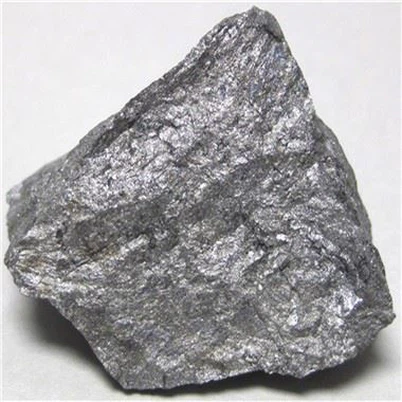

Classification Of Taphole Clay
Leave a message
Taphole clay is a refractory material used to seal the tap hole. It can be divided into two categories: water bearing taphole clay and water free taphole clay. The former is used in small and medium alloy furnaces with low top pressure and low level of intensified smelting, and the latter On large and medium-sized alloy furnaces with high top pressure and high degree of intensified smelting.
Water bearing tapehole clay
Water bearing tapehole clay is usually made of clay, coke powder, bauxite clinker and tar pitch as the main material, and then mixed and stirred with water as a binder. Water bearing tape hole clay is a type of tap hole clay that was used in large quantities in the early days. However, due to its relatively small volume density and weak resistance to scouring of iron slag solution, it is easy to cause insufficient depth of the tap hole and runaway during tapping when used on large and medium alloy furnaces. Phenomena such as coke, iron tapping and venting and unclean iron slag will affect the normal production of the alloy furnace. So far, due to the low cost of water tap hole clay, many medium and small alloy furnaces (<2000m3) are still improving their composition, working hard to adapt to the smelting environment, and their unit consumption is above 1.2kg·t-1.
Water free tapehole clay
Water free tapehole clay generally uses corundum, high alumina bauxite, clay, sericite, pitch, silicon carbide, coke powder, etc. as raw materials, and uses tar, resin, etc. as binders. The bulk density of corundum and high alumina bauxite is relatively large, and they play the role of supporting the skeleton in the tap hole clay, which is the foundation of the tap hole clay strength, which greatly improves the ability of the tap hole clay to resist the scouring of the iron slag solution; the coke powder has good reduction It can protect other carbon components, maintain the reducing atmosphere of the blast furnace tap hole, and has good thermal conductivity, which can be quickly sintered and has a certain sintering strength; silicon carbide has small thermal expansion coefficient, good thermal conductivity, and excellent thermal shock resistance, which can be improved The refractoriness, volume stability, high temperature strength and erosion resistance of tap hole clay; clay and asphalt improve the plasticity of tap hole clay; sericite improves the sintering strength and plasticity of tap hole clay. The Water free tape hole clay has the advantages of no dampness, high strength, stable tap hole depth, small tap hole changes during tapping, etc., and it will not cause a large flow.