
Application Of Titanium-clad Copper Rods in Copper Electrolysis Production
Leave a message
Application of titanium-clad copper rods in copper electrolysis production
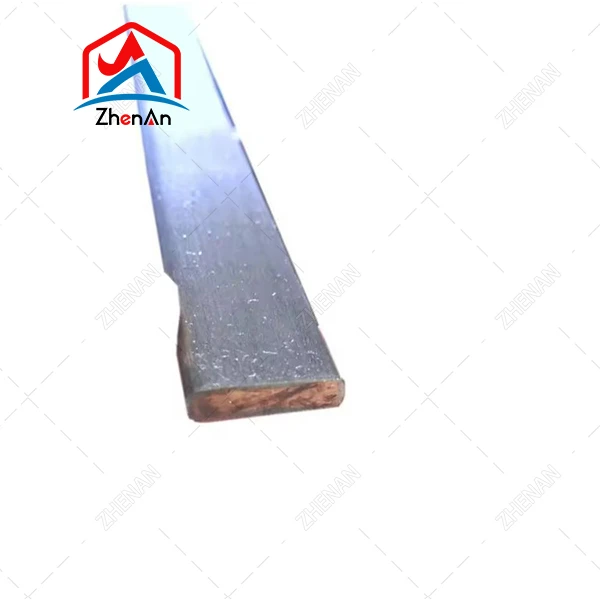
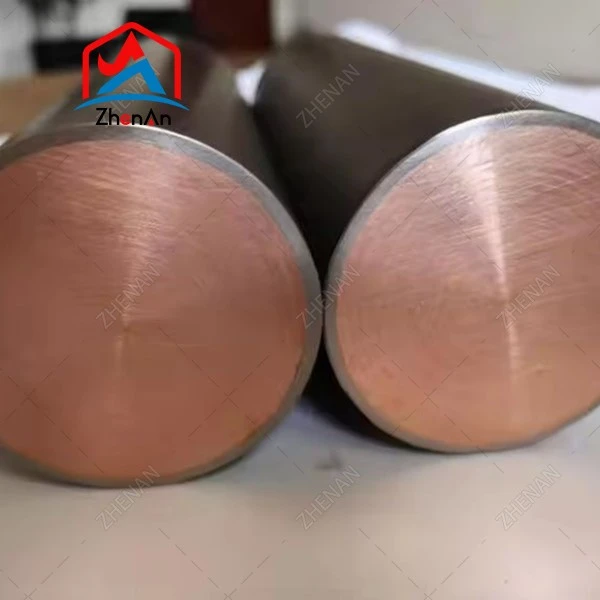
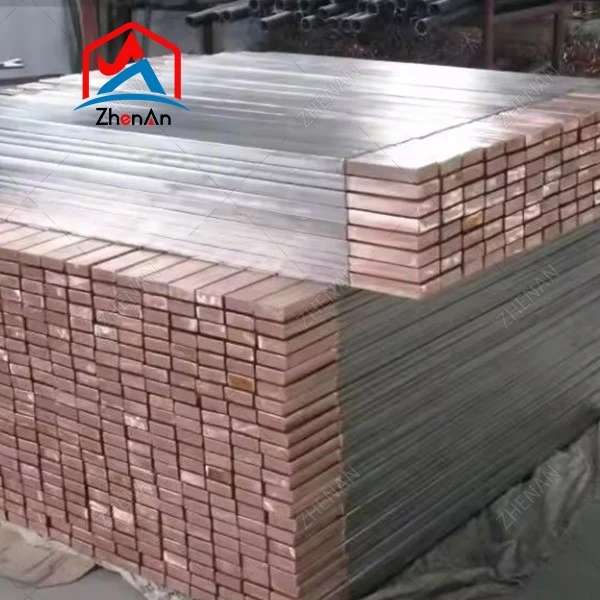
Titanium-clad copper rods are mainly used because the cladding metal titanium has excellent corrosion resistance and the core metal copper has good conductivity. Under strong etching conditions, as a conductor carrying large currents, due to the existence of the plating layer, layers of metal protect copper, preventing corrosion of the copper conductor, ensuring the uniformity of current density, and improving the quality level of electrolytic products.
The conductors are clean and maintenance-free, eliminating electrolyte contamination caused by copper conductor corrosion. Some electroplating electrolysis processes immerse titanium-clad copper rods in the electrolyte to increase current density and efficiency. Due to the excellent characteristics of titanium-copper composite rods, the use of this product will inevitably lead to improved product quality, increased production efficiency, reduced energy consumption, and reduced labor intensity.
Titanium plates are used to produce starting sheets. Since the starting sheets are easy to peel off, they have many advantages such as dense crystal structure, high yield, the board is not easy to short-circuit, light weight, and long life. In the 1970s, my country began to use titanium plates instead. Copper and stainless steel plates. The application of titanium seed plates has created huge economic benefits for copper smelting enterprises. However, for a long time, due to the lack of an ideal connection method between the titanium plate and the cathode copper rod, there are still many difficulties that are difficult to overcome in production. At present, the connection between titanium plate and cathode conductive copper is mainly connected by lugs or fasteners. Join 2 method, as shown below
Using titanium-coated copper rods instead of cathode conductive copper rods is the fundamental solution to eliminate the above shortcomings. The titanium plate and the titanium-copper composite rod are connected by welding, except for the connection between the titanium plate and the conductive rod, so that the titanium plate and the titanium-copper composite rod are integrated and directly connected. Overlap when used.