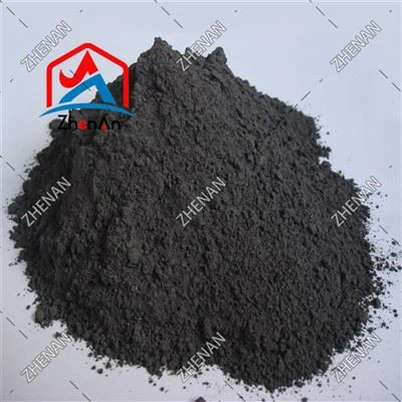

why silicon nitride has a high melting point
Leave a message
Why Silicon Nitride Has a High Melting Point
Silicon nitride (Si₃N₄) is a high-performance ceramic widely used in semiconductors, advanced ceramics, metallurgy, aerospace, and mechanical engineering. One of its most important characteristics is its exceptionally high melting and decomposition temperature, which allows it to perform reliably in extreme thermal environments.
This article explains, from a materials science and industrial application perspective, why silicon nitride has such a high melting point and why this property is critical for industrial use.
Strong Covalent Si–N Bonds
The primary reason silicon nitride has a high melting point is its strong covalent bonding.
Silicon nitride is composed of silicon (Si) and nitrogen (N) atoms bonded by strong covalent Si–N bonds.
These bonds have very high bond energy, requiring a large amount of thermal energy to break.
Compared with metallic bonds in steel or aluminum, covalent bonds are far more resistant to heat.
Because melting requires breaking or weakening atomic bonds, the strong Si–N bonds significantly raise the temperature required for silicon nitride to melt or decompose.
2. Rigid Three-Dimensional Crystal Structure
Silicon nitride forms a highly interconnected three-dimensional crystal lattice.
Each silicon atom bonds with four nitrogen atoms.
Each nitrogen atom bonds with three silicon atoms.
This creates a rigid and stable atomic network that:
Restricts atomic movement at elevated temperatures
Resists thermal vibration and lattice collapse
Maintains structural integrity under extreme heat
Such a dense lattice structure directly contributes to the high melting point and thermal stability of Si₃N₄.
3. Low Atomic Mobility at High Temperatures
For a material to melt, atoms must gain enough energy to move freely. In silicon nitride:
Atomic diffusion is extremely limited
Grain boundaries remain stable at high temperatures
Dislocation movement is minimal compared to metals
This low atomic mobility delays melting and softening, allowing silicon nitride to retain strength well beyond the temperature limits of most engineering materials.
4. Decomposition Instead of Conventional Melting
Unlike many metals and ceramics, silicon nitride:
Does not melt easily under normal atmospheric pressure
Begins to decompose at approximately 1,900–2,000°C rather than forming a liquid phase
This behavior further demonstrates the strength of its atomic bonding and explains why it is classified as a high-temperature ceramic.
5. Comparison with Other Industrial Materials
| Material | Melting / Decomposition Temperature | Bonding Type |
|---|---|---|
| Aluminum | ~660°C | Metallic |
| Steel | ~1,370–1,500°C | Metallic |
| Silicon | ~1,414°C | Covalent |
| Silicon Carbide (SiC) | ~2,700°C | Covalent |
| Silicon Nitride (Si₃N₄) | ~1,900–2,000°C (decomposition) | Covalent |
This comparison highlights the strong relationship between covalent bonding, lattice rigidity, and high-temperature resistance.
6. Industrial Significance of a High Melting Point
Because of its high melting and decomposition temperature, silicon nitride is widely used in:
Semiconductor manufacturing (dielectric and passivation layers)
High-temperature bearings and mechanical components
Aerospace and gas turbine applications
Advanced structural ceramics
High-power and high-temperature electronic devices
At ZhenAn, silicon nitride materials are supplied with controlled purity, stable microstructure, and consistent thermal performance, ensuring reliability in demanding industrial environments.
Frequently Asked Questions (FAQ)
Does silicon nitride actually melt?
Under normal pressure, silicon nitride tends to decompose rather than melt, typically above 1,900°C.
Why do covalent bonds increase melting point?
Covalent bonds require more energy to break than metallic bonds, raising the temperature needed for melting or decomposition.
Is silicon nitride more heat-resistant than steel?
Yes. Silicon nitride maintains mechanical strength and stability at temperatures where most steels soften or fail.
Conclusion
Silicon nitride has a high melting and decomposition temperature due to its strong covalent Si–N bonds, rigid three-dimensional crystal structure, and low atomic mobility at high temperatures. These fundamental properties make Si₃N₄ an essential material for high-temperature, high-reliability industrial and semiconductor applications.
ZhenAn provides high-quality silicon nitride engineered for thermal stability, durability, and consistent industrial performance.
Visit ferro-silicon-alloy.com to learn more about the product. If you would like to learn more about the product price or are interested in purchasing, please email info@zaferroalloy.com. We will get back to you as soon as we see your message.

Why Choose ZhenAn
• 30+ Years of Industry Experience
Specialized in ferroalloys and metallurgical materials with proven expertise and stable supply capability.
• Strong Production Capacity
Modern facilities with an annual output of over 150,000 MT, ensuring consistent quality and reliable delivery.
• Strict Quality Control
In-house laboratories and professional inspection teams guarantee precise composition and product consistency.
• Wide Product Range & Customization
Complete ferroalloy portfolio with flexible specifications, sizes, and packaging to meet different applications.
• Global Export & Reliable Service
Extensive international trade experience supporting customers across Europe, Asia, and the Americas.
one-stop solution
professional team
high quality