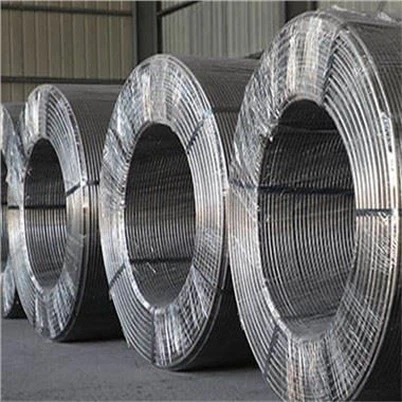

Ferrosilicon vs Silicon Metal: Key Differences
Leave a message
Ferrosilicon vs Silicon Metal: What Is the Difference?
Ferrosilicon and silicon metal are both silicon-based materials, but they are fundamentally different products with different compositions, production routes and applications.
1. Definitions
| Feature | Silicon metal (Si metal) | Ferrosilicon (FeSi) |
|---|---|---|
| Type | Near-pure elemental silicon | Iron-silicon alloy |
| Silicon content | 98-99.99% | 45-90% (typical grades 65/72/75) |
| Iron content | Trace only (about 0.1-0.5% as impurity) | Significant (about 10-55%, balance) |
| Appearance | Silver-grey, shiny, crystalline | Grayish lumps, granules or powder |
| Magnetism | Non-magnetic | Slightly magnetic (iron content) |
| Conductivity | Semiconductor (conductivity far below metals, rises with temperature) | Metallic-type conductor (iron-rich) |
2. Production Routes
| Material | Raw materials | Main reaction | Iron in charge |
|---|---|---|---|
| Silicon metal | Silica (SiO2) + carbon (coke) | SiO2 + 2C gives Si + 2CO | No iron used |
| Ferrosilicon | Silica + carbon + iron ore/scrap | SiO2 + 2C + Fe gives FeSi + CO | Iron is essential and remains in the alloy |
3. Grades
Ferrosilicon (GB/T 2272): FeSi45 (40-47% Si), FeSi65 (60-67% Si), FeSi75 (72-78% Si, most widely used), FeSi90 (88-92% Si).
Silicon metal (GB/T 2881): grades named by Fe/Al/Ca impurities, e.g., 1101, 2202, 3303, 441, 553; off-grade material down to about 96% Si.
4. Applications
| Industry / use case | Silicon metal | Ferrosilicon |
|---|---|---|
| Steelmaking (deoxidation, alloying) | Rarely (special steels, minor Si source) | Yes - primary use |
| Foundry (inoculation, nodulization) | No | Yes |
| Aluminum alloys | Yes - main Si source | Limited (higher Fe not allowed) |
| Silicones / chemicals | Yes - feedstock | No |
| Photovoltaics / semiconductors | Yes - after purification to polysilicon | No |
5. Key Takeaways
Ferrosilicon is an iron-silicon alloy for metallurgy (steelmaking, foundry); silicon metal is a near-pure element for chemicals, aluminum alloys and (after refining) electronics.
If the application tolerates iron and needs silicon for deoxidation/alloying, ferrosilicon is the economical choice; if iron is unacceptable (aluminum alloys, silicones, electronics), silicon metal is required.
Silicon metal has semiconductor properties; it does not conduct electricity like a metal, and its conductivity increases with temperature (opposite to metals).
Frequently Asked Questions
What is the main difference between ferrosilicon and silicon metal? Ferrosilicon is an iron-silicon alloy containing 45-90% silicon with iron as the balance, while silicon metal is near-pure elemental silicon containing 98-99.99% silicon with only trace iron (about 0.1-0.5%) as an impurity. This difference in composition drives entirely different uses.
How do the production routes of the two materials differ? Silicon metal is made by reducing silica (SiO2) with carbon (coke) in the reaction SiO2 + 2C giving Si + 2CO, with no iron added to the charge. Ferrosilicon is produced in the same type of furnace but with iron ore or scrap in the charge, so the reaction SiO2 + 2C + Fe gives FeSi + CO and the iron remains in the alloy.
What are the common ferrosilicon grades? Under GB/T 2272, common grades are FeSi45 (40-47% Si), FeSi65 (60-67% Si), FeSi75 (72-78% Si, the most widely used) and FeSi90 (88-92% Si).
How are silicon metal grades named? Under GB/T 2881, silicon metal grades are designated by their iron, aluminium and calcium impurity levels, for example 1101, 2202, 3303, 441 and 553. Off-grade material can fall to about 96% silicon.
Which applications use ferrosilicon and which use silicon metal? Ferrosilicon is the primary material for steelmaking deoxidation and alloying, and for foundry inoculation and nodulization. Silicon metal is the main silicon source for aluminum alloys and the feedstock for silicones and other chemicals, and it is purified into polysilicon for photovoltaics and semiconductors. Ferrosilicon is rarely used where iron cannot be tolerated.
How do ferrosilicon and silicon metal differ in magnetism and conductivity? Ferrosilicon is slightly magnetic because of its iron content and conducts like a metallic conductor. Silicon metal is non-magnetic and behaves as a semiconductor: its conductivity is far below that of metals and it rises with temperature, which is the opposite of metallic behavior.