
Home - Knowledge - Details

What Is Ferrosilicon Used For?

🔍 What is Ferrosilicon Used For?

Ferrosilicon (FeSi)​ - also known as Ferro Silicon, Iron Silicon Alloy, Silicon Ferro, or by its chemical abbreviation FeSi​ - is a ferroalloy​ composed primarily of iron (Fe)​ and silicon (Si). It is one of the most widely used alloying and deoxidizing agents​ in metallurgy and foundry industries.
The silicon content​ in Ferrosilicon (typically ranging from 15% to 90%, with common grades like FeSi 45, FeSi 65, and FeSi 75) gives it unique chemical and physical properties that make it invaluable in metal production.

⚙️ Primary Uses of Ferrosilicon

1. 🧪 Deoxidation in Steelmaking

What it is:
During steel production, oxygen from the air or raw materials dissolves into the molten steel, forming oxides that weaken the final product.
What Ferrosilicon does:
Ferrosilicon acts as a powerful deoxidizer. The silicon​ in the alloy reacts with oxygen to form silica (SiO₂), which floats to the surface as slag and is removed.
Chemical Reaction:
2FeO + Si → 2Fe + SiO₂
Why it matters:


Produces cleaner, stronger, and more ductile steel


Prevents defects caused by trapped oxygen


Essential in all types of steel, including carbon steel, alloy steel, and stainless steel

2. 🛠️ Alloying Agent in Steel & Cast Iron

What it is:
Silicon is added to metals to enhance their physical and mechanical properties.
What Ferrosilicon does:
As a source of silicon, Ferrosilicon is used to:


Increase strength and hardness


Improve elasticity and wear resistance


Enhance magnetic properties​ (important in electrical steels)


Boost high-temperature performance
Common Applications:


Electrical steels​ (transformers, motors) – Silicon improves resistivity and reduces energy loss


Stainless & heat-resistant steels​ – Better oxidation resistance


Tool steels & spring steels​ – Improved durability


Cast irons​ – Influences graphite formation and strength

3. 🧱 Inoculation & Nodularization in Cast Iron

What it is:
In cast iron, the way carbon solidifies (as graphite) greatly impacts the metal's properties.
What Ferrosilicon does:


In gray cast iron:​ Acts as an inoculant, providing nucleation points for fine, evenly distributed graphite flakes → results in stronger, more machinable iron.


In ductile (nodular) iron:​ Used as a carrier for magnesium​ to promote the formation of spheroidal (round) graphite nodules​ → gives the iron high strength and ductility.
Key Role:​ Controls the graphite structure, which defines the quality and performance of the cast iron.

4. 🏭 Production of Other Ferroalloys

What it is:
Ferrosilicon is not only an end product but also a key ingredient​ in manufacturing other ferroalloys.
What it does:


Acts as a reducing agent​ to remove oxygen from metal ores (e.g., chromium, manganese)


Example: Used to produce Ferro Chrome (FeCr)​ and Ferro Manganese (FeMn)
How it works:
Silicon in Ferrosilicon reacts with oxygen in the ore, leaving behind the pure metal that can be alloyed with iron.

5. 🔧 Welding Applications

What it is:
In welding, oxygen and nitrogen can contaminate the weld pool, causing defects.
What Ferrosilicon does:


Included in welding electrode coatings​ as a deoxidizer


Ensures clean, defect-free welds with good penetration and strength

🧱 Physical Forms of Ferrosilicon & Their Uses

Ferrosilicon is produced in different physical forms​ depending on the application:
Form
Description
Common Use
Ferrosilicon Lumps (FeSi Lumps / Fesi Pieces)
Solid chunks, 10–100 mm
Ladle additions, furnace charge, bulk alloying
Ferrosilicon Granules
Medium-sized particles, 3–25 mm
Foundry use, medium furnaces, continuous casting
Ferrosilicon Powder
Fine particles, <1 mm
Welding, inoculation, powder metallurgy, friction materials
Common grade references: FeSi 75, Ferro Silicon 75, Silicon Ferro 75, FeSi Lumps, Ferrosilicon Granules

✅ Summary: Main Applications of Ferrosilicon

Application Area
Role of Ferrosilicon
Key Benefit
Steelmaking
Deoxidation
Removes oxygen, improves steel quality
Steelmaking
Alloying
Enhances strength, hardness, magnetic properties
Cast Iron
Inoculation
Produces stronger, more machinable gray iron
Cast Iron
Nodularization
Enables production of ductile (spheroidal graphite) iron
Ferroalloy Production
Reducing Agent
Helps produce Chrome, Manganese & other alloys
Welding
Deoxidizer in Electrodes
Prevents weld defects, ensures strong welds

🔑 Keywords Integrated:

Ferrosilicon, Ferro Silicon, Ferrosilicon Alloy, FeSi, Iron Silicon Alloy, Ferrosilicon Lumps, Ferrosilicon Granules, Ferrosilicon Powder, Fe Silicon, Fesi Ferrosilicon, Silicon Ferro

🎯 Conclusion: Why is Ferrosilicon Important?
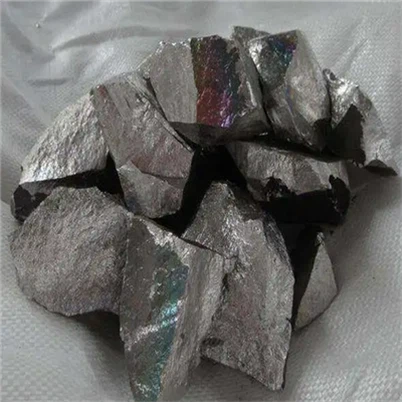
Ferrosilicon is a foundational material in metallurgy, serving multiple essential purposes:


It cleans molten metal​ by removing unwanted oxygen (deoxidation)


It enhances metal properties​ by adding silicon (alloying)


It controls graphite formation​ in cast iron (inoculation & nodularization)


It enables production of other alloys​ (reducing agent)


It improves weld quality​ (welding applications)
Whether you're producing steel for construction, cast iron for machinery, or special alloys for high-tech applications, Ferrosilicon plays a critical behind-the-scenes role​ in making those materials stronger, lighter, and more reliable.

Send Inquiry

You Might Also Like