
What is ferrophosphorus?
Leave a message

What Is Ferrophosphorus? Composition, Grades, Properties and Uses in Steelmaking
1. What Is Ferrophosphorus?
Ferrophosphorus (FeP) is an iron-phosphorus ferroalloy consisting mainly of iron and phosphorus, with controlled amounts of silicon, carbon, sulfur and manganese.
Typical composition:
Phosphorus (P): 15–26%
Silicon (Si): ≤3–6% depending on grade
Balance: iron and trace elements
Ferrophosphorus is produced mainly as a by-product of phosphorus production from phosphate ores or through electric furnace reduction processes. After refining and sizing, it is supplied as lumps or granules for metallurgical applications.
Unlike ordinary steelmaking additives where phosphorus is minimized, ferrophosphorus is intentionally added when controlled phosphorus content is required to improve specific material properties.
2. Role of Ferrophosphorus in Steel
2.1 Phosphorus Effect in Conventional Steel
In most structural steels, phosphorus is considered an undesirable impurity because excessive phosphorus can:
Reduce ductility
Lower impact toughness
Increase cold brittleness
Raise the ductile-to-brittle transition temperature
Phosphorus segregates easily during solidification and may form brittle phases along grain boundaries.
Therefore, standard steel grades usually require strict phosphorus control.
2.2 Controlled Phosphorus Addition
In selected applications, phosphorus provides beneficial effects.
Ferrophosphorus is used to improve:
Corrosion Resistance
Controlled phosphorus additions can enhance resistance to atmospheric corrosion, especially in certain low-alloy steels.
Wear Resistance
Phosphorus contributes to strengthening through:
Solid-solution strengthening
Formation of hard phosphide phases
This improves surface hardness and wear resistance.
Machinability Improvement
In some cast iron and specialty alloy applications, controlled phosphorus content improves:
Cutting performance
Casting characteristics
Surface finish
3. Main Applications of Ferrophosphorus
3.1 Automotive Components
Ferrophosphorus is used in materials such as:
Cylinder liners
Engine components
Wear-resistant cast parts
The phosphorus-containing phases improve hardness and wear resistance.
3.2 Steel Rolling Products
Certain rolling steel products use controlled phosphorus additions to achieve:
Higher strength
Improved corrosion resistance
Better surface performance
3.3 Large Castings
Ferrophosphorus can be added during casting production for:
Heavy machinery components
Wear-resistant castings
Industrial equipment parts
3.4 Metallurgical Alloy Production
Ferrophosphorus can also serve as:
Phosphorus alloying source
Metallurgical additive
Intermediate alloy material
4. Ferrophosphorus Grades and Chemical Composition
Typical commercial grades are classified according to phosphorus content.
| Grade | P (%) | Si (Max %) | C (Max %) | S (Max %) | Mn (Max %) |
|---|---|---|---|---|---|
| FeP24 | 23.0–25.0 | 3.0 | 1.0 | 0.5 | 2.0 |
| FeP21 | 20.0–23.0 | 3.0 | 1.0 | 0.5 | 2.0 |
| FeP18 | 17.0–20.0 | 3.0 | 1.0 | 0.5 | 2.5 |
| FeP16 | 15.0–17.0 | 3.0 | 1.0 | 0.5 | 2.5 |
Note:
Actual chemical composition may vary according to customer requirements and applicable standards, such as:
GB/T 3211 - Ferrophosphorus
The final composition should always be confirmed by a Certificate of Analysis (COA).
5. Ferrophosphorus Physical Form and Customization
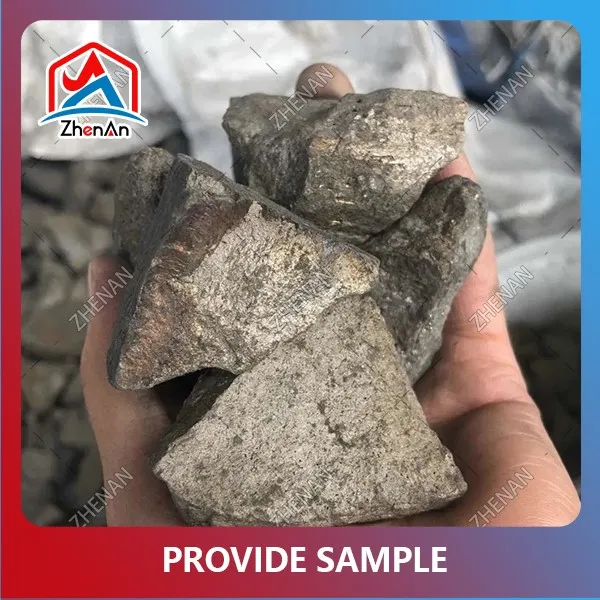
Commercial ferrophosphorus is generally supplied as:
Lump material
Crushed particles
Furnace-grade pieces
Common supply considerations:
| Parameter | Typical Requirement |
|---|---|
| Phosphorus content | Stable target grade |
| Particle size | Customized according to furnace charging requirements |
| Appearance | Clean metallic lumps, low powder content |
| Packaging | Bulk bags, steel drums or customized packing |
High-quality ferrophosphorus should have:
Uniform chemical composition
Low excessive fines
Good storage stability
Suitable size distribution for efficient furnace charging
6. Ferrophosphorus vs Other Ferroalloys
| Material | Main Element | Primary Function |
|---|---|---|
| Ferrophosphorus | Phosphorus | Controlled P alloying |
| Ferrosilicon | Silicon | Deoxidization and Si alloying |
| Ferromanganese | Manganese | Strength improvement and deoxidization |
| Ferrovanadium | Vanadium | Grain refinement and high-strength steel production |
Ferrophosphorus differs from common ferroalloys because its purpose is not mainly deoxidization, but controlled phosphorus modification of alloy properties.
7. Quality Control and Purchasing Guide
When purchasing ferrophosphorus, buyers should confirm:
Chemical Requirements
Specify:
Phosphorus content
Silicon content
Carbon limit
Sulfur limit
Manganese content
Size Requirements
Confirm:
Lump size range
Powder percentage
Furnace charging requirements
Documentation
Request:
Certificate of Analysis (COA)
Chemical composition report
Packing information
Batch traceability documents
FAQ About Ferrophosphorus
1. What is ferrophosphorus used for?
Ferrophosphorus is mainly used as a phosphorus alloying additive in steel and cast iron production to improve hardness, wear resistance and corrosion resistance.
2. Is phosphorus beneficial or harmful to steel?
Both. Excess phosphorus reduces toughness and ductility, but controlled phosphorus additions can improve strength, hardness and corrosion resistance in specific steel grades.
3. What are the common ferrophosphorus grades?
Common grades include:
FeP24
FeP21
FeP18
FeP16
The grade is mainly determined by phosphorus content.
4. How does ferrophosphorus improve wear resistance?
Phosphorus strengthens the iron matrix through solid-solution strengthening and can form hard phosphide phases that increase hardness.
5. What information should buyers provide when ordering ferrophosphorus?
Buyers should specify:
Required P content
Chemical limits
Particle size
Quantity
Packaging requirements
Delivery terms

Contact Us
For ferrophosphorus FeP16–FeP24, customized phosphorus content, particle size and export supply solutions, please contact:
WhatsApp: +86 15518824805
Email: info@zaferroalloy.com