
Benefits of Silicon Carbide Deoxidizer in Steelmaking
Leave a message
How Silicon Carbide Deoxidizes Steel
Silicon carbide carries both silicon and carbon in a single particle. In the melt, SiC dissociates and both elements act as deoxidizers: silicon combines with oxygen to form silica that enters the slag, while carbon removes further oxygen as carbon monoxide gas. Because the two deoxidizers work together from one particle, the reaction is fast and complete compared with dosing ferrosilicon and carbon separately.
Key Benefits
Shorter reaction time: deoxidation is completed faster than with ferrosilicon plus carbon powder, saving time per heat.
Energy savings: faster reaction and the exothermic oxidation of silicon reduce the energy input needed to finish the heat.
Labor savings: fewer separate additions simplify handling and cut man-hours.
Favorable desulfurization conditions: the heat released during SiC reaction helps maintain the temperature and slag conditions that favor sulfur removal.
Cleaner steel: the shorter reduction period reduces the chance of air pick-up and re-oxidation in the later stage, improving the quality of the liquid steel.
Less dust and better absorption: particles or briquettes release far less dust than loose powder, raising absorption rates and reducing the environmental burden.
Furnace protection: controlled addition protects the furnace lining and extends lining life compared with aggressive powder practice.
Typical Use Forms
| Form | Typical Size | Preferred Application |
|---|---|---|
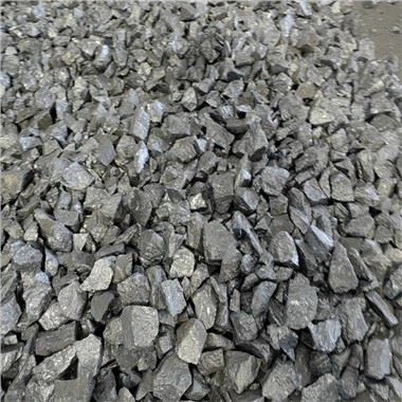
| SiC particles | 1-10 mm | Ladle and furnace additions |
| SiC briquettes/balls | 20-60 mm | Converter and EAF charging |
| SiC powder | Under 1 mm | Injection and fine dosing |
Practical Application Notes
Match the form and size to the furnace type: coarse particles for ladle treatment, briquettes for furnace charging, powder for injection systems.
Control addition timing so deoxidation finishes before alloying additions; verify the oxygen level with a probe where available.
Coordinate with slag practice: SiC deoxidation works best with a basic slag that can absorb the silica formed.
Store SiC dry and free of contamination; moisture and foreign fines reduce absorption and predictability.
Verification When Sourcing
Request the certificate of analysis with SiC content, free carbon, and impurity levels (Fe, Al, Ca, S, P).
Confirm particle size distribution and briquette strength for the selected form.
Check batch-to-batch consistency; deoxidation performance depends on repeatable chemistry.
FAQ
1. Why is silicon carbide a good deoxidizer?
Because one particle supplies both silicon and carbon deoxidizers that react together, giving faster and more complete deoxidation than separate additions.
2. Does SiC deoxidizer save energy?
Yes. Faster reaction shortens furnace time and the exothermic oxidation of silicon contributes heat, lowering net energy consumption per heat.
3. Which form should I use, particles or briquettes?
It depends on the process: briquettes suit converter and EAF charging, particles suit ladle additions, and powder suits injection systems.
4. How does SiC improve steel cleanliness?
A shorter reduction period reduces the chance of air pick-up and re-oxidation in the later stage, so the liquid steel stays cleaner.
5. Does SiC deoxidizer protect the furnace lining?
Controlled SiC addition causes less dust and turbulence than powder practice, which reduces lining wear and extends furnace campaign life.