
Ferrosilicon 75 Products: Grades, Forms and Applications
Leave a message
What FeSi75 Actually Is
Ferrosilicon 75 is the commercial grade family in which silicon sits in the 74-80% band, with iron making up most of the balance and aluminium, carbon, sulphur and phosphorus held to defined ceilings. It is the workhorse deoxidation and alloying addition of the steel plant, and also the base material for foundry inoculants and for a number of specialised products that are chemically related but functionally different.
The number 75 is a silicon target, not a purity claim. Two deliveries that both report 75% silicon can differ substantially in aluminium, in carbon, in size distribution and in internal structure, and those differences decide whether the material performs in a ladle, an induction furnace or a grinding circuit. Purchasers who treat FeSi75 as a single commodity tend to discover this at the point of a failed heat rather than at the point of delivery.
The sections below separate the product family by form and by function, then set out the acceptance rules that apply across all of them.
Grades and the Chemistry That Distinguishes Them
Within the FeSi75 family, producers subdivide by residual aluminium and carbon because those two elements drive most downstream requirements. A general-purpose grade tolerates around 2.0% aluminium; a refined grade holds aluminium near 1.5% or lower; tightly controlled grades push aluminium below 1.0% and carbon toward 0.1% for sheet and electrical applications where residuals affect texture and core loss.
| Parameter | General FeSi75 | Controlled residual FeSi75 | Effect on steelmaking |
|---|---|---|---|
| Silicon | 74.0-80.0% | 74.0-80.0% | Determines addition weight and silicon recovery |
| Aluminium | 2.0% max | 1.5% max and lower by agreement | Raises acid-soluble Al; matters for grain size control |
| Carbon | 0.2% max | 0.1% max and lower by agreement | Limits carbon pick-up in low-carbon and ultra-low-carbon steels |
| Sulphur | 0.02% max | 0.02% max or tighter | Small but cumulative in sulphur-sensitive grades |
| Phosphorus | 0.04% max | 0.04% max or tighter | Cannot be removed downstream; fixed at smelting |
The grade reference for this family is GB/T 2272, which also defines FeSi72 and FeSi65. Choosing between them is an economic calculation rather than a metallurgical preference: FeSi72 delivers slightly less silicon per tonne and costs less per tonne, so the comparison must be made on cost per unit of silicon recovered into the heat, not on cost per tonne of alloy. The recovery figure also depends on size and on addition method, which is why the grade decision and the size decision cannot be made independently.
Lump, Granule and Powder: Forms and Their Uses
FeSi75 is sold in several physical forms, and each form exists because a particular melting or injection practice needs it.
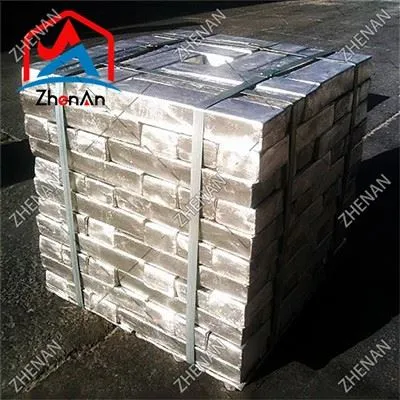
Standard lump, typically 10-50 mm, is the default for electric arc furnace and ladle addition. It sinks through the slag, melts in the metal, and gives a slow but predictable silicon recovery. It is the cheapest form per unit of silicon and the correct choice whenever the ladle is large and the addition can be made early.
Coarse lump, typically 10-100 mm, suits very large ladles, cupola charging and induction furnace Practice where the bath is deep enough to dissolve a large piece before it reaches the bottom. The risk to check is internal porosity: a porous lump floats, reacts at the slag line and reports low recovery.
Granules, typically 3-8 mm or 1-3 mm, feed automatic addition systems, continuous casting tundishes and foundry streams where a metered flow is required. Their advantage is flowability and consistent dissolution; their weakness is a higher surface-to-volume ratio, which means moisture and oxidation sensitivity.
Fines and powder, typically 0-3 mm or finer, go into cored wire, briquettes and powder injection. Powder must be dry and low in fines below the wire diameter, otherwise feeding becomes erratic and the wire jams.
Briquettes exist to convert fines back into a chargeable form. They are mechanically pressed, sometimes with a binder, and their value depends entirely on cohesion: a briquette that disintegrates in the chute is a dust problem with a lump price.
Deoxidation: The Primary Volume Application
Silicon has a high affinity for oxygen at steelmaking temperatures, and FeSi75 is added to kill the bath after oxygen blowing. The reaction forms silica, which enters the slag, and the efficiency of the addition depends on how much of the silicon reaches the metal before it meets oxygen in the slag or the atmosphere.
Several practical rules follow. Addition should be made with the bath at temperature, because cold metal freezes around the lump and delays dissolution. The slag should be in a condition to absorb the silica produced, otherwise the reaction reverses. And the sizing must match the addition method: pneumatic injection wants fine material, but shovel or chute addition of fines simply burns at the surface.
Silicon also acts as an alloying element where the specification calls for it, notably in silicon-killed structural and spring grades, where the target silicon is achieved by deliberate addition rather than by residual from deoxidation. In those heats, aluminium control and silicon control interact, and the aluminium ceiling on the FeSi75 becomes a real constraint rather than a formality.
Electrical Steel, Grain-Oriented Sheet and Residual Control
Silicon steel is the application where FeSi75 grade selection is most sensitive. Silicon raises electrical resistivity and reduces core loss, and it is added in quantities far larger than a deoxidation addition. Because the addition is large, the residuals carried by the alloy are multiplied by the same factor: an aluminium level that is negligible at a 2 kg per tonne addition is not negligible at a 30 kg per tonne addition.
For this reason, electrical steel producers specify low-aluminium, low-carbon FeSi75 and frequently require the supplier to declare the analytical method as well as the result. Titanium, zirconium and other strong nitride formers in the alloy are also questioned, because they affect inclusion populations and magnetic behaviour. The relevant acceptance document is the mill's own internal specification layered on the GB/T 2272 grade, and the certificate must report each element separately.
Foundry Inoculation and Calcium-Bearing Variants
In iron foundries, ferrosilicon is used as an inoculant to control graphite nucleation and chill depth in cast iron. Plain FeSi75 works, but inoculation is more stable with calcium- and aluminium-bearing grades, where the calcium content typically falls in the 0.5-2.5% range and the calcium-to-aluminium ratio governs the nucleation behaviour. Barium-bearing grades are used where the casting needs a longer inoculation life, for example in heavy sections that cool slowly.
Inoculant performance is measured in the foundry, by chill testing and by microstructure, not by silicon assay alone. A supplier who changes the calcium source without telling the customer can shift chill depth noticeably while the silicon certificate stays identical. Buyers of inoculant grades should therefore specify Ca, Al, Ba and the size fraction, and should verify the lot against a retained reference sample rather than against the nominal analysis.
Specialised Products Built on Ferrosilicon
Two product families are frequently confused with FeSi75 because they share the name.
Magnesium ferrosilicon, used for nodularisation in ductile iron, is a distinct alloy with magnesium typically in the 3-10% range together with calcium and rare earths, made by a specialised process because magnesium boils well below the alloy's melting point. It must never be specified against a FeSi75 analysis, and it requires dry storage and controlled handling because magnesium reacts with moisture.
Densified medium powder for heavy-media separation is atomised and heat-treated to a rounded particle with silicon around 15-16% and a density near 6.7-7.0 g/cm3. Its specification is built around particle shape, density and magnetic recovery, not around steelmaking residuals. Anyone ordering it against a FeSi75 grade will receive the wrong material.
Packaging, Storage and Transport
FeSi75 is delivered in 1 tonne jumbo bags, 25 kg bags, steel drums or bulk. The choice affects moisture exposure, handling loss and the ability to blend. For powder and granule forms, the bag liner matters as much as the bag: a moisture barrier that is punctured in transit defeats the whole packaging specification.
Storage should be dry, covered and on a raised floor. Wet ferrosilicon generates hydrogen on contact with moisture, and the hazard is worse where lime-bearing or magnesium-bearing material is stored alongside it. Fine material that has absorbed moisture also oxidises, producing a white silica film that slows dissolution and raises dust. Bulk heaps should be protected from rain and should not be stored against steel structures that can be attacked by the mildly alkaline runoff.
For sea freight, the material is not classified as dangerous goods in lump form, but the shipper still needs to confirm the moisture condition at loading. Condensation inside a container during a long voyage is a common cause of arrival claims that have nothing to do with alloy quality.
Acceptance Checklist for a FeSi75 Consignment
A workable acceptance procedure covers four layers. First, documentation: certificate of analysis by heat or lot, with silicon, aluminium, carbon, sulphur and phosphorus reported separately, plus the grade designation against GB/T 2272. Second, sampling: increments across the consignment under a documented plan, reduced by crushing and quartering, following GB/T 4010 or ISO 3713 rather than surface sampling. Third, physical checks: size distribution against the ordered fraction using the GB/T 13247 grain size method, moisture, and a visual check for slag crust and unreacted quartz. Fourth, a retained sample for the agreed retention period, so that a later dispute can be resolved against material rather than memory.
Two commercial points complete the picture. Delivery terms should state whether the tonnage is gross or net and how moisture is treated, since a 1% moisture allowance on 1000 tonnes is 10 tonnes of water. And the contract should name the analytical method and the arbitration laboratory, because disputes about a tenth of a percent of aluminium are settled by method, not by argument.
FAQ
Q: Is FeSi75 the same as 75% ferrosilicon?
Yes in ordinary trade usage: FeSi75 designates the grade family with silicon in the 74.0-80.0% range under GB/T 2272, and the 75 refers to the nominal silicon target rather than to a guaranteed exact content.
Q: What size of FeSi75 should be used for ladle deoxidation?
Standard lump of about 10-50 mm is the usual choice for electric arc furnace and ladle work; granules are used where metered automatic addition or a tundish stream is involved.
Q: Why does aluminium content matter in ferrosilicon 75?
Aluminium carries through into the steel and affects grain size, inclusion type and, in electrical steels, magnetic behaviour; large silicon additions multiply the residual, so low-aluminium grades are specified where the addition rate is high.
Q: How do FeSi75 and FeSi72 compare on cost?
Comparison must be on cost per unit of silicon recovered into the heat, not cost per tonne: FeSi72 carries slightly less silicon and usually a lower price, and dissolution losses differ with size and addition practice.
Q: Can magnesium ferrosilicon be substituted for FeSi75?
No. Magnesium ferrosilicon is a separate alloy for nodularisation with magnesium in the 3-10% range and a different reaction behaviour, and the two are not interchangeable in either direction.
Q: What causes low silicon recovery from a ferrosilicon addition?
Common causes are cold bath temperature, oxidising slag, sizing that is too fine for the addition method, porous lump that floats at the slag line, and moisture picked up in storage.