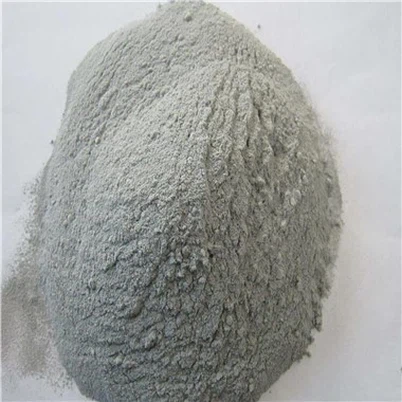

Ferrotungsten: Density, Grades and Bath Behaviour
Leave a message
What Ferrotungsten Is and Why the Alloy Form Is Used
Ferrotungsten is an iron-tungsten master alloy produced for one purpose: to raise the tungsten content of a steel or alloy melt without the melting and oxidation problems that pure tungsten would create. Commercial material carries between about 70% and 80% W, with iron as the balance and a small but consequential allowance for carbon, silicon, manganese, sulphur and phosphorus. The governing grade family in Chinese trade is GB/T 3648, under which FeW75 and FeW80 are the designations most often quoted.
The alloy exists because tungsten metal melts at 3422 ℃ and would not dissolve in a steel bath at 1600 ℃ in any practical time. Pre-alloying with iron depresses the melting range into a band that, while still far above steelmaking temperature, allows the material to dissolve by diffusion once it has been held in the bath long enough. That single physical fact explains most of the commercial rules around ferrotungsten: it must be sized, it must be charged early, and it must be given residence time. Tungsten also has a strong affinity for oxygen at high temperature, so the alloy is added to a deoxidised or partly deoxidised bath rather than to a fully oxidised one, and it is protected from long exposure to an oxidising slag.
Grades and Chemical Composition
Tungsten content is the paid element, but the carbon and silicon figures decide whether the lot can be used at all in a given grade of steel. FeW75 is the workhorse for tool steels and high-speed steels; FeW80 is specified where a higher tungsten increment is needed and where the extra density and lower iron dilution are worth the price. Low-carbon variants exist because a 0.4% C addition would be ruinous in a 0.03% C stainless or in a low-carbon die steel, and the certificate must be read against the receiving heat's own carbon headroom, not against the alloy's nominal grade alone.
| Element | FeW75, typical range | Effect on the receiving heat |
|---|---|---|
| W | 70-80% | Paid element; sets the addition weight |
| C | 0.10-0.40% max | Directly raises carbon in the bath |
| Si | 0.3-0.7% max | Raises silicon; reduces ferrosilicon need |
| Mn | 0.3-0.6% max | Minor manganese credit, usually ignored |
| S | 0.05-0.08% max | Loads the desulphurisation step |
| P | 0.03-0.05% max | No removal route; accumulates in the heat |
| As, Cu | individually limited | Residuals; relevant in tool and die steels |
Because tungsten is not removed at any later stage of steelmaking, the analysis is fixed the moment the alloy dissolves. There is no correction step, no trimming addition that can bring an overshot heat back, and no slag treatment that will recover a misjudged charge. This is the reason ferrotungsten attracts more sampling discipline than its tonnage would suggest.
Why Density Matters More Than Any Other Physical Property
Ferrotungsten is among the densest materials charged into a steel furnace, with a bulk density well above steel and individual lumps that sink immediately through any slag layer. The practical consequences run in both directions. On the positive side, the material will not float on the slag and oxidise, so recovery is high and stable; figures of 90-95% are normal for correctly sized lump. On the negative side, lumps that reach the bottom of an unstirred ladle can sit there through the whole cast, producing a ladle analysis that reads low while the molybdenum-style assumption of uniform dissolution is quietly wrong.
Density also governs the addition calculation. A charge designed on volume rather than mass will over-add, because a given scoop of ferrotungsten weighs far more than the same scoop of ferrosilicon. Weighing, not counting, is the only defensible method. In small induction furnaces making tool steel, this is where most tungsten analysis errors originate: the addition is estimated by eye from a bucket, and the resulting heat is either short of tungsten and soft, or over the band and brittle.
The heavy-lump behaviour has a third consequence in continuous casting and in ingot teeming. If the alloy is added late, the first portion of the cast can be lean in tungsten while the last portion runs rich, which shows up as hardness scatter along a rolled bar and as inconsistent response to hardening. Adding early and stirring solves the problem more cheaply than any downstream inspection.
Melting and Dissolution Behaviour in the Bath
Ferrotungsten does not melt on contact with liquid steel. It dissolves, and the rate is controlled by the exposed surface area, the bath temperature, the carbon content of the steel, and the degree of stirring. Carbon matters because tungsten forms carbides readily; in a high-carbon tool steel melt the dissolution is faster and more complete than in a low-carbon stainless, where the alloy tends to sit as a discrete phase until mechanical stirring distributes it. This is why a heat with a low carbon specification needs a longer holding time or a finer sizing band.
Very fine sizing is not the answer, however. Fines below about 5 mm oxidise on the pile, generate dust, and are easily carried into the slag, where the tungsten is lost. A band of roughly 10-50 mm is the usual compromise for ladle or small-furnace work, and 10-100 mm for electric furnace charging where the bath is deep and the arc stirs the melt. Oversize pieces above the agreed top size are the most common cause of a low tungsten analysis on an otherwise correct charge.
Temperature is the other lever. Raising the tapping temperature by 30-40 ℃ shortens the dissolution time appreciably, but it also increases refractory wear and gas pickup, so the usual practice is to add early at normal temperature and rely on residence time rather than on superheat. Where the furnace schedule does not allow residence time, finer sizing at the top of the acceptable band is a better trade than excess temperature.
Production Route and What It Means for Quality
Ferrotungsten is produced by aluminothermic reduction of tungsten-bearing concentrate, typically wolframite or scheelite, in a refractory-lined reactor. Aluminium powder reduces the oxide, the reaction is strongly exothermic and self-sustaining, and the resulting metal pool separates from an alumina-rich slag by density. The product is then cooled, crushed, and screened to the ordered size band.
The process route explains the impurity pattern that buyers see. Residual aluminium is always present at some level, because the reductant is used in slight excess to drive the reaction to completion; a well-run operation keeps it low and consistent, while a poorly controlled one produces a scattered aluminium figure that shows up later as an inclusion problem in the steel. Silicon and manganese come partly from the concentrate and partly from the charge mix. Carbon depends on the reductant and on any carbonaceous material used in the lining or the charge.
Cooling practice affects the physical quality of the lump. Slow cooling in an insulated reactor gives a sound, dense product that crushes into blocky pieces; rapid cooling or water quenching produces internal cracks and a fines fraction that is much higher than the size certificate implies. A buyer who receives a shipment with an unusual amount of broken material is looking at a cooling problem, not a shipping problem.
Applications Across Steel and Alloy Families
High-speed steel is the classic application. Tungsten forms the complex carbides that give red hardness, and the alloy is charged to reach tungsten contents in the range of roughly 6-18% depending on the grade family. Hot-work tool steels use tungsten for resistance to softening at die temperature, cold-work steels for wear resistance through carbide volume, and shock-resisting steels for a combination of toughness and edge retention. In each case the addition is made early, in the furnace, with a full melt-down before sampling.
Outside tool steel, ferrotungsten feeds wear-resistant cast irons and hardfacing consumables, where tungsten carbides provide abrasion resistance; certain heat-resistant and creep-resistant steels, where tungsten contributes to solid-solution strengthening at elevated temperature; and tungsten-bearing nickel and cobalt alloys produced for high-temperature and wear duty. Small quantities also go into welding electrodes and into alloys where tungsten is used for density rather than for hardness, such as counterweights and radiation-shielding components.
Each application puts a different emphasis on the certificate. Tool steel cares about carbon and about consistent tungsten, because a scatter of half a percent changes the hardening response. Hardfacing consumables care about phosphorus and sulphur, because these degrade the deposit toughness. Shielding and counterweight applications care mainly about density and about the absence of voids, which is a physical rather than a chemical question.
Charging Practice, Sizing and Recovery
The addition weight is derived from tap weight, target tungsten, residual tungsten in the charge from scrap or returns, and a recovery factor. Residual tungsten is easy to overlook: high-speed steel returns can carry several percent tungsten, and a charge built with a high proportion of returns may already be close to the target before any alloy is added. Sampling the charge mix, or at least knowing the return ratio accurately, is essential in a shop that recycles its own tool steel scrap.
Recovery planning at 90-95% is realistic for correctly sized lump added to a deoxidised bath with stirring. Lower figures point to one of four causes: an oxidising slag at the moment of addition, oversize lump that never dissolved, fines lost to the slag or to the extraction system, or a sample taken before dissolution was complete. Distinguishing between them is straightforward if the charge records note the sizing band, the addition point, and the time between addition and sampling.
Ferrotungsten should not be added together with strong deoxidisers in a single scoop, because the local reaction can be violent and can eject material. Nor should it be added to a slag-covered bath without raking, since the heavy lumps will push through into the metal but the fines will be captured. The safe sequence is to deoxidise, rake, add the alloy into the metal stream or directly into the bath with stirring, and allow the agreed residence time before sampling.
Inspection, Acceptance and Documentation
Sampling and sample preparation for chemical analysis follow GB/T 4010, and size determination follows GB/T 13247. Tungsten is normally determined by gravimetric or spectrophotometric methods, and the certificate should state the method or at least the laboratory that produced the result. For a lot destined for high-speed steel, the carbon figure deserves an independent check, because it is the single number most likely to move a heat out of specification.
Visual inspection at receipt should cover sizing distribution, surface condition and freedom from visible slag. A legitimate ferrotungsten lump has a metallic grey fracture and a dense, continuous structure; a lump with a spongy interior or with slag veins will run low on tungsten and high on aluminium. Weighing should be checked against the packing list by lot, and moisture should be checked on any material shipped without desiccant or stored in the open.
The documents worth holding are the lot or heat number traceable to the certificate, the grade designation with its standard reference, the agreed sizing band with the undersize allowance, and the net weight per unit. Where the material is destined for a critical tool steel, an agreed pre-shipment sampling procedure is worth more than a longer certificate, because it fixes the sample before the material travels.
Cost Drivers and How to Compare Quotations
Ferrotungsten is priced as contained tungsten plus a conversion margin. The tungsten raw material cost dominates, and it follows concentrate availability and the policy environment around tungsten export rather than steel demand, which is why ferrotungsten price movements can be largely disconnected from the ferrosilicon and ferromolybdenum markets. The conversion margin covers aluminium reductant, refractory consumption, crushing and screening, and the yield loss inherent in the aluminothermic reaction.
Comparison should be made per kilogram of contained tungsten, not per tonne of alloy. Divide the quoted price per tonne by the tungsten fraction, then adjust for the credit attached to the silicon and manganese and the penalty attached to carbon, sulphur and phosphorus against the receiving heat's allowance, and finally add freight, packing and any inspection cost. Because FeW75 and FeW80 differ in tungsten fraction, a per-tonne comparison across grades is meaningless.
An enquiry that gets a usable answer states the grade and standard reference, the tungsten band, the carbon limit, the sizing band, the packing weight, the shipment quantity, the delivery basis, and whether a joint pre-shipment sample will be drawn. It should also state the intended steel grade, because that single piece of information lets the supplier warn about a carbon or silicon conflict before the material is committed.
Storage, Handling and Safety
Ferrotungsten is heavy, hard, and dusty when screened. Store under cover on a drained hardstanding with the bags off the ground, and keep the stock dry: moisture on the surface of a dense lump flashes to steam on contact with liquid steel and can eject material from the ladle. Handling should be by magnet or grab, with foot protection mandatory, because a fist-sized piece of ferrotungsten weighs several kilograms and a dropped lump is a serious injury risk.
Screening dust contains tungsten and aluminium and is respirable; local extraction or water suppression should be used wherever material is crushed or screened, and operators should wear particulate protection. Bags should not be stacked beyond the manufacturer's recommended height, since the bottom layer crushes and the resulting fines are both a commercial loss and a dust source. Stock rotation matters: an old lot that has passed through several humid seasons will no longer match its original sizing certificate.
FAQ
Q: Why does the density of ferrotungsten matter so much in purchasing?
Because it determines both recovery and distribution. High density keeps the lump under the slag where it cannot oxidise, but it also makes the alloy sink and settle, so unstirred ladles produce uneven tungsten along the cast and a misleading ladle sample.
Q: What tungsten content is normal for ferrotungsten?
Commercial ferrotungsten carries roughly 70-80% W, with FeW75 and FeW80 as the usual designations under GB/T 3648 and iron as the balance of the alloy.
Q: Which impurities limit the use of ferrotungsten in tool steel?
Carbon first, because it directly raises the bath carbon in a grade with little headroom, then sulphur and phosphorus, which have no removal route in ordinary steelmaking and degrade toughness in the finished tool.
Q: What lump size should be ordered for a small induction furnace?
A 10-50 mm band is the usual choice; it dissolves in a reasonable time with stirring, whereas oversize pieces may remain undissolved at tapping and fines are lost to the slag or the extraction system.
Q: Can tungsten be trimmed after the heat is melted?
No. Tungsten is not removed by any refining step, so the analysis is fixed once the alloy dissolves. The addition must be calculated from the charge, the residual and the recovery factor before the alloy is charged.
Q: How is a ferrotungsten lot checked on arrival?
By visual inspection for sizing and for slag or spongy structure, a weighbridge check against the packing list, a moisture check, and a composite chemical sample prepared per GB/T 4010 with sizing verified per GB/T 13247.