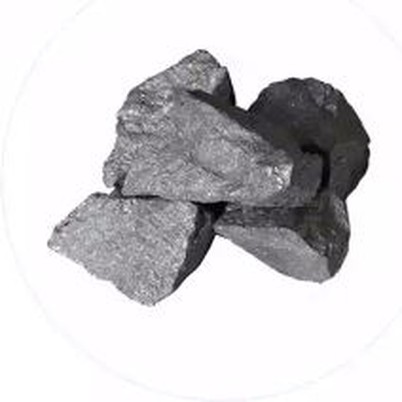

Ferrosilicon Granule in Steelmaking: Deoxidation and Alloying
Leave a message
What Ferrosilicon Granule Means in Steelmaking Practice
Ferrosilicon granule is the crushed and screened form of standard ferrosilicon, supplied in controlled size bands rather than as lump material. In steelmaking it is charged for three distinct duties: removal of dissolved oxygen from the melt, adjustment of silicon content as an alloying element, and thermal buffering of the furnace during the oxygen blow. The granule form matters because dissolution kinetics, feeding accuracy and recovery all depend on particle size rather than on chemistry alone. A 1-3 mm granule dissolves into a 1650 degrees Celsius bath within seconds, while a 50-100 mm lump may still be floating on the slag after the tapping operation has begun.
Buyers usually specify ferrosilicon by grade plus size band, and the two specifications are independent: FeSi75 supplied as 10-50 mm lump and FeSi75 supplied as 1-3 mm granule carry the same chemistry but are not interchangeable in a continuous wire-feeding line. This article sets out the composition requirements, the deoxidation chemistry, the alloying role, the size specifications and the acceptance rules that a purchasing team should apply when sourcing granulated ferrosilicon for converter, electric arc furnace or ladle metallurgy use.
Grades and Chemical Composition under GB/T 2272
Chinese ferrosilicon grades are standardised in GB/T 2272, which defines FeSi75, FeSi72, FeSi65 and lower grades together with limits on silicon, carbon, sulphur, phosphorus and aluminium. The grade designation refers to the nominal silicon content; the actual guaranteed range is written into the standard and must appear on the mill test certificate. FeSi75, the grade most often granulated for steelmaking, is specified at 74.0-80.0% Si. Carbon is normally held at 0.2% maximum for the standard grade and can be tightened to 0.1% or 0.05% maximum on request for low-carbon steel practices. Sulphur is typically 0.02% maximum and phosphorus 0.035% maximum, with 0.02% maximum available in low-phosphorus grades.
Aluminium is the least understood specification item. Standard FeSi75 allows up to about 2.0% Al, but aluminium is a strong deoxidiser in its own right and it changes inclusion chemistry. For drawing-quality and bearing-grade steels, aluminium is often capped at 0.5% or lower so that alumina inclusion counts stay predictable. Because aluminium reports almost entirely to the steel during dissolution, an aluminium specification that is not stated on the certificate cannot be assumed.
| Parameter | FeSi75 | FeSi72 | FeSi65 | Typical test method basis |
|---|---|---|---|---|
| Silicon content, % | 74.0-80.0 | 72.0-80.0 | 65.0-70.0 | Chemical analysis per GB/T 4333 series |
| Carbon, % max | 0.2 | 0.2 | 0.2 | Combustion infrared |
| Sulphur, % max | 0.02 | 0.02 | 0.02 | Combustion infrared |
| Phosphorus, % max | 0.035 | 0.04 | 0.04 | Inductively coupled plasma |
| Aluminium, % max | 2.0 | 2.0 | 2.0 | Inductively coupled plasma |
| Bulk density, g/cm3 | approx. 3.2 | approx. 3.2 | approx. 3.1 | Gravimetric |
Deoxidation Chemistry and Oxygen Removal
Silicon dissolved in liquid steel reacts with dissolved oxygen to form silica, and the equilibrium oxygen level for that reaction is far lower than for carbon at the same temperature. In practice the reaction is not a single-step process: silicon first lowers the oxygen activity, and the resulting silica particles then collide, coalesce and float out into the slag. Two consequences follow for the operator. First, deoxidation efficiency depends on slag basicity, because a highly basic slag absorbs silica readily while an acidic slag pushes the reaction back towards reoxidation. Second, the silicon addition should be made with the slag already fluid enough to take up the product.
Ferrosilicon for deoxidation is normally added at the ladle in the tap stream or by wire feeding, and recovery is expressed as the fraction of charged silicon that remains dissolved in the finished steel. With correctly sized granule (typically 1-10 mm for wire feeding and 10-50 mm for tap-stream addition), silicon recovery of 85-95% is achievable in aluminium-killed practice. Losses come from three routes: fines blown out with the dust extraction system, silicon tied up as silica inclusions that never fully separate, and reoxidation at the slag-metal interface. The fines loss route is the reason granule size distribution is specified with an upper and lower limit, and why a 0-3 mm product with excessive fines is rejected in wire-feeding applications.
Silicon deoxidation is rarely the only killing step. Most grades combine silicon with manganese to form liquid manganese silicates that coalesce and rise faster than solid silica. That is why ferrosilicon is often charged together with ferromanganese or silicomanganese rather than alone, and why the silicon-to-manganese ratio in the addition is a process variable rather than a purchasing detail.
Alloying Control and Microstructural Effects
Beyond deoxidation, silicon is a deliberate alloying element. It raises hardness and wear resistance through solid solution strengthening, improves oxidation resistance at elevated temperature by forming a protective silica-rich layer, and increases electrical resistivity, which is why silicon-bearing steels are used in transformer and motor laminations. In structural steels silicon is held between 0.15% and 0.60% so that toughness and weldability are not compromised; above roughly 1.0% the toughness of ferrite falls and weld heat-affected zones become sensitive to cracking.
In spring steels and rail steels silicon contributes to resistance to relaxation at service temperature. In electrical steels the silicon level is set by the grade, with 1.0-3.5% Si typical for non-oriented and grain-oriented products, and the aluminium and nitrogen balance must be controlled at the same time because silicon alone does not give the required texture. Because granule is added to a bath that already contains alloying elements, the operator should compute the silicon addition against the aim analysis rather than against the ladle weight alone, and should account for silicon picked up from the ferromanganese or silicomanganese charge in the same sequence.
Thermal Effects and Furnace Temperature Control
The dissolution of ferrosilicon is exothermic relative to the liquid steel bath: silicon dissolved in iron releases heat, and the practical effect is a modest temperature rise near the addition point. In converter tapping this heat is useful because it offsets the cooling effect of scrap additions and alloy charging, and it can be used to hold the tap temperature within a narrow window without additional burner energy. The effect is small and local: a granule addition of a few kilograms per tonne does not replace proper tap temperature control, and treating ferrosilicon as a heating agent leads to over-addition and an off-analysis heat.
Two temperature-related cautions apply. Ferrosilicon should be dry before charging, because moisture on the granule surface dissociates in the bath and adds hydrogen, which raises the risk of flaking in plate products. Second, very fine granule added to a cold ladle can bridge and hang on the ladle wall, delaying dissolution until the next heat; a minimum size of 1 mm for pneumatic injection avoids most bridging problems.
Size Bands, Tolerances and Handling Requirements
Granule size is specified as a nominal band with an allowed undersize and oversize fraction, and the acceptance test is a sieve analysis under GB/T 13247, which governs sampling and size testing of ferroalloys. A supplier that quotes only "1-3 mm" without a tolerance statement leaves the buyer unable to reject a shipment containing 20% fines.
| Application | Nominal band | Typical tolerance | Packaging |
|---|---|---|---|
| Wire feeding, cored wire filling | 1-3 mm | Oversize 5% max, undersize 10% max | 25 kg bags or 1 t big bags |
| Ladle addition, tap stream | 3-10 mm | Oversize 5% max, undersize 10% max | 1 t big bags |
| Converter and EAF charging | 10-50 mm | Oversize 5% max, undersize 5% max | 1 t big bags or bulk |
| Foundry inoculant feed | 0.2-1 mm | Undersize 10% max | 25 kg moisture-barrier bags |
Handling rules follow from the material's behaviour. Ferrosilicon granule is dense and abrasive, so conveying lines should use wear-resistant bends and should be purged after each transfer to prevent settled material from blocking the line. Storage must be under cover on a dry floor: contact with water does not merely wet the product, it can generate phosphine and hydrogen from the impurities present, and wet ferrosilicon has been associated with spontaneous heating in confined spaces. Bulk piles should be limited in height to avoid compaction that makes pneumatic pickup unreliable.
Addition Practice, Recovery Calculation and Cost Control
A practical addition calculation starts from the aim silicon content, subtracts the residual silicon already in the bath, and divides by the recovery factor and the silicon content of the grade. For a 200 tonne heat aiming at 0.30% Si with a 0.05% residual and 90% recovery using FeSi75 at 75% Si, the required addition is approximately 0.74 tonnes of ferrosilicon. Working the calculation in this order makes the grade choice and the recovery assumption explicit, so that a change of supplier or size band can be tested against the same arithmetic rather than by trial heats.
Cost control in granule purchasing should be based on contained silicon cost rather than price per tonne, because a cheaper FeSi65 delivers noticeably less silicon per tonne than FeSi75. The comparison should also include the fines fraction: a product with 15% undersize in a wire-feeding line effectively loses that fraction to the dust system, so the delivered cost of usable silicon is higher than the invoice implies. Sieve data, moisture content and aluminium level are the three certificate items that most often change the true cost per unit of recovered silicon.
Inspection, Acceptance and Safety Points
Acceptance should be built on three documents and two tests. The documents are the mill test certificate showing heat number and full chemistry, the packing list showing net weight per bag or big bag, and a size analysis report. The tests are an independent chemical check and a sieve check, both sampled per GB/T 4010 and GB/T 13247. Sampling of granule must be by incremental sampling from multiple positions in the lot, not by taking a scoop from the top of one bag, because segregation by size during filling is significant in big bags.
Rejection criteria should be written into the purchase order in advance: silicon below the lower grade limit, carbon or sulphur over the stated maximum, undersize above the agreed tolerance, free moisture visible in the bag, or contamination with slag, sand or foreign lump. On the safety side, ferrosilicon fines should be treated as a dust hazard and handled with extraction; the material is not toxic in lump form but respirable dust should be controlled, and storage areas should be kept free of standing water and of acids that could liberate phosphine from phosphide impurities.
FAQ
Q: What is the typical silicon content of FeSi75 ferrosilicon granule?
FeSi75 is specified at 74.0-80.0% Si under GB/T 2272, with carbon at 0.2% maximum and sulphur at 0.02% maximum.
Q: Why is granule used instead of lump ferrosilicon in ladle metallurgy?
Small particles dissolve faster and can be fed accurately through a wire feeder or injection lance, which improves recovery and reduces temperature loss compared with dropping large lumps onto the slag.
Q: Does a higher aluminium content in ferrosilicon affect steel quality?
Yes. Aluminium is a strong deoxidiser and changes inclusion chemistry, so drawing-quality and bearing steels usually cap aluminium at 0.5% maximum rather than accepting the standard 2.0% limit.
Q: What recovery can be expected from granulated ferrosilicon?
Silicon recovery of 85-95% is typical for correctly sized granule in aluminium-killed practice, with losses mainly to dust extraction, residual silica inclusions and slag-interface reoxidation.
Q: How should a size dispute on a ferrosilicon granule shipment be resolved?
By sieve analysis on incrementally sampled material taken per GB/T 13247 and compared against the tolerances written into the purchase order, not against a verbal description of the band.
Q: Can wet ferrosilicon granule be dried and used?
Surface moisture can be removed by controlled drying, but material that has been exposed to standing water should be quarantined and assessed, because phosphide impurities can liberate phosphine and wet fines are prone to heating in storage.