Silicon Carbide Production Process: Acheson Furnace Steps
Leave a message
Raw Materials and Preparation
Silicon carbide is made from two simple raw materials: petroleum coke as the carbon source and quartz sand as the silica source. The coke is first broken in a hammer crusher down to the particle size range required by the furnace recipe, because an oversized or dusty charge disturbs the resistance path inside the furnace and lowers the share of usable crystal taken from the batch.
The purity of the two feeds sets the ceiling on the grade that the furnace can reach, so the sand is checked for iron and alumina bearing impurities and the coke for ash and moisture before the charge is accepted for batching.
Batching and Mixing
Batching is the weighing and mixing stage that follows the furnace recipe. Petroleum coke and quartz sand are weighed on a batching platform and mixed in a concrete mixer until the two components are evenly distributed. An uneven mix produces uneven reaction zones inside the furnace, which shows up as a lower grade of crystal and a larger proportion of low value material in the block.
The mix is normally turned until the colour and texture are uniform; the batch records the weights of coke and sand, the number of mixing turns and the furnace the charge is destined for, so a campaign can be traced back to its raw material lots.
Furnace Preparation and Loading
Furnace preparation means repairing and finishing the furnace used in the previous campaign so that it can be put back into service. The operation covers cleaning the bottom of the furnace, trimming the electrodes, cleaning and repairing the furnace wall, and checking and removing any other defect found in the shell or the current path.
Loading then fills the furnace with reaction material, insulation material and core material in the specified type, position and size, and builds the side wall of the melting furnace with insulation and material holding. The way the core and the insulation are placed decides where the current flows and therefore how evenly the charge is heated.
Electric Smelting and Cooling
Once the furnace is loaded and the transformer connected, power is applied. The open flame is introduced about 15 minutes after the power is switched on, which ignites the carbon monoxide given off by the reaction, and the smelting campaign runs for roughly 170 hours. The furnace is then stopped and left to cool naturally before the wall is unloaded and the material stripped for a further natural cooling period.
| Stage | Equipment | Key parameter |
|---|---|---|
| Raw material crushing | Hammer crusher | Coke broken to the recipe particle size |
| Batching and mixing | Batching platform and concrete mixer | Coke and sand weighed to the recipe, then mixed to a uniform colour |
| Furnace preparation | Furnace, electrodes and shell | Furnace bottom cleaned, electrodes trimmed, wall repaired |
| Loading | Charge handling equipment | Reaction, insulation and core material placed by type, position and size |
| Electric smelting | Electric furnace and transformer | Flame introduced after 15 minutes of power, campaign about 170 hours |
| Cooling and unloading | Furnace | Natural cooling, then wall unloading and material stripping |
| Grading | Classification field | Manual splitting, then hand sorting of the crystallization block |
Grading of the Crystallization Block
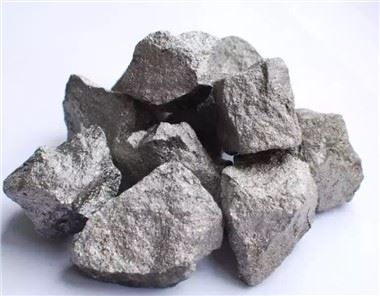
When the charge has cooled, the crystallization block, the graphite and the other by-products are separated. The block is split manually and the bulk of it is carried to the classification field for hand sorting, which is the step where the commercial grades are built and where foreign material is rejected.
| Output of the furnace | What it becomes |
|---|---|
| Crystallization block | Crushed, milled and screened into the saleable silicon carbide grades |
| Graphite and carbon rich material | Separated and either recycled to the charge or sold as a by-product |
| Fines and low grade material | Used in metallurgical applications where a lower grade is acceptable |
Commercial black silicon carbide is graded with a minimum silicon carbide content between 90% and 98.5% depending on the grade, and abrasive grades are commonly referenced to GB/T 2480, with the exact limits taken from the applicable grade table for the grade ordered. Size distribution, magnetic iron and free carbon are checked alongside the silicon carbide content before a lot is released.
FAQ
Q: What raw materials are used to make silicon carbide?
Petroleum coke supplies the carbon and quartz sand supplies the silica; the two are weighed to a recipe and mixed before loading.
Q: How long does a silicon carbide smelting campaign last?
The furnace runs for roughly 170 hours, after which it is stopped and left to cool naturally.
Q: When is the flame introduced?
About 15 minutes after the power is switched on, so that the carbon monoxide released by the reaction is burned off.
Q: What does furnace preparation include?
Cleaning the furnace bottom, trimming the electrodes, cleaning and repairing the wall, and removing any other defect in the furnace.
Q: How is the crystallization block turned into saleable grades?
It is split manually, carried to the classification field, hand sorted, then crushed, milled and screened to the ordered grade.
Q: Why is even mixing so important?
An uneven mix creates uneven reaction zones, which lower the crystal grade and increase the proportion of low value material.