
Is Silicon a Metal or Nonmetal? Metalloid Explained
Leave a message
Is Silicon a Metal or a Nonmetal?
Silicon (Si) is neither a true metal nor a nonmetal. It belongs to the group of elements called metalloids (semimetals), which sit between metals and nonmetals in the periodic table and share characteristics of both.
1. Why Silicon Is a Metalloid
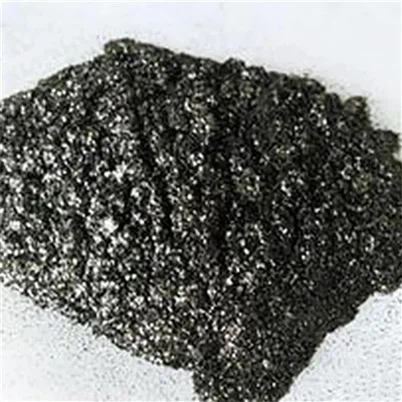
Appearance: silicon has a metallic gray luster like a metal.
Conductivity: silicon is a semiconductor. Its electrical conductivity is far lower than that of typical metals (e.g., copper, iron) and, unlike metals, its conductivity increases as temperature rises (metals conduct less well when heated).
Chemistry: silicon forms covalent bonds and compounds similar to carbon (its diagonal neighbor), behaving chemically more like a nonmetal; it reacts with oxygen to form SiO2 (silica).
Mechanical behavior: at room temperature silicon is hard and brittle, unlike ductile metals.
2. Industrial Significance
This intermediate nature is exactly what makes silicon valuable: its semiconducting behavior is the basis of the electronics industry (chips, transistors, solar cells), while its chemical affinity for oxygen makes it the most widely used deoxidizer in steelmaking and an essential element of aluminum alloys and silicones. Metallurgical-grade silicon (metal silicon) is the starting material for all of these value chains.
3. Industrial Silicon Grades (Typical)
Metal silicon grades are designated by three digits: Fe, Al and Ca content in percent (e.g., 441 means Fe ≤0.4%, Al ≤0.4%, Ca ≤0.1%). P is reported as an additional impurity limit.
| Grade | Si content (%) | Fe | Al | Ca | P, max |
|---|---|---|---|---|---|
| 1101 | 99.79 | 0.1 | 0.1 | 0.01 | ≤0.004% |
| 2202 | 99.58 | 0.2 | 0.2 | 0.02 | ≤0.004% |
| 3303 | 99.37 | 0.3 | 0.3 | 0.03 | ≤0.005% |
| 1501 | 99.69 | 0.15 | 0.15 | 0.01 | ≤0.004% |
| 1502 | 99.68 | 0.15 | 0.15 | 0.02 | ≤0.004% |
| 2502 | 99.48 | 0.25 | 0.25 | 0.02 | ≤0.004% |
| 411 | 99.4 | 0.4 | 0.1 | 0.1 | ≤0.005% |
| 421 | 99.3 | 0.4 | 0.2 | 0.1 | - |
| 441 | 99.1 | 0.4 | 0.4 | 0.1 | - |
| 551 | 98.9 | 0.5 | 0.5 | 0.1 | - |
| 553 | 98.7 | 0.5 | 0.5 | 0.3 | - |
| Off-grade | 96 | 2 | 1 | 1 | - |
Typical applications by grade: high grades (1101, 2202) for chemical-grade use such as silicones; 441/553 for aluminum alloys and steelmaking; off-grade for cost-sensitive metallurgical uses.
Frequently Asked Questions
Is silicon a metal or a nonmetal? Silicon (Si) is neither a true metal nor a nonmetal. It belongs to the group of elements called metalloids (semimetals), which sit between metals and nonmetals in the periodic table and share characteristics of both.
Why is silicon classified as a metalloid? Silicon shows a metallic gray luster like a metal, but its electrical conductivity is far lower than that of typical metals such as copper and iron, and unlike metals it conducts better as temperature rises. Chemically it forms covalent compounds similar to carbon and reacts with oxygen to form SiO2, while mechanically it is hard and brittle at room temperature rather than ductile. This combination of metal-like and nonmetal-like behavior defines a metalloid.
Why does the intermediate nature of silicon matter industrially? Its semiconducting behavior is the basis of the electronics industry, including chips, transistors and solar cells, while its chemical affinity for oxygen makes it the most widely used deoxidizer in steelmaking and an essential element of aluminum alloys and silicones. Metallurgical-grade silicon (metal silicon) is the starting material for all of these value chains.
How are industrial silicon grade numbers such as 441 read? The three digits give the maximum iron, aluminium and calcium contents in percent, so 441 means Fe not more than 0.4%, Al not more than 0.4% and Ca not more than 0.1%. Phosphorus is reported as an additional impurity limit where specified.
Which grades are used for which applications? High grades such as 1101 and 2202 (99.79% and 99.58% Si in the typical table) are used for chemical-grade purposes such as silicones, while 441 and 553 serve aluminum alloys and steelmaking. The off-grade material at about 96% Si is chosen for cost-sensitive metallurgical uses.
What silicon content range does the typical grade table cover? The table spans from grade 1101 at 99.79% Si down to grade 553 at 98.7% Si, with the off-grade listed at 96%. Within the range, the Si content falls as the allowed iron, aluminium and calcium limits rise, which is why lower-numbered grades command a cleaner analysis.