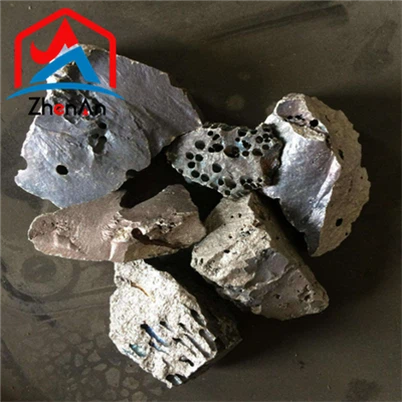

Femo60 Charge Preparation: Weighing, Mixing and Moisture Control
Leave a message
Femo60 Is Won or Lost in the Batching Bay
Most discussions of ferromolybdenum concentrate on the spectacular part of the operation, the ignition and the boiling reaction. In practice the alloy is decided earlier, in a batching bay where a few tonnes of oxide, aluminium, iron units and minor additions are weighed into a mixer. The reaction itself is self-propagating and essentially unstoppable once lit; there is no trim addition, no ladle adjustment and no second chance. Whatever the scale reads is what the customer receives, which is why serious producers treat charge preparation as the controlled step and the reaction as the consequence.
This article deals with the preparation stage for Femo60, the steelmaking grade specified at 55-65% Mo with typical ceilings on silicon, carbon, sulphur, phosphorus and copper under GB/T 3649. It covers material specifications, drying, weighing sequence, batching tolerance, mixing, fire prevention, dust extraction and the records that make a heat traceable. It deliberately does not repeat the smelting narrative: the subject here is the discipline that sits in front of the vessel.
Raw Material Specifications and Size Windows
The molybdenum source is technical molybdic oxide, a calcined product assaying 55-65% Mo, with a proportion of MoO2 that depends on the calcination temperature and a residual sulphur level inherited from the concentrate. Oxide received as a fine powder behaves differently from oxide received as granulated or briquetted material: fines fluidise in the mixer, segregate in the hopper and are easily carried into the extraction duct, while coarse granules mix less homogeneously unless the mixing time is extended. A workable feed window is a screened oxide with a controlled top size and a limited fines fraction, agreed with the supplier rather than discovered on the day.
Aluminium is supplied as granules or chopped wire in the 0.5-3 mm band at 99% Al minimum. Below about 0.5 mm the material behaves as a dust, burns ahead of the reaction front and contributes to fume rather than to reduction; above 3 mm the particles survive the early part of the reaction and dissolve late, which shows up as aluminium-rich patches in the ingot and as variable hardness at the crushing stage. Iron units are mill scale, clean low-carbon turnings or shredded scrap; mill scale assays around 70% Fe, and any scale that has been stored wet will carry both moisture and oil. Ferrosilicon is taken as FeSi75 to GB/T 2272 in a 1-3 mm crushed grade, and steel filings must be free of cutting fluid, because oil adds carbon and creates a fume and fire problem in the mixer.
Fluorspar is the slag conditioner and is specified at 85% CaF2 minimum, 1-5 mm, and dry. Sodium nitrate is the heat booster and is bought as an industrial grade of 99% minimum, kept bagged and segregated. Both are small additions by weight and both are capable of ruining a heat out of proportion to their mass, so both deserve a supplier certificate and an incoming moisture check rather than a visual glance.
Drying and Moisture Control Before Weighing
Water is the most damaging single contaminant in an aluminothermic charge. At the reaction front, a droplet of moisture inside a particle flashes to steam and expands by roughly three orders of magnitude, ejecting charge and slag from the vessel. On a smaller scale the same effect produces porosity in the ingot; on a larger scale it produces an ejection event and a burn injury. Moisture also consumes aluminium through side reactions that generate hydrogen rather than useful heat, so a damp charge needs more reductant and therefore carries more residual aluminium into the alloy.
A workable control set is straightforward. Oxide is dried or calcined so that loss on drying stays at or below 0.5% before it enters the bay. Spar and nitrate are stored in sealed bags on pallets, never on a concrete floor that sweats. Aluminium is protected from condensation, since a damp granule grows a hydroxide film that both spoils the reduction and feeds hydrogen into the ingot. The bay itself is kept above 5 C and below 60% relative humidity, with a recorded hygrometer rather than an opinion. Materials that have been open for more than a shift are re-checked, and any drum with visible condensation is quarantined rather than dried in a hurry next to a heater.
The Weighing Sequence and Why Order Matters
The charge is weighed in a fixed order: molybdic oxide first, then sodium nitrate, then aluminium granules, then mill scale, then ferrosilicon, then steel filings, then fluorspar. The sequence is not ceremonial. The oxide is the bulk carrier and forms the bed into which the small critical additions are dispersed, so an aggressive reductant is never left sitting alone at the bottom of a weigh hopper. Nitrate goes in early because it must be uniformly distributed before the aluminium arrives; the two together are the most reactive pair in the recipe and should meet only inside a running mixer, never in a static pile.
Aluminium is weighed at the highest accuracy of any component because its mass fraction is the smallest of the major constituents and its effect on temperature and residual content is the largest. Scale resolution of 0.1 kg on a 500 kg batch, a calibrated check weight at the start of each shift, and a two-person verification of the aluminium figure are all proportionate controls. Fluorspar is weighed last, which keeps the final trim in a component that is tolerant of a small error.
Every weighing is recorded against a batch number, and the batch number follows the charge into the mixer, the vessel, the crushed product and the drum. Acceptance sampling of the finished lot to GB/T 4010 and delivery documentation to GB/T 3650 only mean something if that chain is unbroken.
Batching Tolerance and How Errors Surface
Tolerance should be set per component, not as a single plant-wide figure. Oxide can be held to plus or minus 0.5% of setpoint, aluminium to plus or minus 0.3%, nitrate to plus or minus 0.5%, iron units to plus or minus 1%, and spar to plus or minus 2%. Those numbers are achievable with modern load cells and they are tight enough to keep a Femo60 heat inside its molybdenum band without a corrective re-melt.
The diagnostic value of the tolerance is that each error leaves a different fingerprint in the product or in the vessel. Excess aluminium raises the residual aluminium figure and the fluidity of the slag. Short aluminium leaves a pasty slag with entrained shot and a skull at the wall. Excess nitrate produces a violent middle stage, more brown fume and more ejection. Short nitrate leaves a heat that stalls before finishing. Excess iron units lower the molybdenum grade and simultaneously cool the reaction. Wet spar produces spitting and a porous ingot. An operator who reports what the vessel did is reporting the accuracy of the batching bay.
Mixing: Time, Uniformity and Equipment
Weighed materials go into a mixer, most often a horizontal ribbon or paddle type with a closed lid and a dust take-off, and are mixed for about eight minutes. Eight minutes is a practical floor: shorter times leave the small additions stratified, longer times do not improve uniformity but do generate heat and fines. Uniformity is verified rather than assumed, by taking three samples from different points of the discharged batch and comparing molybdenum and aluminium figures; a coefficient of variation above about 2% between points indicates that the mixer needs attention or that the batch is overfilled.
Overfilling is the most common mechanical cause of a bad mix. A ribbon mixer loaded past its rated volume forms a dead zone at each end, so the aluminium that should have been distributed through the batch stays where it was charged. The result is a heat that runs unevenly, with a fast centre and a sluggish periphery, and an ingot that is metallurgically inhomogeneous in exactly the way a chemical certificate cannot detect.
Discharge into the charging hopper should be direct, with no free fall over a long distance and no intermediate open conveyor, because a drop of a few metres separates oxide fines from aluminium granules and undoes the mixing.
Fire and Dust Control in the Batching Bay
A mixture of aluminium granules and sodium nitrate is an oxidiser-fuel system. It is not a curiosity to be managed by vigilance alone; it needs engineered controls. The bay is a designated no-smoking, no-hot-work area. Tools are non-sparking, drums are bonded and earthed during transfer, and mobile equipment is excluded from the charging zone. Nitrate and aluminium are stored in separate compartments, never stacked together, and the quantity of premixed charge awaiting ignition is limited to what the next heat needs.
Dust is the second hazard and the first housekeeping problem. Aluminium fines and oxide dust are both respirable, and nitrate dust adds an oxidiser load to every surface. Blowing down with compressed air simply puts the mixture into suspension, which is precisely the condition to avoid; cleaning is done by vacuum with a grounded, conductive hose, or by wet methods away from the aluminium store. Mixing and discharge points are enclosed and connected to extraction, with a capture velocity at the openings sufficient to keep the plume inside the hood. Collected dust is treated as a molybdenum-bearing secondary material, assayed and either recycled or sold, not swept into general waste.
The reaction vessel needs its own extraction, because the middle stage releases alumina fume, fluoride carry-over and nitrogen oxides. That system is started before ignition, not after the first brown cloud, and its ductwork is cleaned on a schedule because alumina dust is abrasive and settles in horizontal runs.
Personnel, Records and Hold Time
Batching is repetitive work done under time pressure, which is the classic setting for a transposed digit. The controls that actually hold are structural: automatic weighing with the setpoint locked out of operator editing, a printed batch ticket, a second-person check on aluminium and nitrate, and a rule that a batch is either fully recorded or not charged. Operators should be able to explain why the sequence is what it is, because a person who understands that aluminium is the accuracy-critical component does not round the figure when the shift is running late.
Hold time matters as well. A mixed charge that sits for half a day absorbs moisture from the air, and one that sits next to a hot vessel or in direct sun develops a temperature gradient before it is lit. A practical limit of a few hours between mixing and ignition, with covered hoppers in between, keeps the charge in the condition it was designed for. Records linking oxide lot, aluminium lot, nitrate lot, weighed masses, mixer identity, operator, heat number and final chemical analysis should be retained long enough to answer a customer complaint two or three years after delivery.
Charge Preparation Control Points
| Control point | Target setting | Consequence of deviation |
|---|---|---|
| Oxide grade and source | 55-65% Mo, screened, one lot per heat where possible | Grade drift moves alloy Mo outside the Femo60 band |
| Oxide loss on drying | 0.5% maximum | Steam ejection, porosity, extra aluminium demand |
| Aluminium size | 0.5-3 mm, dry, 99% Al minimum | Fines burn in the hood; coarse leaves Al-rich patches |
| Aluminium weighing tolerance | Plus or minus 0.3% of setpoint | Slag viscosity, skull or high residual aluminium |
| Nitrate and spar moisture | Sealed storage, dry on receipt | Spitting, violent early reaction, ejection loss |
| Weighing sequence | Oxide, nitrate, aluminium, scale, FeSi, filings, spar | Segregation, local hot spots, incomplete reduction |
| Mixer load | At or below rated volume | Dead zones, aluminium stratified at the ends |
| Mixing time | About 8 minutes | Short mix leaves additions stratified |
| Mix uniformity | Coefficient of variation 2% or below across three points | Uneven reaction front, inhomogeneous ingot |
| Bay conditions | Above 5 C, below 60% relative humidity | Condensation on granules, hydrogen pickup |
| Hold time before ignition | A few hours, covered hopper | Moisture regain, preheat gradient |
| Traceability record | Lot to batch to heat to drum, analysis to GB/T 4010 | Unresolvable complaints, no recall capability |
Why the Preparation Standard Shows Up in the Certificate
A buyer reviewing a ferromolybdenum certificate sees molybdenum, silicon, carbon, sulphur, phosphorus, copper and aluminium, plus a size class and a lot number. Every one of those figures is an echo of the batching bay. Molybdenum reflects the oxide assay and the iron-unit balance. Aluminium reflects the reductant excess and the accuracy of its weighing. Carbon reflects the cleanliness of turnings and the absence of oil. Sulphur reflects the oxide and the spar. Size reflects crushing and screening, but the crushability of the block reflects how evenly the heat reacted, which reflects the mix.
This is the practical argument for buying from a works that can describe its batching controls rather than only its furnace. Two suppliers can quote the same Femo60 specification from the same standard. Only one of them can explain why the aluminium figure on the certificate sits where it does, and that difference tends to show up in the third container, not the first.
FAQ
Q: Why is the aluminium weighed more accurately than the molybdenum oxide?
Because aluminium is a small fraction of the charge with a large effect on reaction temperature and residual content. A 0.3% error in aluminium changes slag fluidity and the Al figure in the alloy, while the same relative error in oxide barely moves the molybdenum grade.
Q: What charge moisture level is acceptable for Femo60 production?
Oxide is held at or below 0.5% loss on drying, and spar and nitrate are kept dry in sealed storage. Any visible condensation on aluminium granules is grounds for quarantine, since the hydroxide film feeds hydrogen into the ingot.
Q: How long should the charge be mixed before ignition?
About eight minutes in a ribbon or paddle mixer loaded within its rated volume. Uniformity is confirmed by three-point sampling with a coefficient of variation at or below 2%, not by the clock alone.
Q: Why keep sodium nitrate and aluminium in separate stores?
Together they form an oxidiser-fuel mixture that can ignite from a spark or from local friction heating. Segregated storage, non-sparking tools and bonded earthing during transfer are the basic engineered controls for that pair.
Q: Can a mixed charge be held overnight before smelting?
It should not be. A mixed charge absorbs moisture when it sits, and the aluminium surface degrades. Hold time of a few hours in a covered hopper keeps the charge close to its designed condition.
Q: How does a batching error show up if no chemical analysis is done per heat?
Through the vessel. A pasty slag, a skull, a violent early boil or a stalled reaction all point back to a component that was weighed or mixed wrongly. Recording the reaction behaviour per heat turns that observation into a usable diagnostic.
Q: Which documents should accompany a Femo60 lot?
A quality certificate traceable to a heat number, chemical analysis for the elements in GB/T 3649, the size class as measured under GB/T 13247, and packing and marking as required by GB/T 3650. Sampling and sample preparation for the analysis follow GB/T 4010.