
How Premium V2O5 Flakes Improve Efficiency in Chemical Manufacturing
Leave a message
What Premium V2O5 Flakes Are
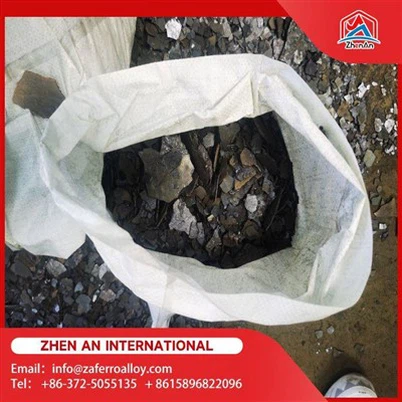
Vanadium pentoxide, written V2O5, is the most common commercial form of vanadium. Premium flake material is characterised by a high assay, typically above 99%, and by a uniform flake structure. The grade is sold as dark orange to yellow-brown flakes that are a few millimetres across, which allows consistent weighing, feeding and dissolution on a process line. Vanadium pentoxide acts as an amphoteric oxide: it dissolves in alkalis to form vanadates and in acids to form vanadyl salts, and it is this chemistry that makes it useful both as a catalyst and as a precursor to other vanadium compounds.
| Property | Typical value |
|---|---|
| Chemical formula | V2O5 |
| Commercial assay | 98% min standard grade; above 99% for premium flake |
| Appearance | Dark orange to yellow-brown flakes |
| Melting point | About 690 degrees Celsius |
| Solubility | Soluble in alkalis and acids; only slightly soluble in water |
| Main uses | Catalyst and catalyst precursor, ferrovanadium feedstock, vanadium chemicals |
The Catalyst Role in Sulphuric Acid Production
The largest single catalytic use of vanadium pentoxide is the contact process for sulphuric acid. Sulphur dioxide is oxidised to sulphur trioxide over a vanadium catalyst, and the SO3 is then absorbed to make acid. The catalyst itself is a vanadium pentoxide melt, usually promoted with potassium and supported on a porous carrier, and the active species shifts between oxidation states as the gas passes over the bed. Purity and surface availability matter here. Higher and more consistent V2O5 content means more active sites per unit of catalyst volume, faster approach to equilibrium conversion, and slower deactivation, which extends the interval between catalyst screening and replacement. For an acid plant, that translates into fewer shutdowns for catalyst handling and a lower operating cost per tonne of acid.
Beyond Sulphuric Acid: Oxidation and Synthesis Routes
Maleic anhydride - vanadium-phosphorus oxide catalysts, prepared from vanadium pentoxide, oxidise butane or benzene to maleic anhydride.
Phthalic anhydride - V2O5 based catalysts, often promoted with titanium dioxide, oxidise ortho-xylene or naphthalene.
Nitrogen oxide abatement - vanadium pentoxide on a titania carrier is the standard active phase in selective catalytic reduction catalysts used to convert nitrogen oxides with ammonia.
Catalyst precursors - flakes are dissolved or slurried to impregnate carriers, so a clean, homogeneous feedstock gives a predictable loading on the support.
Vanadium chemicals and alloys - the same flakes feed ferrovanadium production and the synthesis of vanadyl salts used in laboratory and analytical work.
In each case the mechanism is the same: a reversible change in the vanadium oxidation state gives up oxygen to the reactant and takes it back from the gas phase. Efficiency comes from having that cycle turn over as many times as possible before the catalyst loses surface area or is poisoned by impurities.
Why Flake Form and Purity Matter on the Plant Floor
A uniform flake dissolves and disperses predictably, so batches of catalyst or solution come out with the same activity. Fine dust, by contrast, is harder to weigh accurately and is easily lost to extraction systems, which shows up later as an assay that does not match the formulation. Consistent purity also reduces the side reactions and by-products that consume feedstock and complicate downstream separation, and it keeps the alkali and iron levels in the melt within the window where the catalyst holds its activity. In analytical and laboratory use, a homogeneous feedstock is what makes test results repeatable across operators and over time.
Handling, Storage and Safety
Vanadium pentoxide is a hazardous substance and should be treated as such. Dust must be controlled with local extraction and suitable respiratory protection, and workers should use gloves, eye protection and dedicated work clothing. Material should be stored dry in sealed containers away from acids, alkalis and reducing agents, and spills should be cleaned with approved methods rather than washed into drains. Safety data sheets should travel with every consignment, and plant procedures should cover dust generation during charging, mixing and bag emptying.
Reference Price Levels for V2O5 Flakes
For orientation only, published Chinese ex-works indications in late October 2025 for 98% vanadium flake were about CNY 75,500 per ton from large producers and about CNY 73,000 per ton for smaller lot trades, with the lower figure marked down slightly on the day. Ferrovanadium was indicated at CNY 81,500-83,000 per ton for FeV50 and CNY 130,400-132,800 per ton for FeV80.
| Product | Grade | Reference level | Basis |
|---|---|---|---|
| Vanadium pentoxide flake | 98% V2O5, large producer | CNY 75,500 / ton | Ex-works China |
| Vanadium pentoxide flake | 98% V2O5, smaller lot trades | CNY 73,000 / ton | Ex-works China |
| Ferrovanadium | FeV50 | CNY 81,500-83,000 / ton | Ex-works China |
| Ferrovanadium | FeV80 | CNY 130,400-132,800 / ton | Ex-works China |
The figures are a snapshot of one trading day and move with steel demand, vanadium slag and feedstock availability, and energy costs. Buyers comparing offers should confirm the assay, the trace element limits and the basis of delivery rather than comparing headline numbers alone.
Frequently Asked Questions
Q: What purity should I specify for catalyst work?
Premium flake is normally above 99% V2O5, while the standard commercial grade is 98% minimum. For catalyst impregnation and analytical use, the higher assay reduces the impurity load introduced with each batch.
Q: Why is vanadium pentoxide used as a catalyst?
It can change oxidation state reversibly and pass oxygen between a gas phase and a reactant. That cycle drives the conversion of sulphur dioxide to sulphur trioxide in acid plants and the oxidation of hydrocarbons to anhydrides.
Q: Does flake size affect performance?
It affects handling more than chemistry. Uniform flakes weigh, feed and dissolve consistently, while fine dust is harder to meter and is easily lost, which can leave a formulation short of the intended vanadium content.
Q: Is the flake form suitable for dissolving?
Yes. Flakes dissolve or disperse readily in alkaline and acidic media, which suits impregnation baths, solution preparation and laboratory reagents where a homogeneous feedstock is needed.
Q: How should the material be stored?
Keep it dry in sealed containers, away from acids, alkalis and reducing agents, and control dust during handling. Vanadium pentoxide is hazardous and requires extraction, protective equipment and documented safety procedures.
Q: What other vanadium products are made from the flakes?
Vanadium pentoxide feeds ferrovanadium for micro-alloyed steels, vanadyl salts and other vanadium chemicals. Ferrovanadium indications are quoted alongside the flake price because the two markets share the same feedstock.