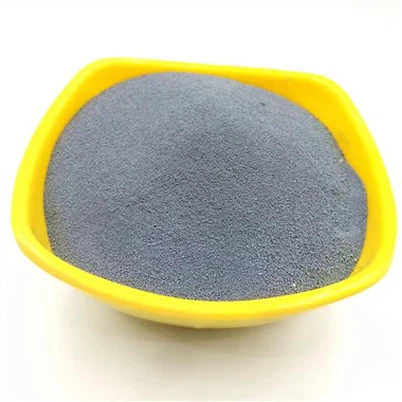

High-Purity Electrolytic Manganese Flakes 99.95% Mn for LiMn2O4 Cathode Production
Leave a message
Why Manganese Purity Matters for LiMn2O4
Lithium manganese oxide, LiMn2O4, is a widely used cathode material for lithium-ion batteries. Its performance depends on the spinel crystal structure, and trace impurities in the manganese feedstock can distort this structure, degrade capacity retention and shorten cycle life. High-purity electrolytic manganese flakes with 99.95% manganese content are engineered to meet the strict impurity discipline that battery cathode production requires.
Key Product Specifications
| Parameter | Specification |
|---|---|
| Product | High-purity electrolytic manganese flakes |
| Manganese content | Mn greater than or equal to 99.95% |
| Application focus | LiMn2O4 cathode material |
| Form | Clean, uniform flakes with controlled surface oxidation |
| Packaging | Moisture-controlled, battery-material compliant |
Production Route
Electrolytic manganese metal (EMM) is produced by electrolysis of a manganese sulfate solution. For the 99.95% grade, the process adds enhanced purification steps and batch-level analysis to hold impurity elements such as iron, sulfur, selenium and heavy metals within tight limits. Each production batch is characterized so that buyers can qualify the material with confidence and reproduce their own cathode synthesis results.
Why 99.95% Mn Matters
Reduces impurity-driven lattice distortion in the spinel structure.
Improves crystal structure stability during charge-discharge cycling.
Supports consistent capacity retention across battery life.
Minimizes requalification risk when switching manganese suppliers.
Typical Applications
The primary application is LiMn2O4 cathode synthesis for lithium-ion batteries used in power tools, electric vehicles and energy storage systems. The high-purity grade is also suitable for other advanced battery chemistries that demand strict manganese purity, including nickel-manganese-cobalt and manganese-rich systems, where consistent feedstock quality is essential.
Quality Control and Supply Reliability
Battery material procurement requires reproducibility across batches. High-purity EMM suppliers support this through batch-level chemical certificates, controlled surface oxidation to avoid inconsistent dissolution behavior, and moisture-controlled packaging that protects the material during transport and storage. Buyers should verify impurity limits, lot consistency and packaging suitability when qualifying a supplier.
FAQ
Q1: What is the manganese content of this product? The flakes contain at least 99.95% manganese.
Q2: Why is 99.95% purity needed for LiMn2O4? Trace impurities distort the spinel structure and degrade capacity retention and cycle life, so tight purity control improves battery performance.
Q3: How is high-purity EMM produced? By electrolysis of manganese sulfate solution with enhanced purification and batch-level analysis.
Q4: What applications use this grade? LiMn2O4 cathode production and other advanced battery chemistries requiring strict manganese purity.
Q5: What packaging is used? Moisture-controlled, battery-material-compliant packaging to protect the flakes during transport and storage.