
Future Trends in Steelmaking Cored Wire: Core Design and Feeding
Leave a message
What Cored Wire Is and Why Steelmakers Use It
Cored wire, also called flux-cored wire or filled wire, is a composite consumable built from a thin low-carbon steel strip that is shaped into a tube or a U-profile, filled with a precisely weighed blend of powdered or granular material, and then closed by folding, seaming or drawing. The steel sheath is only the carrier; the metallurgical work is done by the core, which may hold a single alloying element, a deoxidiser, a desulphuriser, or a balanced mixture of several. Because the filler is sealed inside the jacket, reactive or low-density materials such as calcium-bearing compounds can be delivered below the slag layer instead of burning or floating away at the bath surface.
In secondary metallurgy the wire is pushed into the melt by a wire-feeding machine at a controlled linear speed. The sheath melts shortly after it enters the steel and releases the core close to the intended reaction zone. The steelmaker therefore controls the addition with two simple variables, feed speed and wire length, and the mass of active material is read directly from the core weight per metre. That relationship turns an otherwise crude bulk addition into a metered dose, which is why cored wire dominates calcium treatment, boron micro-alloying, carbon trimming and the controlled introduction of titanium, niobium and rare-earth bearing blends.
It is worth stressing what cored wire is not. It is not a substitute for sound ladle practice, and it does not remove the need for a clean, well-deoxidised bath. The product performs best when the steel is already calm, the slag is controlled, and the ladle has enough stirring energy to entrain the released particles. Used in that setting it gives a repeatable addition and a traceable record; used in a poorly stirred bath, even an accurately fed wire will show erratic recovery.
Core Filler Design: Alloying, Deoxidation and Desulphurisation
A cored wire is defined by its core, and the current direction of core design is towards higher active content, tighter particle-size distribution and better flowability. Those three properties govern how evenly the material leaves the sheath, how completely it dissolves, and how little is lost to the slag. Filler is normally screened to a controlled fraction, commonly somewhere between roughly 0.1 mm and 2 mm depending on the powder and the strip size, so that it fills the tube without bridging and feeds without pulsation. Over-fine powder can pack and block the feed line, while coarse or damp material produces an uneven dose.
Calcium-based cores are the classic deoxidation and desulphurisation family. A calcium-silicon core delivers calcium and silicon together and is used to modify solid alumina inclusions into liquid calcium aluminates that are less likely to clog continuous-casting nozzles. A calcium-iron core offers a higher calcium density per metre, which suits heavy sections and deep ladles where a lighter wire would not carry enough active material to reach the target. Because calcium has a low boiling point and a strong affinity for oxygen and sulphur, the sheath protects it during transport while the feed rate governs how much is actually recovered in the steel.
Alloying cores follow the same logic for different elements. Ferroboron cores introduce boron for hardenability in structural and forging grades, where boron is effective at only a few parts per million, so accuracy of addition matters far more than bulk throughput. Carbon cores trim carbon during ladle treatment and are chosen when the carbon specification window is narrow. Titanium cores fix nitrogen and stabilise interstitial-free and certain stainless grades, while niobium and vanadium cores support micro-alloyed high-strength steels by forming fine carbonitride precipitates. Rare-earth and magnesium bearing mixes are used where inclusion shape control and sulphur resistance are required, for example in line-pipe, rail and certain plate steels.
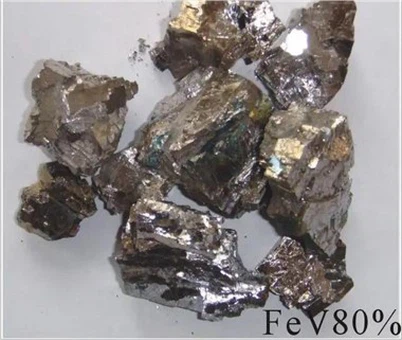
The chemistry of the core must be declared and verifiable, because the whole addition calculation depends on it. In practice the core material is a ferroalloy or a mixture of ferroalloys, so its specification is written against the relevant product standard, for example GB/T 2272 for ferrosilicon, GB/T 3282 for ferrotitanium, GB/T 4139 for ferrovanadium, GB/T 20567 for vanadium-nitrogen alloy and GB/T 3283 for vanadium pentoxide where an oxide carrier is used. Where a wire carries a mixture that no single product standard covers, the controlling document is the applicable GB/T or YB/T specification for cored wire together with the agreed certificate of analysis.
Feeding and Dissolution Behaviour in the Ladle
Dissolution is the performance bottleneck of the whole process. When the wire enters the steel, three things must happen quickly and in the right order: the sheath must melt, the core must be released as discrete particles, and those particles must be entrained into the melt before they can float into the slag. If the feed rate is too high, the wire penetrates too deep and the filler may be released outside the active mixing zone. If the feed rate is too low, the wire melts near the surface and the active material is lost upward. Modern practice therefore couples feed speed to ladle depth, melt temperature and argon stirring rate so that a stable reaction zone is held throughout the addition.
Wire diameter and strip thickness set the melting behaviour. A thin strip melts faster and suits small ladles and low addition rates, while a thicker strip resists deep penetration and suits large heats. Commercial cored wire diameters commonly run from about 9 mm to 16 mm, with core fill ratios typically in the region of 40% to 60% of the wire weight. The exact figures are set by the product standard and the mill instruction and should be taken from those documents rather than assumed. Because dissolution depends on the local bath conditions, the same wire can behave differently in two shops, which is why the feed recipe is normally developed and frozen for each ladle station.
Recovery of the active element is the single most useful performance indicator. For calcium treatment, recovery is influenced by the sulphur level, the oxygen level, the slag composition and the stirring energy; for boron it is influenced by the oxygen and nitrogen levels, since boron is easily lost to stable oxides and nitrides. Monitoring recovery heat by heat turns an invisible metallurgical reaction into a measurable number and gives the operator a basis for adjusting the feed recipe rather than reacting to failed samples after the fact.
Manufacturing, Sheathing and Quality Control
Manufacturing advances are concentrated in three areas: strip forming, filling accuracy and closure quality. Continuous forming lines fold a flat strip into a tube, meter the filler with loss-in-weight or volumetric feeders, and close the seam by interlocking or drawing. A tight, well-formed seam prevents filler loss during coiling, transport and unwinding, and it prevents moisture pickup from the atmosphere that would otherwise introduce hydrogen into the steel. Some products add a protective coating or a secondary jacket to limit rusting of the sheath and to reduce friction inside the guide tube, which helps to keep the feed rate steady over a long coil.
Quality control of a cored wire begins with its raw materials. Ferroalloy powders are sampled and analysed under the general rules for ferroalloy sampling, such as the procedures described in GB/T 4010 and ISO 3713, so that the declared active content of the core is traceable back to a lot. The particle size of the filler is checked against the agreed range, and the finished wire is inspected for diameter, seam integrity, core weight per metre and the absence of voids. Packaging, marking and moisture protection follow the general requirements for ferroalloys in GB/T 3650, adapted to the smaller unit sizes used for wire. A coil that has absorbed moisture in storage can release hydrogen during feeding and cause porosity in the cast product, so dry, sealed packaging is treated as a process variable rather than an administrative detail.
Particle size also links the wire to the wider family of ferroalloy products. Where a core uses a screened ferroalloy, the size fraction definition and the tolerances around it are best written with reference to the general rules for ferroalloy particle size, for example GB/T 13247, so that the wire producer and the steel mill work from the same definition of the accepted fraction. That shared definition avoids disputes over what counts as oversize or undersize and keeps the feed behaviour predictable from lot to lot.
Automation and Digital Process Control
Wire feeding has shifted from a manual, experience-based activity to a controlled unit operation. Modern feeders use servo drives and closed-loop speed control to hold a set feed rate regardless of coil diameter and friction, and they log the wire length consumed for each heat. That log is the basis of a simple mass balance: metres fed multiplied by core weight per metre gives the kilograms of active element added, which can then be compared with the composition change measured by the ladle sample. Reconciling the two numbers is now a standard way to detect feed faults, seam losses and incorrect core content before they become a quality problem.
Digitalisation extends the same idea across the plant. Feed schedules, wire batch numbers and analytical results can be linked so that the full addition history of a heat is retrievable, and trends in recovery for calcium, boron or carbon can be tracked heat by heat. The aim is not to replace the metallurgist but to remove the variability that comes from manual feeding, and to give the operator a stable, repeatable addition that reduces both over-dosing and the cost of the additive. A well-instrumented feeding station also shortens the learning curve for new grades, because the effect of a feed change can be read from the data rather than guessed from experience.
Typical Core Types and Their Metallurgical Targets
The table below summarises the main core families, the element they deliver and the steelmaking purpose they serve. The figures given are indicative industry ranges; the controlling values are always those in the product standard and the mill specification.
| Core family | Active element | Typical purpose | Notes on handling |
|---|---|---|---|
| Calcium-silicon | Ca, Si | Deoxidation, inclusion modification, desulphurisation | Keep dry; feed within the stirring window |
| Calcium-iron | Ca | Higher calcium dose per metre for heavy sections | Denser core; check seam integrity |
| Ferroboron | B | Hardenability in boron-treated structural and forging steels | Very small additions; accuracy is critical |
| Carbon | C | Carbon trimming into a narrow specification window | Guard against moisture pickup |
| Ferrotitanium | Ti | Nitrogen fixation; stabilisation of selected grades | Control particle size for steady feed |
| Niobium and vanadium | Nb, V | Micro-alloying for high-strength steels | Uniform dispersion is needed |
| Rare-earth and magnesium mixes | RE, Mg | Inclusion shape control in pipe and rail steels | Highly reactive; sheath protection essential |
Procurement and Acceptance Points
When a cored wire is purchased, the specification should state the core material and its minimum active content, the wire diameter and its tolerance, the strip thickness, the core weight per metre and its tolerance, the filler particle-size range, and the packaging unit. A certificate of analysis for the core is expected, and the sampling and analysis behind that certificate should follow recognised ferroalloy practice such as GB/T 4010 and ISO 3713. For particle size, the general rules of GB/T 13247 provide a workable framework for defining the accepted fraction and its tolerances, and the marking and packaging requirements can be aligned with GB/T 3650.
On receipt, a short acceptance routine catches most problems. Measure the outside diameter and the strip thickness, cut a sample length and weigh the core to confirm the declared core weight per metre, inspect the seam and the coil surface for rust or mechanical damage, and verify that the packaging and any desiccant are intact. Because the cost of a cored wire is driven mainly by the contained value of its core material, the active content, the particle-size quality and the consistency of the core weight per metre are the variables that decide whether the wire is economical in service, rather than the wire cost per tonne on its own. A cheap wire with a low or inconsistent core fill can end up costing more per kilogram of recovered element than a higher-priced wire with a tight, well-declared core.
FAQ
Q: What is the difference between a cored wire and a solid alloy wire?
A solid wire is a single alloy throughout its cross-section, while a cored wire is a steel sheath filled with a powdered or granular core. The cored construction makes it possible to deliver reactive or low-density materials such as calcium that cannot easily be drawn into a solid alloy wire, and it lets the addition be metered by wire length instead of by weight of bulk additive.
Q: How is the amount of an added element calculated when feeding cored wire?
The added mass of active material equals the wire length fed multiplied by the core weight per metre and then by the active content of the core. For example, if a wire carries a core weight of a given mass per metre and the core contains a stated percentage of the active element, the delivered kilograms follow directly from that product, which is why the declared core weight per metre must be accurate and consistently achieved.
Q: Why is moisture control so important for cored wire?
The filler is often hygroscopic, and a sheath that is not tightly closed can allow the core to absorb atmospheric moisture during storage. When such a wire is fed into molten steel, the absorbed moisture dissociates and adds hydrogen, which raises the risk of porosity and hydrogen-related defects in the cast product. Dry, sealed packaging and dry storage are therefore treated as essential process conditions.
Q: What core weight per metre should a buyer expect?
There is no single figure, because the core weight per metre depends on the wire diameter, the strip thickness and the fill ratio, and these are set by the product standard and the intended application. Buyers should fix the value and its tolerance in the purchase specification and confirm it by weighing a cut sample, rather than relying on a nominal figure quoted without a tolerance.
Q: Which standards support the acceptance of a cored wire?
The core material is normally specified against the relevant ferroalloy product standard, such as GB/T 2272 for ferrosilicon, GB/T 3282 for ferrotitanium, GB/T 4139 for ferrovanadium, GB/T 20567 for vanadium-nitrogen alloy and GB/T 3283 for vanadium pentoxide where an oxide carrier is used. Sampling and analysis follow the general rules in GB/T 4010 and ISO 3713, particle size is defined with reference to GB/T 13247, and marking and packaging follow GB/T 3650. The wire itself is controlled by the applicable GB/T or YB/T specification for cored wire and by the agreed certificate of analysis.
Q: Does a higher feed rate always mean a faster reaction?
No. A feed rate that is too high can push the release point beyond the active mixing zone, so part of the filler may be ineffective, while a rate that is too low can release the filler near the surface where it is lost to the slag. The optimum rate is the one that keeps a stable reaction zone for the given ladle depth, temperature and stirring energy, and it is best established per ladle station rather than assumed from a general rule.