
FeV80 Vs FeV70 Vs FeV60 | Choosing The Right Vanadium Alloy For Steelmaking
Leave a message

FeV80 vs FeV70 vs FeV60: Choosing the Right Ferrovanadium Grade for Steelmaking
1. What Are FeV80, FeV70 and FeV60?
Ferrovanadium is an iron–vanadium master alloy used to add vanadium to steel. The numbers 80, 70 and 60 denote nominal vanadium content: FeV80 ≈ 80% V, FeV70 ≈ 70% V and FeV60 ≈ 60% V, with iron as the balance and controlled levels of silicon, aluminum, carbon, phosphorus and sulfur. Grade chemistry is defined by standards such as GB/T 4139 (FeV40–FeV80 series) or ISO 5451; buyers should confirm the full composition from the certificate of analysis (COA) rather than relying on the nominal number alone.
2. How Vanadium Strengthens Steel
Vanadium added to steel (typically 0.02–0.15% depending on the grade) acts through two mechanisms:
Grain refinement: vanadium nitrides and carbides pin austenite grain boundaries during rolling and heat treatment, producing a fine-grained structure that raises both strength and toughness.
Precipitation strengthening: fine vanadium carbides (VC) formed during cooling increase yield strength and hardness.
Because the property gain is governed by the vanadium input in the steel (calculated on a vanadium-equivalent basis) and by recovery in the furnace, a higher alloy V content does not automatically mean a proportionally stronger steel - it mainly means less alloy mass and less iron carry-over per unit of vanadium.
3. Grade Comparison
| Alloy | Vanadium content | Strengthening effect | Typical applications | Cost consideration |
|---|---|---|---|---|
| FeV80 | ≈80% | Highest per unit mass | HSLA steel, tool steel, spring steel, specialty steels | Higher unit price, lowest iron carry-over |
| FeV70 | ≈70% | Moderate–high | Alloy steels, carbon steels, medium-strength applications | Balanced performance and cost |
| FeV60 | ≈60% | Moderate | General-purpose alloy and structural steels | Most cost-effective where extreme strengthening is not required |
4. Selection Guidance by Requirement
Strength and hardness: FeV80 provides the greatest improvement in tensile strength, yield strength and hardness per unit added, preferred for HSLA, tool and spring steels.
Wear resistance and toughness: all three grades improve wear resistance through carbide formation; FeV80 gives the highest resistance in demanding conditions, while FeV70 and FeV60 suit moderate wear environments.
High-temperature performance: FeV80 ensures the best grain stability at elevated temperatures, important for HSLA and tool steels; FeV70 offers moderate stability; FeV60 is adequate for standard industrial steels.
Cost: where cost efficiency is the priority and extreme strengthening is not required, FeV60 is typically selected; FeV70 balances performance and price; FeV80 is chosen for premium, high-performance steels.
5. Particle Size and Recovery
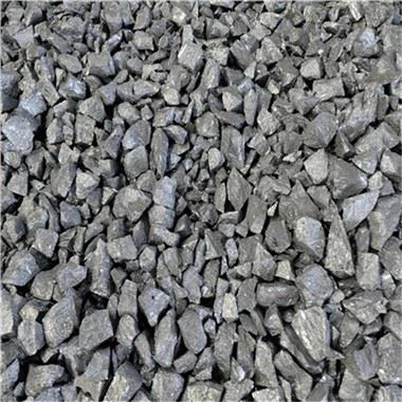
Ferrovanadium is commonly supplied in 10–50 mm, 10–100 mm or 10–220 mm lumps. Size selection depends on the addition method: finer sizes dissolve faster for ladle or wire feeding, while larger lumps suit furnace additions. Vanadium recovery is affected by addition timing, bath temperature, stirring and slag conditions - typically 90–98% in well-controlled operations. Buyers should specify the required size distribution (e.g. 90–95% within range) and agree recovery expectations with the supplier.
6. FAQ
Q1: Which ferrovanadium grade improves steel strength the most? For the same vanadium input, all grades give equivalent strengthening; FeV80 delivers the most vanadium per unit mass, which is advantageous where alloy addition space or iron carry-over matters.
Q2: Can FeV70 or FeV60 replace FeV80? Yes, if the required vanadium addition is met and the target mechanical properties (strength, wear resistance, high-temperature stability) are verified; recalculate the addition weight on a vanadium-equivalent basis and confirm the chemistry per GB/T 4139.
Q3: What particle sizes are available? Common ranges are 10–50 mm, 10–100 mm and 10–220 mm, customizable to the furnace and addition method.
Q4: Which applications benefit most from FeV80? HSLA steel, tool steel, spring steel and specialty steels requiring high strength and wear resistance.
Q5: How should a buyer qualify a ferrovanadium supplier? Verify COA composition against the standard, batch gas/impurity test reports, particle-size distribution, and consistent supply history for global steelmaking operations.
Contact ZhenAn
For FeV80, FeV70, and FeV60 ferrovanadium and technical support in steel alloying:
Email: info@zaferroalloy.com
WhatsApp: +86 15518824805