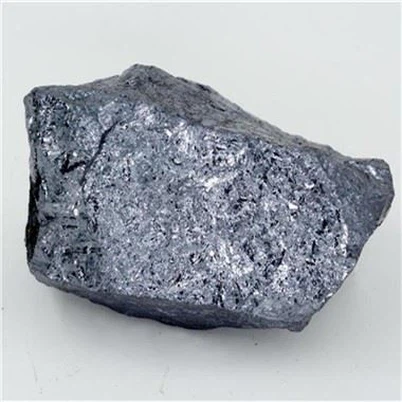

Ferro Silicon Magnesium (FeSiMg) Nodulizer: Specification, Grades, Applications And Buying Guide
Leave a message

Ferro Silicon Magnesium (FeSiMg) Nodulizer: Specification, Grades, Applications and Buying Guide
1. Product Overview
Ferro Silicon Magnesium (FeSiMg) is a specialized ferroalloy used as a nodulizing agent (spheroidizing alloy) in ductile iron production. It is added to molten iron to transform graphite morphology from flake graphite into spherical graphite, creating ductile iron with higher strength, toughness and fatigue resistance.
FeSiMg mainly contains:
Silicon (Si)
Magnesium (Mg)
Rare Earth elements (RE)
Calcium (Ca)
Iron (Fe)
The combination of magnesium and rare earth elements provides controlled graphite spheroidization, while silicon improves inoculation and supports stable casting performance.
Product Name: Ferro Silicon Magnesium Alloy
Abbreviation: FeSiMg
Application: Ductile iron production
Main Function: Graphite nodulization
2. What Is FeSiMg Used For?
The primary use of FeSiMg is manufacturing ductile iron (nodular cast iron).
During solidification, untreated cast iron normally forms flake graphite, which creates stress concentration points and reduces mechanical properties.
After FeSiMg treatment:
Flake Graphite → Spherical Graphite
The resulting ductile iron has:
Higher tensile strength
Improved elongation
Better impact resistance
Improved fatigue performance
Better machinability
Common industries include:
Automotive
Pipe manufacturing
Heavy machinery
Wind power equipment
Engineering castings
3. FeSiMg Manufacturing Process
3.1 Raw Materials
The main raw materials include:
| Raw Material | Function |
|---|---|
| Ferrosilicon | Provides silicon base |
| Magnesium metal | Main spheroidizing element |
| Rare earth alloy | Stabilizes graphite nodules |
| Calcium | Controls reaction intensity |
| Iron | Alloy matrix |
3.2 Alloy Production
FeSiMg is produced through:
Submerged arc furnace process
Medium-frequency induction furnace process
Production steps:
Step 1: Raw Material Preparation
Ferrosilicon, magnesium-containing materials and rare earth materials are prepared according to the required grade.
Step 2: Alloy Melting
Raw materials are melted and alloyed under controlled conditions.
Magnesium requires careful control because of:
High vapor pressure
Strong reaction with molten iron
Step 3: Composition Adjustment
The alloy composition is adjusted according to:
Mg requirement
RE requirement
Calcium content
Customer specification
Step 4: Crushing and Screening
After cooling:
Alloy blocks are crushed
Particle size is screened
Finished FeSiMg is packed
4. Typical FeSiMg Chemical Specifications
Typical composition range:
| Element | Typical Range |
|---|---|
| Silicon (Si) | 40–50% |
| Magnesium (Mg) | 1–8% |
| Rare Earth (RE) | 0.5–8% |
| Calcium (Ca) | Controlled |
| Aluminum (Al) | Controlled |
| Iron (Fe) | Balance |
The exact chemical composition depends on:
Casting requirements
Treatment method
Customer specification
Buyers should confirm:
Mg content
RE content
Ca content
Particle size
Impurity limits
with the supplier's COA.
5. FeSiMg Grade Guide
FeSiMg grades are mainly classified according to magnesium and rare earth content.
| Grade | Mg Content | RE Content | Typical Application |
|---|---|---|---|
| FeSiMg 1-6 | Approx. 1% Mg | Higher RE | General ductile iron |
| FeSiMg 3-8 | Approx. 3% Mg | Approx. 8% RE | Common ductile iron production |
| FeSiMg 5-8 | Approx. 5% Mg | Approx. 8% RE | Heavy and demanding castings |
6. Why Use FeSiMg in Ductile Iron Production?
6.1 Graphite Spheroidization
Magnesium changes graphite growth from:
Flake structure → Nodular structure
Spherical graphite reduces stress concentration and improves mechanical properties.
6.2 Strength Improvement
Ductile iron treated with FeSiMg provides:
Higher tensile strength
Improved yield strength
Better toughness
6.3 Better Fatigue Resistance
The nodular graphite structure improves resistance to repeated loading.
Important for:
Automotive components
Machinery parts
Wind turbine castings
6.4 Improved Casting Stability
Rare earth elements help:
Neutralize harmful trace elements
Improve nodule formation
Increase graphite nodule stability
7. Role of Each Element in FeSiMg
Magnesium (Mg)
The key spheroidizing element.
Functions:
Creates spherical graphite
Suppresses flake graphite
Improves ductility
Rare Earth Elements (RE)
Functions:
Remove anti-spheroidizing effects
Improve graphite morphology
Increase nodule stability
Calcium (Ca)
Functions:
Controls magnesium reaction
Improves magnesium recovery
Reduces reaction intensity
Silicon (Si)
Functions:
Supports graphitization
Provides inoculation effect
Balances alloy composition
8. FeSiMg Particle Sizes
Common sizes:
| Size | Application |
|---|---|
| 0.2–1 mm | Wire feeding and special treatment |
| 1–3 mm | Automated feeding systems |
| 3–8 mm | Common foundry treatment |
| 5–25 mm | Ladle treatment |
Particle size selection depends on:
Treatment method
Ladle size
Reaction control requirements
9. FeSiMg Treatment Methods
9.1 Ladle Treatment
Most widely used method.
Process:
Add FeSiMg alloy into treatment ladle
Cover with molten iron
Allow reaction
Pour treated iron
Advantages:
Simple operation
Suitable for most foundries
9.2 Sandwich Method
FeSiMg is placed at the bottom of the ladle and covered with iron.
Advantages:
Reduces violent magnesium reaction
Improves magnesium recovery
9.3 Cored Wire Injection
FeSiMg powder is filled into wire and injected into molten iron.
Advantages:
Accurate addition
Automated control
Lower alloy consumption
10. FeSiMg Application Fields
Automotive Castings
Used for:
Engine components
Brake parts
Suspension components
Benefits:
Strength
Durability
Fatigue resistance
Ductile Iron Pipes
Used in:
Water pipelines
Gas pipelines
Industrial transportation systems
Advantages:
High pressure resistance
Long service life
Heavy Machinery
Applications:
Machine bases
Gear housings
Industrial equipment
Wind Power Industry
Used for:
Wind turbine hubs
Large structural castings
Requirements:
High toughness
Stable mechanical properties
11. FeSiMg VS Ferrosilicon (FeSi)
| Comparison | FeSiMg | Ferrosilicon (FeSi) |
|---|---|---|
| Main function | Graphite nodulizer | Silicon alloy additive |
| Main element | Magnesium | Silicon |
| Industry | Ductile iron casting | Steelmaking & casting |
| Purpose | Creates spherical graphite | Deoxidation and alloying |
| Typical user | Foundries | Steel mills and foundries |
12. FeSiMg VS Pure Magnesium
| Comparison | FeSiMg | Pure Magnesium |
|---|---|---|
| Form | Ferroalloy | Metal |
| Reaction | Controlled | Very intense |
| Handling | Easier | More difficult |
| Recovery | More stable | More variable |
| Foundry application | Widely used | Limited |
FeSiMg is preferred because it provides more stable magnesium recovery and easier process control.
13. FeSiMg Quality Control
Professional quality inspection includes:
Chemical Analysis
Testing:
Mg
RE
Si
Ca
Al
Impurities
Physical Inspection
Checking:
Particle size
Appearance
Packaging condition
Documentation
Available documents:
Certificate of Analysis (COA)
Material Test Report (MTC)
SDS
Third-party inspection report
14. Packaging and Storage
Export Packaging
| Packaging | Application |
|---|---|
| 25 kg bags | Small orders |
| 1 MT jumbo bags | Bulk shipment |
| Customized packaging | Customer requirements |
Storage Requirements
Store in:
Dry warehouse
Moisture-free environment
Sealed packaging
Avoid:
Water exposure
Humid conditions
Contamination
15. FeSiMg Buying Guide
Before purchasing FeSiMg, buyers should confirm:
Product Specification
Required information:
Grade:
FeSiMg 1-6
FeSiMg 3-8
FeSiMg 5-8
Mg content
RE content
Particle size
Quantity
Packaging
Supplier Evaluation
Check:
Production capability
Chemical consistency
Quality control system
Export experience
Request:
COA
Technical data sheet
Inspection documents
16. Frequently Asked Questions (FAQ)
Q1: What is FeSiMg used for?
FeSiMg is mainly used as a nodularizer for producing ductile iron by converting flake graphite into spherical graphite.
Q2: What does FeSiMg 3-8 mean?
FeSiMg 3-8 generally refers to a grade containing approximately 3% magnesium and 8% rare earth elements.
Q3: Why is magnesium added to ductile iron?
Magnesium changes graphite morphology and creates spherical graphite, improving strength and ductility.
Q4: What is the difference between FeSi and FeSiMg?
FeSi is mainly used for silicon addition and deoxidation, while FeSiMg is used for graphite spheroidization in ductile iron.
Q5: Which FeSiMg grade should I choose?
Selection depends on:
Sulfur content
Casting thickness
Treatment method
Required mechanical properties

FeSiMg Nodulizer Supply for Global Foundries
We supply Ferro Silicon Magnesium (FeSiMg) nodulizer alloys for ductile iron production with controlled:
Magnesium content
Rare earth content
Calcium level
Particle size
Available grades:
FeSiMg 1-6
FeSiMg 3-8
FeSiMg 5-8
Applications:
Automotive casting
Ductile iron pipes
Heavy machinery
Wind power components
WhatsApp: +86 15518824805
Email: info@zaferroalloy.com