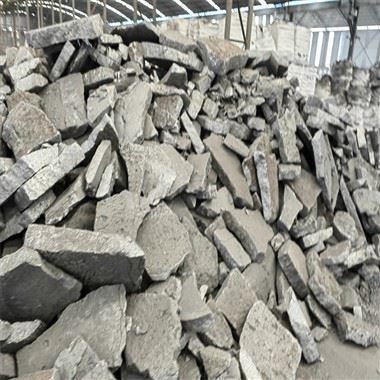
Ferrosilicon Lump 75 and 72 for Casting Iron: 10-50 mm and 50-100 mm Supply Data
Leave a message
Ferrosilicon 75 and 72 Lump for Casting Iron
Ferrosilicon supplied for casting iron is normally ordered as lump in two commercial grades, 75% and 72% silicon, and in two size fractions, 10-50 mm and 50-100 mm. The grade sets the silicon input to the melt and therefore the strength and graphite structure of the casting; the size fraction sets how the lump behaves in the charging bucket and how quickly it dissolves. The tables below reproduce export quotes on an FOB Tianjin Port basis and domestic low aluminium ferrosilicon levels, both dated 14 July.
Export Quotations, FOB Tianjin Port
| Product | Grade | Quote (USD/tonne) | Change | Basis |
|---|---|---|---|---|
| Ferrosilicon | 72 | 1,000-1,030 | Flat | FOB Tianjin Port |
| Ferrosilicon | 75 | 1,080-1,100 | Flat | FOB Tianjin Port |
Low Aluminium Ferrosilicon, Domestic Levels
Low aluminium grades are quoted in Yuan per tonne, natural block, ex-works cash including tax. Two aluminium ceilings are commonly traded: Si75Al<0.1 and Si75Al<0.5.
| Product | Specification | Region | Price (Yuan/tonne) | Change | Remark |
|---|---|---|---|---|---|
| Low aluminium ferrosilicon | Si75Al<0.1 | Qinghai | 6,700-6,750 | Flat | Ex-works, tax inclusive |
| Low aluminium ferrosilicon | Si75Al<0.5 | Qinghai | 6,400-6,450 | Flat | Ex-works, tax inclusive |
| Low aluminium ferrosilicon | Si75Al<0.1 | Inner Mongolia | 6,700-6,750 | Flat | Ex-works, tax inclusive |
| Low aluminium ferrosilicon | Si75Al<0.5 | Inner Mongolia | 6,400-6,450 | Flat | Ex-works, tax inclusive |
The two aluminium ceilings bracket a spread of about Yuan 300 per tonne, which is the market's price for the extra refining needed to hold aluminium below 0.1%. Where a foundry controls aluminium elsewhere in the charge, the 0.5% ceiling is the cheaper route to the same silicon input.
Why the Grade and the Size Both Matter in Casting Iron
In cast iron, ferrosilicon does two jobs at once. It is the main carrier of silicon into the melt, and it acts as an inoculant when added late in the ladle or in the mould stream. Silicon content of 75% delivers more silicon units per tonne charged than the 72% grade, which matters when a foundry is trying to raise silicon without adding weight. The 72% grade remains the volume material for grey and ductile iron where silicon targets are moderate and cost per silicon unit dominates the decision.
Size follows furnace practice. The 10-50 mm fraction dissolves quickly and is the usual choice for induction furnace charging and for ladle inoculation because it disperses readily. The 50-100 mm fraction suits larger cupola and electric melting charges where a slow, steady release of silicon over a longer melting cycle is acceptable and where lump strength under a heavy burden matters more than dissolution speed. Mixing fractions in one charge tends to create uneven silicon recovery, so most foundries fix one fraction per furnace line.
Specification, Packing and Quality Control
Grades: FeSi 75 and FeSi 72, both supplied as natural block lump.
Size fractions: 10-50 mm and 50-100 mm, with other fractions available on request.
Low aluminium options: Si75Al<0.1 and Si75Al<0.5 for foundries controlling aluminium in ductile iron.
Packing: 1 MT big bags as standard, sized for direct charging and clean handling.
Inspection: certificate issued by a third party testing institution or by the producing works, as the contract requires.
Silicon, aluminium, carbon and sulfur are the values a foundry checks on the certificate before the lot is used, because aluminium and carbon in the inoculant shift the graphite morphology of the casting. Buying on grade name alone is not enough where the casting has thin sections or tight nodularity requirements; the certificate values are what tie the delivered lump to the melt recipe.
Reading the Two Quote Tables Together
The export table is quoted in USD per tonne FOB Tianjin Port, and the domestic table is quoted in Yuan per tonne ex-works, tax inclusive. The two cannot be compared directly: one carries export logistics to the port of loading, the other carries tax and a domestic delivery basis, and they reference different quality specifications, because the low aluminium grades in the domestic table are a more tightly controlled product than plain FeSi 75 tonnage. Direction of travel is comparable, level is not. On 14 July both tables stood flat, which indicates a market waiting on the next input signal rather than one repricing.
For a foundry, the decision sequence is short. Fix the silicon target of the melt, choose 75% or 72% accordingly, then choose the aluminium ceiling that the casting quality actually requires, then match the size fraction to the furnace line, and only then compare quotes on a consistent delivered basis.
Frequently Asked Questions
Q: What is the difference between ferrosilicon 75 and ferrosilicon 72?
Both are ferrosilicon lump used in casting iron. The 75 grade carries a higher silicon content and therefore delivers more silicon units per tonne charged; the 72 grade is the more economical volume material where silicon targets are moderate.
Q: Which size fraction should a foundry order, 10-50 mm or 50-100 mm?
10-50 mm dissolves quickly and suits induction furnace charging and ladle inoculation. 50-100 mm suits larger cupola and electric melting charges where silicon can be released over a longer cycle.
Q: What does Si75Al<0.1 mean?
It describes a low aluminium ferrosilicon with 75% silicon and aluminium held below 0.1%. Low aluminium grades are chosen where aluminium in the charge must be tightly controlled, for example in ductile iron.
Q: How much more expensive is the low aluminium grade?
On the same regional basis the Si75Al<0.1 grade stood about Yuan 300 per tonne above Si75Al<0.5, which reflects the additional refining needed to hold aluminium below the tighter ceiling.
Q: How is ferrosilicon lump packed for shipment?
Standard packing is 1 MT big bags, which keeps lots traceable and allows clean direct charging. Other packing arrangements can be agreed for specific handling systems.
Q: Are the export and domestic prices comparable?
No. The export figures are USD per tonne FOB Tianjin Port and the domestic figures are Yuan per tonne ex-works tax inclusive, on different quality specifications. Compare direction, not level.
Q: What should be verified on the inspection certificate?
Silicon, aluminium, carbon and sulfur at minimum, together with the size fraction actually shipped. Those values determine both the silicon recovery in the melt and the casting structure that results.