
Vanadium Pentoxide V2O5 98% Min: Properties, Grades and Industrial Use
Leave a message
Product Identity and Physical Constants
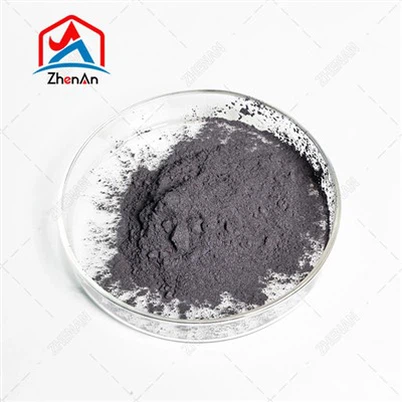
Industrial-grade vanadium pentoxide is supplied as gray-black flake or powder with a minimum assay of 98% V2O5. The substance is identified by CAS number 1314-62-1 and EINECS number 215-239-8, has a formula mass of 181.88 g/mol, a density of 3.357 g/cm3, a melting point near 690 C and a boiling point near 1750 C. Solubility in water is low, roughly 1 g per 125 mL, which is why dissolution for downstream processing normally runs through alkaline or acidic routes rather than plain water.
Grade Bands and Typical Analysis
Three commercial bands are traded: 98% min, 99% min and 99.5% min. The increment is driven by impurity-sensitive users such as catalyst makers and battery electrolyte producers, who pay attention to silicon, iron, aluminium, phosphorus, arsenic and sulfur. Assay is established by dissolving the sample and titrating vanadium with potassium permanganate, or by inductively coupled plasma optical emission spectrometry when a full impurity scan is required; a laboratory operating under ISO/IEC 17025 provides the traceable report that most steel and chemical buyers now ask for. Moisture is normally held below about 0.5% to protect the assay on a dry basis.
| Parameter | Value / range | Method or note |
|---|---|---|
| Formula | V2O5 | Formula mass 181.88 g/mol |
| Assay | 98% min / 99% min / 99.5% min | Permanganate titration or ICP-OES |
| Appearance | Gray-black flake or powder | Flake is the traded bulk form |
| Density | 3.357 g/cm3 | Solid at room temperature |
| Melting / boiling | 690 C / 1750 C | Decomposes partially on strong heating |
Chemistry: Amphoteric Behaviour and Reduction Routes
Vanadium pentoxide is amphoteric. In alkali it forms vanadates, for example V2O5 + 2 NaOH giving 2 NaVO3 + H2O, and in acid media it gives the vanadyl ion VO2+. Vanadium moves between the +5, +4, +3 and +2 oxidation states, which is the property exploited in both batteries and catalysts. Aluminothermic reduction follows the stoichiometry 3 V2O5 + 10 Al giving 6 V + 5 Al2O3, and the molten vanadium is absorbed in iron to produce the FeV80 grade described in ISO 5451. Electrolyte manufacture takes the same oxide through dissolution and partial reduction to vanadyl sulfate.
Industrial Applications
Roughly three quarters of vanadium consumption ends up in steel as ferrovanadium for HSLA, forging, spring and tool steels. The remaining share is split between catalysts, chemicals and energy storage. Sulfuric acid plants use V2O5-based contact masses to oxidise SO2 to SO3 at 400-450 C, and power plant flue gas trains use vanadium-tungsten-titania catalysts for selective catalytic reduction of nitrogen oxides. Additional uses include maleic anhydride synthesis, ceramic and glass colouring, and vanadium chemicals for surface treatment.
Packaging, Storage and Handling
Flake is packed in 25 kg steel or fibre drums, 500 kg and 1000 kg jumbo bags with a polyethylene inner liner, or lined steel drums for long sea transit. The material is classified as a toxic solid by ingestion and inhalation of dust, so bags must be opened under local exhaust or with respiratory protection, and spills should be damped and collected rather than swept dry. Stock should be kept in a closed, dry warehouse away from reducing agents and strong alkalis, and pallets should be kept off the floor to avoid moisture wicking through the liner.
Frequently Asked Questions
Q: What is the difference between 98% and 99.5% vanadium pentoxide?
A: The higher grade carries fewer impurity elements such as silicon, iron and arsenic, which matters for catalyst and battery electrolyte production rather than for ferrovanadium melting.
Q: Can vanadium pentoxide be shipped as a normal bulk cargo?
A: No. It is a toxic solid in dust form, so it travels in sealed lined drums or jumbo bags, with the class and packing marked on the transport documents and the material kept dry.
Q: Why is flake preferred over powder for bulk orders?
A: Flake generates less airborne dust during unloading, packs to a higher bulk density in bags and dissolves at a predictable rate, which simplifies charge control at the furnace.
Q: How should the assay be verified on arrival?
A: Draw a composite sample from the lot, split it, and test by potassium permanganate titration with a second laboratory check by ICP-OES if the result is challenged.
Q: Does storage temperature affect the product?
A: Ambient storage in a dry warehouse is sufficient; the risk is moisture and dust, not temperature, provided the bags remain sealed and the liner is intact.