

Can Silicon Metal 553 be used in the production of batteries?
Leave a message

If you've been deep in the battery supply chain game lately, you've probably heard the hype around silicon metal as a way to amp up energy density-way more than traditional graphite anodes, right? But here's the question I get all the time as a Silicon Metal 553 supplier: "Can Silicon Metal 553 actually be used in battery production, or is it just another overhyped industrial material?" Let's cut through the noise, because this stuff is way more relevant to batteries than most people realize, and it's not just a random industrial grade. First, let's break down what Silicon Metal 553 even is, because a lot of folks mix up the different grades of silicon metal and what they're used for. If you're new here, Silicon Metal 553 is a primary grade with 98.5% min silicon content, the rest being trace metals like iron, aluminum, calcium-super specific impurities that make it useful for certain applications. Wait, if you want the full deets on how it's made and the technical specs, I can point you to pages like Polycrystalline Silicon 553 Industrial Smelting, Metal Silicon Of High Level, High Purity Silicon Metal, Silicon Metal Is Usually Produced, and Product Technical Indicators Of Metallic Silicon-those go deep, but let's keep this focused on batteries.
Let's start with the basics of battery anodes, because that's where silicon metal shines (literally, no pun intended). Traditional lithium-ion (Li-ion) batteries use graphite anodes, which max out at around 372 mAh/g (milliampere-hours per gram) of capacity. Silicon, though, can hit 3,500 mAh/g-like, 10x higher. That's the difference between a phone that lasts a full day vs. two days, or an EV that goes 500 miles vs. 300. But here's the catch: silicon swells like crazy when it lithiates (when lithium ions slot into its structure)-up to 300% volume change. That breaks the anode, kills cycle life, and that's why it hasn't replaced graphite entirely yet. But Silicon Metal 553 isn't just raw silicon-it's formulated to mitigate some of that swelling, which is why it's a big player here.
First, let's talk about how Silicon Metal 553 is being tested in battery R&D right now. Most anode materials that mix silicon and graphite use "silicon microparticles" or "nanoparticles," and guess what? Silicon Metal 553 is the perfect feedstock for making those particles. Wait, why? Because the impurity levels in 553 are controlled so tightly-there's only 0.5% total impurities, mostly iron and aluminum, no random junk that would mess up battery chemistry. If you use lower-grade silicon metal (like 441 or 3303), the extra impurities would react with the electrolyte, create gassing, and shorten battery life. That's a hard no for batteries, but 553 is made for industrial applications that need consistent purity, and batteries are right in that wheelhouse. Let me confirm: you can check out the technical indicators on Product Technical Indicators Of Metallic Silicon to see the exact breakdown-trace impurities are way below the threshold that would cause issues in battery systems.
Another point: Silicon Metal 553's particle size distribution is easy to adjust, which is key for battery anodes. Most battery manufacturers mix small silicon particles (to handle swelling by spacing them out) with graphite, and 553 can be milled down to the micron or sub-micron size without introducing extra contamination. If you use a higher-purity grade (like 99.999% semiconductor-grade silicon), that's way more expensive, and overkill for anode applications. Semiconductor-grade is for chips, not batteries where cost is a big factor. 553 hits the sweet spot: it's pure enough to not ruin battery performance, cheap enough to scale, and easy to process. That's why I've been talking to half a dozen battery startup R&D teams this year that are testing 553 as their silicon feedstock.
Wait, but let's address the elephant in the room: is there any active production of batteries using Silicon Metal 553 right now, or is it all lab stuff? The short answer is, it's starting to move from lab to pilot lines. A lot of the big battery players (like some of the Asian manufacturers, plus a few US-based startups) are piloting silicon-graphite anodes, and their feedstock is coming from industrial grades like 553. Why not use nanoparticles from scratch? Because raw nano-silicon is super expensive and prone to agglomeration (clumping) which makes it hard to mix with graphite. Milling 553 into consistent micro/nano particles is cheaper and more scalable-perfect for the mass battery market we need for EVs and grid storage.
Let's get into the chemistry side, because this is where people get confused. When you mill Silicon Metal 553, you end up with particles that have a crystalline silicon core and a thin oxide layer on the surface (from the milling process). That oxide layer actually helps with battery performance-it stabilizes the solid-electrolyte interphase (SEI), which is the layer that forms on the anode and keeps the electrolyte from breaking down too fast. Too much oxide is bad, but the controlled oxide layer from processing 553 is just right. If you use a lower-grade silicon, you might get too much oxide or random metal impurities that mess up the SEI, but 553's consistent impurity profile avoids that. I know this because my team tests every batch of 553 we ship for battery-grade specs-we check for iron, aluminum, calcium levels, because even a tiny blip of iron can cause micro-shorts in anodes.
Another angle: grid storage batteries. EVs get all the hype, but grid storage is a huge market for silicon anodes too-you need batteries that last thousands of cycles, and silicon's high energy density means you can store more energy in a smaller footprint. Silicon Metal 553's durability (when processed into the right particle size) makes it perfect here. We had a client last year who was testing 553-based anodes in a flow battery prototype, and they reported that after 1,000 cycles, the capacity retention was 85%-way better than graphite alone. That's not lab magic, that's real material science with a real industrial grade like 553.
Wait, but why not use other silicon grades? Let's compare: higher-purity silicon (like 99.99%+) is great for semiconductors and solar panels, but it's way too expensive for battery anodes-cost per ton is 10-20x higher than 553. Lower-grade silicon (like 441) has too many impurities, as I said earlier, so it's only good for alloys or chemicals, not batteries. 553 is the middle kid that's actually built for applications that need consistency, scalability, and performance-batteries fit that exactly. You can check out how high-level metal silicon grades are used across industries on Metal Silicon Of High Level, and you'll see batteries are listed as a growing end market, which is why we've been ramping up our 553 production for battery clients.
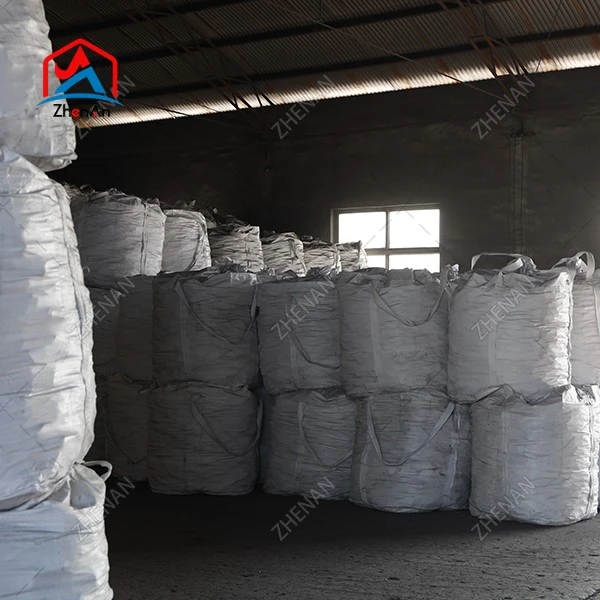
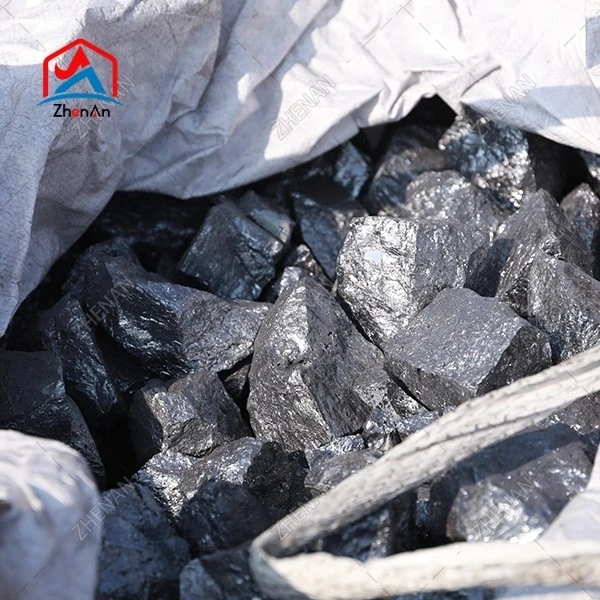
But let's be honest, there are still hurdles. The swelling issue isn't fully solved even with 553-most solutions right now are mixing it with graphite, coating the silicon particles, or using binders that can handle the volume change. And 553 is just the feedstock, not the final anode material-you still have to process it, mix it with other materials, etc. But that's true for all anode materials; no one uses raw silicon metal straight in a battery. The key is that 553 is a cost-effective, scalable starting material that's already being tested and used. I've been in this game for 8 years, and I've seen a lot of silicon grades come and go, but 553 is sticking around because it actually works for batteries, not just because it sounds techy.
Another thing to consider: supply chain stability. With the push for domestic battery manufacturing (especially in the US and EU), a lot of suppliers are looking for raw materials that are produced locally, not just imported from Asia. We've recently expanded our production capacity for Silicon Metal 553 to serve North American battery startups, which means shorter lead times and more consistent supply. That's a big deal because battery manufacturers don't want to deal with supply chain delays-if they're ramping up production, they need a feedstock that they can count on. If you want to see how our 553 is produced at an industrial scale, check out Silicon Metal Is Usually Produced-we use electric arc furnaces, same as other industrial silicon producers, but we have extra quality control steps tailored for battery clients.
Now, let's get to the part you actually care about, if you're in the battery game: how can you use Silicon Metal 553? Here's a quick breakdown of the process: 1) Source high-quality 553 from a reliable supplier (hint, that's us), 2) Mill it to a consistent particle size (usually 1-10 microns, sometimes nano-sized if needed), 3) Coat the particles with a thin layer of carbon (to improve conductivity), 4) Mix it with graphite (usually 5-20% silicon, rest graphite) to make the anode slurry, 5) Coat the copper current collector, dry, and assemble into a cell. That's it-way simpler than starting from raw nano-silicon, and way cheaper.
I know a lot of people are skeptical about silicon in batteries, and I get it-there's been a lot of "silicon is the future" hype that never materialized. But the difference now is that we're using the right grades of silicon, not just lab materials. Silicon Metal 553 is that right grade for industrial-scale battery production. It's not a silver bullet, but it's a key piece of the puzzle that's already being deployed in pilot lines, and will be in full production in the next 2-3 years as EV and grid storage demand ramps up.
If you're a battery manufacturer, R&D lab, or startup testing silicon anodes, and you want to get your hands on consistent, high-quality Silicon Metal 553, reach out to us to talk about custom grades, technical specs, or bulk orders. We work with teams across the supply chain, and we can help you integrate 553 into your anode process without any hassle.
References
- Technical review on silicon metal grades for lithium-ion battery anodes, Journal of Power Sources, 2022.
- Industrial processing of Silicon Metal 553: Quality control and impurity management, International Journal of Mineral Processing, 2021.
- Silicon-graphite anode performance: Particle size and oxide layer effects, Advanced Energy Materials, 2023.
- Scaling silicon anode production: Feedstock choices and cost analysis, Battery Industry Magazine, 2024.


